-
ŚB 10.8.17 Explained: Divine Protection, Ethical Power and the Courage to Flourish

Śrīmad-Bhāgavatam 10.8.17 explains how Kṛṣṇa protects upright people when effective government and social order have broken down. This verse-by-verse study examines important Sanskrit terms such as sādhavaḥ, arājake, rakṣyamāṇāḥ and samedhitāḥ. It shows that divine protection does not eliminate human agency but creates the conditions in which responsible people can prevail and flourish. The discussion…
-
Sri Radha’s Tears Part 10: Profound Lessons on Ecstatic Love and Bhakti-Rasa

This long-form companion to “Sri Radha’s Tears Part 10” explains why tears carry profound theological meaning in Gaudiya Vaishnava devotion. It introduces the technical structure of bhakti-rasa, including vibhāva, uddīpana, anubhāva, sāttvika-bhāva, and aśru. The discussion examines Sri Radha as the embodiment of mahābhāva and clarifies how viraha, or separation from Krishna, can intensify sacred…
-
Changu Narayan’s Headless Vishnu: Sacred Legend, History, and Humbling Power

Changu Narayan in Nepal is one of the most important Vaishnava temples of the Kathmandu Valley and a major UNESCO World Heritage site. Its famous legend of Bhagavan Vishnu without a head is not merely a dramatic temple story, but a profound reflection on ego, anger, karma, repentance, and divine grace. The temple’s early Licchavi…
-
Essential Values, Powerful Tools, and the Spiritual Test of Human Civilization

This essay examines the difference between tools and true values through the lens of Hindu philosophy and the Bhagavad Gita. It explains why intelligence, wealth, fame, beauty, and strength are not inherently good or evil, but become meaningful only when guided by dharma. The discussion uses the three gunas, sattva, rajas, and tamas, to show…
-
Brahma as Urdhva Dikpala: Powerful Wisdom of the Celestial Guardian

Brahma as Urdhva Dikpala reveals how Sanatana Dharma understands space as sacred, ordered, and spiritually meaningful. The Dasha Dikpalas, or guardians of the ten directions, transform the universe into a mandala of divine protection and cosmic orientation. Brahma’s role as the upward guardian connects him with creation, sacred knowledge, temple architecture, and the human aspiration…
-
Why Śrīmad-Bhāgavatam 11.3.21 Offers a Powerful Test for True Spiritual Guidance

Śrīmad-Bhāgavatam 11.3.21 gives one of the clearest scriptural standards for authentic spiritual guidance. It teaches that a sincere seeker of the highest good should approach a guru who is deeply grounded in sacred knowledge, realized in the Supreme, and detached from material agitation. This reflection explains the verse in its Vaishnava context while also showing…
-
Sakhada Bhagavati Temple: Powerful History and Sacred Symbolism of Nepal’s Headless Goddess

Sakhada Bhagavati Temple near Rajbiraj in Nepal’s Saptari district is one of the most compelling Shakti Peetha traditions of the Madhesh region. Associated with Chhinnamasta Bhagawati, the headless form of the Goddess, the temple transforms an image of rupture into a profound symbol of ego-transcendence, sacrifice, and cosmic power. Its history is linked with the…
-
Powerful Lessons from Guru Puja and Caitanya-caritāmṛta Ādi-līlā 14.34–37

This article explores the theological and practical meaning of Śrī Caitanya-caritāmṛta Ādi-līlā 14.34–37 in connection with Deity greetings and Guru Puja. It explains how mother Śacī’s instruction to child Nimāi teaches practical spiritual discernment rather than vague abstraction. The discussion also examines the visiting brāhmaṇa’s offering and how the Lord’s acceptance reveals the inner meaning…
-
Brahma’s Astonishing Lesson: Sanatana Goswami and the Power of Sacred Humility

This reflective essay explores the contrast between Lord Brahma’s moment of cosmic bewilderment and Srila Sanatana Goswami’s exemplary humility. Beginning with the Ramayana’s teaching on the Will of Providence, it shows how Lord Rama’s exile reveals surrender to divine order rather than passive resignation. The discussion then turns to Brahma’s visit to Krishna in Dvaraka,…
-
Supreme Dharma Revealed: The Transforming Power of Unbroken Krishna Bhakti

The supreme dharma described in the Srimad Bhagavatham is unmotivated and uninterrupted devotional service to Krishna. This teaching explains that the highest purpose of dharma is not external ritual alone, but the awakening of pure bhakti that satisfies the soul. The article explores key Sanskrit terms such as ahaitukī and apratihatā, showing how devotion becomes…
-
Gita2050 in Brooklyn: Powerful Bhagavad Gita Wisdom for a Future-Ready Dharma

Svayam Bhagavan Keshava Maharaja’s Gita2050 session in Brooklyn places the Bhagavad Gita in conversation with the future of dharma, identity, leadership, and spiritual responsibility. The discussion highlights how the Gita’s teachings on dharma, karma-yoga, bhakti-yoga, atma, and self-mastery remain deeply relevant in a technological and globally connected age. It also shows why diaspora communities can…
-
Why Ajamila Received Mercy While Bharata Faced Consequence: A Profound Bhakti Lesson

The stories of Ajamila and Bharata Maharaja reveal two different forms of divine mercy in the Srimad Bhagavatham. Ajamila received rescue through the unexpected power of the holy name Narayana, while Bharata received corrective mercy through the consequences of subtle attachment. This article explains why the two outcomes are not contradictory but deeply complementary. It…
-
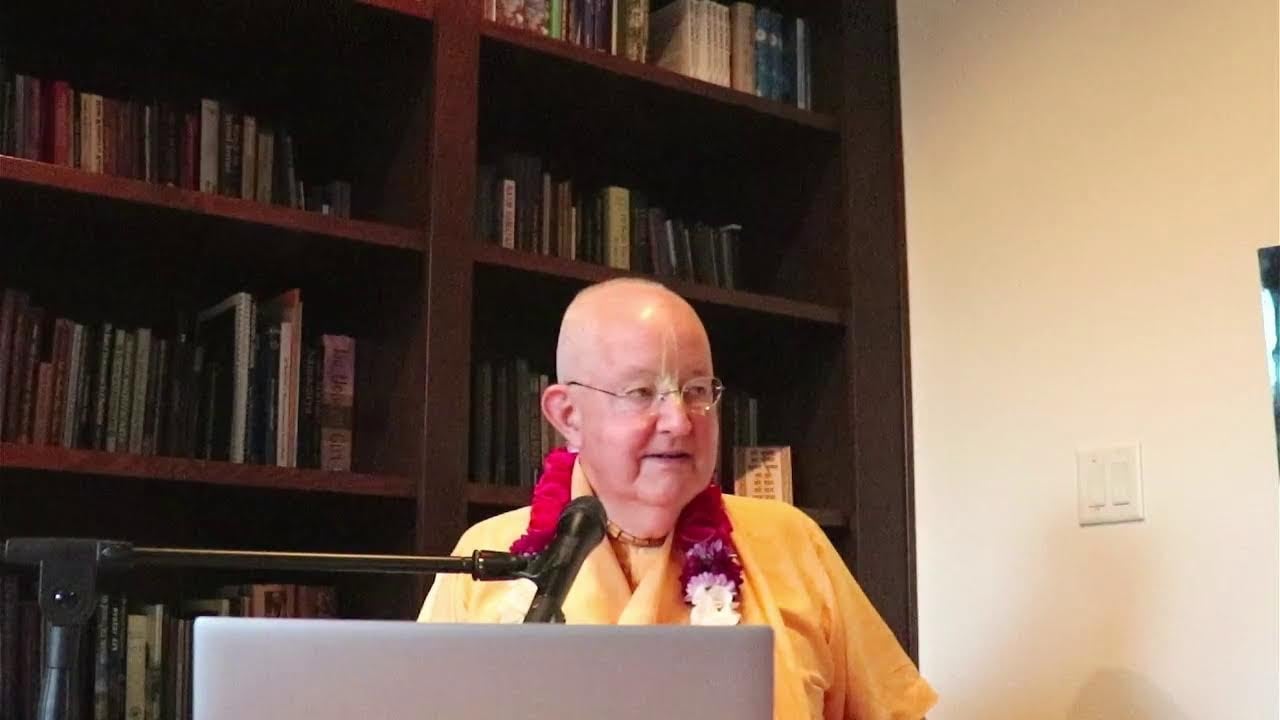
A Powerful Srimad-Bhagavatam Class with Srutakirti Prabhu on Living Bhakti

This featured Srimad-Bhagavatam class by Srutakirti Prabhu invites serious reflection on bhakti, sacred listening, and the living guru-shishya tradition. It highlights the importance of hearing scripture not as passive content, but as a disciplined practice that can refine conduct and consciousness. The discussion is placed within the wider context of Krishna consciousness, Srila Prabhupada’s legacy,…
-
A Powerful Hungary Reflection on Dhirasanta Goswami and Bhagavatam 3.7.8

This reflection explores the June 28, 2026 Hungary video on recent experiences with Dhirasanta Goswami and Śrīmad-Bhāgavatam 3.7.8. It explains how Vidura’s sincere inquiry and Maitreya Muni’s composed response create a classical model for dharmic learning. The post highlights key Sanskrit concepts such as tattva-jijñāsunā and bhagavac-cittaḥ in accessible academic language. It connects the verse…
-
Spanda Explained: The Powerful Divine Pulse Behind Kashmir Shaivism’s Living Cosmos

Spanda is one of the central insights of Kashmir Shaivism, presenting the universe as a living pulsation of consciousness rather than a completed event in the distant past. This article explains Spanda as the dynamic power of Śiva-Śakti, clarifying why it should not be reduced to ordinary physical vibration. It explores the doctrine’s textual foundations…
-
Powerful Lessons from ISKCON Paris on Ratha Yatra, Humility, and Sacred Kirtan

This reflection explores Śrī Caitanya-caritāmṛta Madhya-līlā 13.47-60 through the ISKCON Paris theme associated with HH Janananda Goswami Maharaj. The passage describes seven saṅkīrtana parties, fourteen drums, the ecstatic chanting before Lord Jagannātha, and the mysterious mercy of Śrī Caitanya Mahāprabhu. It highlights how devotional organization, sacred sound, and humility work together in Gauḍīya Vaiṣṇava theology.…