
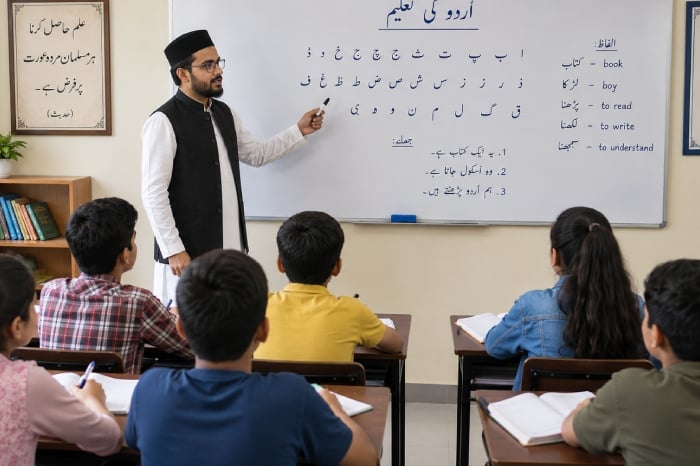
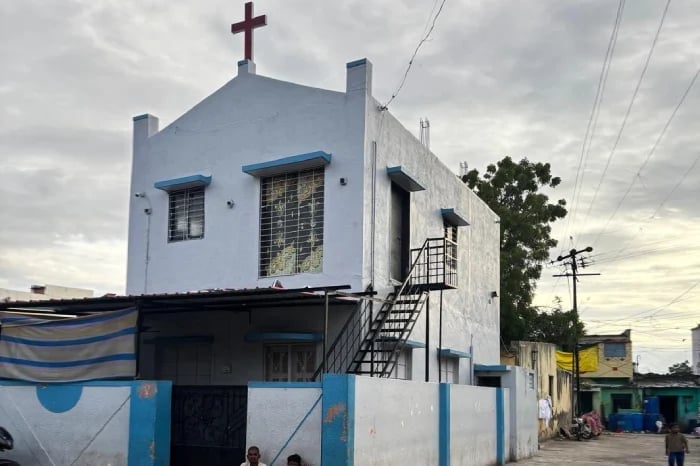
The controversy at Bharat Chandra High School, also known in reports as Bhavishya Darshini School, in Perkit village of Armoor mandal, Nizamabad district, has become more than a local school dispute. It now sits at the intersection of education policy, parental trust, religious sensitivity, language instruction, school accountability and public order in Telangana. The reported allegation is that Hindu students were taught Urdu and, according to the initial framing of the row, Kalma, without clear parental consent or authorisation under the approved school curriculum. Public reporting available on the incident has focused chiefly on the unauthorised Urdu instruction, the alleged direction to use the greeting Adaab, and the police cases that followed.
According to published reports, the Armoor police registered a case against the school’s Hindi teacher, principal and correspondent after an inquiry into allegations that Urdu was being taught during Hindi class to primary students. The police case reportedly invoked Section 196(1)(b) of the Bharatiya Nyaya Sanhita, a provision connected with acts that may promote enmity between groups on grounds including religion and language. The school’s principal and correspondent were also named, with investigators stating that complaints from parents had already reached the management.
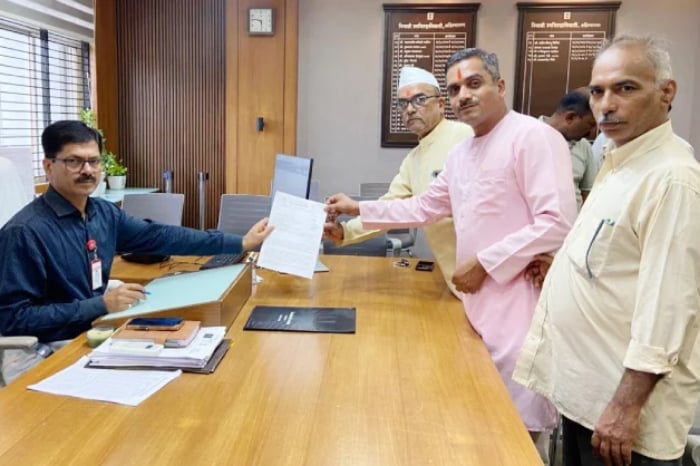
A second and equally significant legal development concerns the alleged assault on school staff. Reports state that local BJP workers, including Armoor town president Mandula Balu, entered the school premises after objections were raised over the alleged unauthorised teaching. The principal, Ameer Khan, was reportedly manhandled in the presence of police. A separate FIR was then registered for alleged trespass, assault, hurt, mischief and common intention. Later reporting stated that Mandula Balu was arrested, produced before a local court and released on conditional bail.
This dual FIR structure is important because it prevents the issue from being reduced to a single emotional narrative. If a school taught material outside the approved syllabus, particularly to young children, that is a matter for educational inquiry and lawful accountability. If political workers or members of the public assaulted school staff, that is a separate law-and-order matter. A civilised society has to hold both principles together: parents deserve transparency in education, and no grievance justifies physical intimidation or violence.
The educational question is straightforward in principle. A private school is expected to follow the curriculum it has represented to parents and the syllabus authorised by competent authorities. If a school is English-medium and does not have permission to teach Urdu as part of its curriculum, then introducing Urdu during Hindi class raises governance concerns. The issue becomes even more sensitive when the learners are in primary classes, because young children may not be able to distinguish between language exposure, cultural instruction, religious practice and formal syllabus requirements.
Language itself should not be treated with hostility. Urdu, like Sanskrit, Hindi, Telugu, Tamil, Bengali, Punjabi, Pali, Prakrit and many other Indian languages, belongs to the complex civilisational landscape of the subcontinent. It has literary, poetic and historical value. Many Hindu, Sikh, Jain and Buddhist families have engaged deeply with multiple languages across generations. The concern in this case is therefore not the existence of Urdu as a language. The concern is whether a school introduced unauthorised instruction, whether parents were informed, whether the approved syllabus was followed, and whether any religious content was taught without consent.
The alleged teaching of Kalma, if established through evidence, would raise a different and more serious concern than language teaching. In a plural society, religious literacy can have educational value when handled academically, comparatively and transparently. However, religious recitation or devotional instruction given to children of another faith tradition without parental consent is not a neutral classroom activity. It touches conscience, identity and the family’s right to guide a child’s religious upbringing. Any such allegation must be investigated carefully, without exaggeration and without communal generalisation.
For Hindu parents, the emotional unease in such a situation is understandable. A family sends a child to school with the expectation that the institution will teach mathematics, languages, science, social studies and values within the declared framework. When parents later hear that their children may have been taught material outside the syllabus, especially material perceived as religious, the reaction is not merely administrative. It feels like a breach of trust. That emotional dimension should be acknowledged without allowing it to become a licence for mob pressure.
At the same time, the response to such concerns must remain anchored in dharma: restraint, truthfulness, justice and proportion. Dharma does not require silence in the face of wrongdoing, but it also does not permit anger to override lawful conduct. Hindu, Buddhist, Jain and Sikh traditions all contain strong ethical frameworks for disciplined action. Ahimsa, satya, daya, seva and self-control are not abstract ideals; they are social technologies for preventing grievance from becoming disorder.

The reported assault on the principal therefore cannot be treated as a minor side issue. Even when a school is under legitimate scrutiny, staff members remain entitled to due process and physical safety. If investigators find wrongdoing, the consequences should come through the education department, police inquiry, regulatory action and judicial process. Public anger may bring attention to a problem, but violence weakens the moral position of those claiming to defend parental rights and Hindu interests.
The school management’s reported conduct also requires scrutiny. Police reports cited by the media state that the principal and correspondent allegedly admitted receiving complaints from parents and directing the teacher to stop Urdu instruction. Reports also say that pages containing Urdu notes were allegedly torn from students’ notebooks after objections were raised. If this is confirmed, it raises questions about transparency. Removing or destroying classroom material after objections does not calm a community; it deepens suspicion and makes the dispute harder to resolve.
A school facing parental complaints should preserve records, document the classroom activity, communicate promptly with parents and cooperate fully with education officials. The proper institutional response is not denial, concealment or informal damage control. It is evidence-based review. Parents should be told what was taught, why it was taught, who authorised it, how long it continued and what corrective steps have been taken.
The role of the education department is equally central. Reports indicate that officials examined students, staff, parents and management after instructions from district authorities. The Mandal Education Officer reportedly stated that Urdu was beyond the curriculum and that the school did not have permission to teach it. This shows why regulatory clarity matters. Private schools cannot operate as private islands. Their autonomy exists within the framework of approved syllabi, recognition conditions and accountability to families.

This case also illustrates a wider tension in Indian education: how to teach cultural diversity without creating anxiety about religious influence. India’s classrooms should be capable of introducing students to many languages, festivals, texts, ethical traditions and historical communities. But the method matters. Comparative learning must be age-appropriate, transparent, non-devotional and clearly separated from religious practice. Parents are more likely to accept plural education when schools are honest about content and careful about boundaries.
A dharmic approach to education does not demand cultural isolation. It asks for rootedness with openness. A Hindu child can learn about Sikh courage, Buddhist compassion, Jain ahimsa, Hindu philosophy, Indian languages and the histories of neighbouring communities without being pressured into devotional forms outside the family’s tradition. Similarly, children of other faiths can learn about Hindu festivals, Sanskrit terms, yoga, temple architecture and epics as civilisational knowledge when the teaching is respectful and non-coercive.
The distinction between knowledge and practice is therefore essential. Teaching that Urdu is written in a particular script, or that it has influenced poetry and public culture, is different from instructing children to adopt religious expressions or recitations. Teaching about a prayer is different from making children participate in it. Mature pluralism depends on this distinction. Without it, communities begin to view every cultural exposure as a threat and every classroom choice as ideological messaging.
The Telangana school row should not be used to demonise an entire language, community or profession. It should be used to insist on better school governance. The families raising concerns should not be dismissed as intolerant merely because they object to unauthorised instruction. The school staff should not be presumed guilty of every accusation before investigation is complete. The political workers accused of assault should not be allowed to recast violence as legitimate activism. Each actor must be judged by evidence and law.
There is also a need to speak carefully about Hindu students in such disputes. Hindu identity is not fragile, but trust can be fragile. Families rightly expect that a school will not dilute, mock or override their religious and cultural formation. At the same time, Hindu civilisation has historically shown the ability to engage multiple languages, philosophies and communities while retaining its own centre. The best defence of Hindu children is not fear. It is clarity, confident cultural education, parental involvement and institutional accountability.
For schools, the practical lessons are immediate. Any language enrichment activity should be documented and approved. Any religious or comparative religion content should be disclosed to parents in advance. Teachers should receive training on constitutional sensitivity, child psychology and classroom boundaries. Management should create a transparent grievance mechanism so that parental concerns are heard early, before resentment spills into public confrontation.
For parents, the lesson is to stay engaged before controversies erupt. Reviewing notebooks, attending parent-teacher meetings, asking for syllabi, and raising written concerns with school authorities are not signs of mistrust; they are normal responsibilities in a child’s education. When concerns involve religion or identity, written complaints to the school, education department and local authorities are more effective than public confrontation. Documentation protects children, parents and even honest teachers.
For political and community organisations, the lesson is restraint. Advocacy has value when it helps parents navigate institutions, gather evidence and demand lawful accountability. It becomes harmful when it turns a school campus into a site of intimidation. Children should never witness adults resolving educational disputes through force. A school is a place of learning, not a theatre for physical confrontation.
The broader social lesson is that India needs both cultural confidence and civic discipline. Communities must be able to object to unauthorised religious messaging in schools without being labelled reactionary. Schools must be able to teach India’s linguistic and cultural diversity without being accused unfairly. Police and education officials must investigate facts without political pressure. Courts must determine culpability where offences are alleged. This balance is difficult, but it is the only durable path.
The incident in Armoor is still under investigation, and the language of allegation must remain precise. Reports establish that police cases were registered over unauthorised Urdu teaching and over the alleged assault on the principal. Reports also mention concerns about greetings such as Adaab and claims that pages containing Urdu notes were torn. The allegation regarding Kalma requires careful verification through official findings, student accounts, parental statements and documentary evidence. Responsible commentary should neither suppress the concern nor inflate it beyond the record.
In the end, this row is a reminder that education is not merely information transfer. It is a trust relationship between family, child, teacher, institution and society. When that trust is handled carelessly, even a classroom exercise can become a public crisis. When grievances are handled violently, even a legitimate concern can lose moral clarity. The dharmic response is neither passivity nor rage; it is disciplined truth-seeking, protection of children, lawful accountability and respect for India’s many traditions without compromising the rights of families.
Source context: this analysis draws on publicly available reports from The Times of India published between June 28 and June 30, 2026, including reports on the FIRs, the alleged unauthorised Urdu instruction, the school inquiry and the arrest and conditional bail of a local BJP leader.
Inspired by this post on Hindu Jagruti Samiti.





Leave a Reply
You must be logged in to post a comment.