

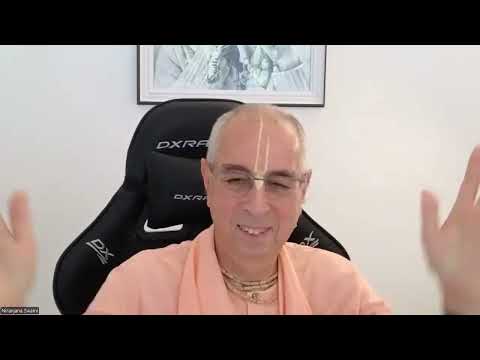
The discourse associated with His Holiness Prabodhananda Saraswati Swami Maharaj on Śrīmad-Bhāgavatam 11.3.9 invites a serious reading of one of the Bhāgavata Purāṇa’s most striking cosmological images: the terrible drought that precedes cosmic dissolution. The verse does not merely describe catastrophe. It places impermanence, time, and spiritual responsibility before the listener with unusual force.
Śrīmad-Bhāgavatam 11.3 belongs to the larger teaching dialogue between King Nimi and the nine Yogendras, the spiritually realized sons of Ṛṣabhadeva. In this chapter, King Nimi asks about māyā, the divine power that makes the temporary world appear self-sufficient and ultimate. The reply moves from creation to dissolution, showing that the same cosmic order that gives rise to experience also withdraws it through kāla, time.
The Sanskrit of ŚB 11.3.9 reads: śata-varṣā hy anāvṛṣṭir bhaviṣyaty ulbaṇā bhuvi tat-kālopacitoṣṇārko lokāṁs trīn pratapiṣyati. In simple terms, the verse states that, as cosmic dissolution approaches, a dreadful drought lasts for one hundred years on earth, while the heat of the sun steadily intensifies and afflicts the three worlds. The Bhaktivedanta VedaBase edition places this verse within the chapter titled Liberation from the Illusory Energy.
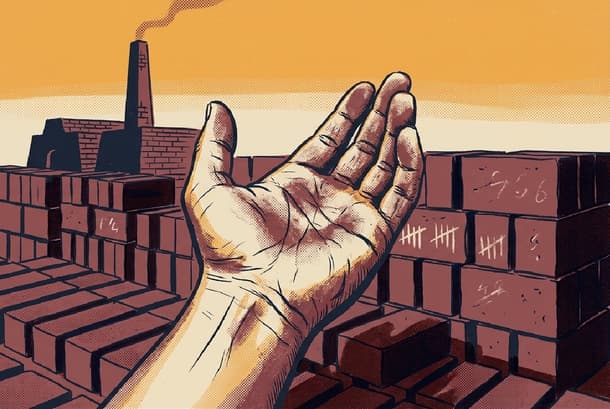
The first technical point is that the verse is not presented as a casual weather report or a sensational prediction tied to a particular modern date. It belongs to Purāṇic cosmology, where creation, sustenance, and dissolution unfold in immense cycles. The imagery of one hundred years of drought expresses the complete exhaustion of material supports. Rain, fertility, food, habitability, and embodied confidence all become unstable under the pressure of time.
In the Bhāgavata’s worldview, kāla is not merely chronological duration. Time is an active principle of divine governance. It reveals the limits of all material arrangements, however advanced or impressive they may appear. Kingdoms, bodies, social identities, intellectual systems, and even celestial structures are meaningful within time, but none of them can overrule time.
This makes ŚB 11.3.9 philosophically important. The verse uses cosmic heat and drought to expose a spiritual problem: the conditioned mind assumes continuity. It expects the world to remain available for its ambitions, comforts, rivalries, and possessions. The Bhāgavata interrupts that assumption and asks the listener to look directly at finitude.
The word anāvṛṣṭi, drought or absence of rain, has a layered significance. On the literal level, it signifies ecological collapse. On the symbolic level, it points to the drying up of nourishment when consciousness is cut off from dharma. Rain in Indic thought is often linked to yajña, reciprocity, gratitude, restraint, and cosmic harmony. When the order of giving and receiving is forgotten, life becomes arid both outwardly and inwardly.
The intensifying sun is equally significant. The sun normally sustains life through light, rhythm, heat, and timekeeping. In this verse, the same solar force becomes unbearable. The text thereby teaches that the forces sustaining material existence can become instruments of dissolution when the cycle turns. This is not a contradiction; it is a statement about the dependence of all material conditions on divine order.
The phrase lokāṁs trīn, the three worlds, expands the scope beyond human society. The teaching is not limited to personal mortality or terrestrial crisis. It includes the whole structured cosmos as understood in Purāṇic categories. The heavenly, earthly, and lower regions are all included in the reach of time, making the lesson universal rather than sectarian.
For a dharmic reader, this universality matters. Hinduism, Buddhism, Jainism, and Sikhism each articulate impermanence, discipline, ethical responsibility, and liberation in distinct ways. ŚB 11.3.9 belongs to the Vaiṣṇava Purāṇic tradition, yet its core insight can be appreciated across dharmic traditions: worldly formations are unstable, and wisdom begins when this instability is faced honestly rather than denied.
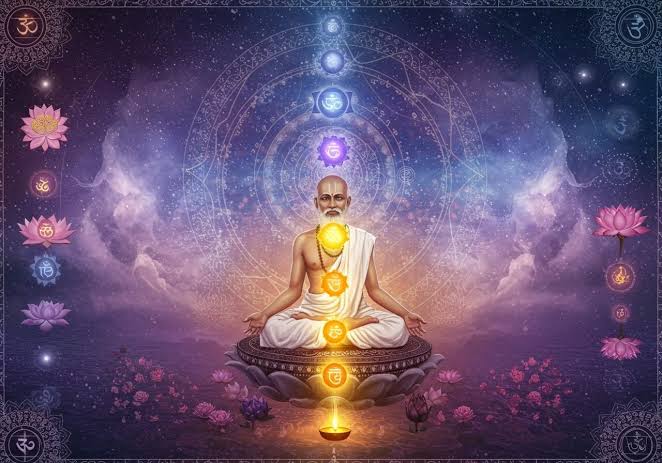
In Hindu philosophy, the recognition of impermanence does not lead to despair. It directs the mind toward satya, dharma, bhakti, vairāgya, and jñāna. The Bhāgavata does not describe cosmic dissolution to frighten the listener into helplessness. It uses the scale of cosmic collapse to reveal the urgency of spiritual clarity while life, breath, memory, and choice are still available.
This is where the teaching becomes personally relatable without losing its academic seriousness. Everyone has known smaller dissolutions: a body growing weaker, a household changing, a relationship ending, a career becoming uncertain, a familiar social order losing coherence, or a cherished assumption failing under pressure. The Purāṇic description of pralaya magnifies these experiences to the level of the cosmos, but the existential lesson is already present in ordinary life.
The verse also challenges modern arrogance. Technological systems can manage resources, predict weather, extend life, and improve comfort, but they cannot abolish dependence. Human civilization remains dependent on rain, soil, sunlight, atmosphere, ethical cooperation, and disciplined restraint. ŚB 11.3.9 therefore speaks with surprising relevance in an age of ecological anxiety, climate instability, and consumer excess.
Yet the verse should not be reduced to environmental commentary alone. Its primary field is metaphysical. The drought is not merely a crisis of water; it is a revelation of the fragile status of embodied existence. The Bhāgavata’s question is not simply how to survive a hostile world, but how to understand the self, the Supreme, and the purpose of human life before the world’s temporary supports disappear.
Within the broader chapter, King Nimi’s inquiry into māyā is central. Māyā does not merely mean illusion in the sense of something nonexistent. It refers to the power by which the temporary is experienced as ultimate, the dependent as independent, and the changing as permanently secure. ŚB 11.3.9 tears through this confusion by showing that even the grand architecture of the cosmos is subject to withdrawal.
From a Vedāntic perspective, this helps distinguish between the perishable and the imperishable. The body, senses, mind, and social world are real as experiences, but they are not absolute. Their reality is conditioned, dependent, and temporary. Spiritual wisdom begins when conditioned reality is respected without being worshipped as final.
Bhakti gives this recognition a devotional form. If time dissolves all material arrangements, then love directed toward the Supreme becomes the most intelligent use of human consciousness. Devotion is not escapism; it is the reorientation of the heart toward that which is not defeated by time. In the Bhāgavata tradition, remembering Bhagavān, hearing sacred teachings, serving with humility, and cultivating compassion become practical disciplines for crossing māyā.
The teaching also strengthens ethical life. When impermanence is understood, pride becomes less defensible. Hoarding loses its glamour. Cruelty appears irrational. Sectarian contempt becomes spiritually immature. The recognition that all embodied beings stand within time should deepen humility and widen compassion across communities, especially within the wider family of dharmic traditions.
This is essential for contemporary Hindu discourse. Scriptural study should not harden into superiority; it should mature into responsibility. A verse about cosmic dissolution should make society more truthful, less arrogant, and more disciplined. It should encourage reverence for temples, scriptures, gurus, family duties, ecological balance, and the shared moral fabric that sustains civilization.
ŚB 11.3.9 also has a pedagogical function. The teacher places the listener before an extreme image so that subtle attachment becomes visible. One may not be ready to contemplate the end of the cosmos every day, but the verse asks whether daily life is being organized around the eternal or the temporary. This question is uncomfortable because it is precise.
A disciplined reading avoids two mistakes. The first mistake is sensationalism, where the verse is treated as a date-setting apocalypse. The second mistake is dismissal, where ancient cosmology is brushed aside as irrelevant. A more serious approach recognizes the verse as a sophisticated theological statement about time, dependence, cosmic order, and liberation.
The Bhāgavata’s imagery of drought can also be read as a warning against spiritual dryness. A life may appear externally successful yet become inwardly barren when it lacks śravaṇa, kīrtana, study, service, gratitude, and self-restraint. In that sense, the verse describes not only the end of a cosmic cycle but also the condition of a heart separated from sacred remembrance.
His Holiness Prabodhananda Saraswati Swami Maharaj’s association with this teaching places the verse in the living guru-śiṣya tradition rather than leaving it as a distant textual artifact. In the dharmic world, scripture is not merely read; it is heard, contemplated, embodied, and transmitted. A single verse becomes transformative when it is received with humility and examined through practice.
The date 30-06-2026 may mark a particular discourse or publication context, but the teaching itself is timeless. The Bhāgavata speaks across centuries because its subject is not bound to a passing event. It addresses the human tendency to mistake temporary shelter for ultimate refuge, and it redirects attention toward the eternal foundation of spiritual life.
For seekers, the practical lesson is clear. Time should be respected. Dharma should be practiced before crisis makes practice difficult. Sacred knowledge should be approached with seriousness. Relationships should be purified through compassion and truth. The earth should be treated as a trust rather than a possession. Above all, consciousness should be trained to remember the divine even while fulfilling worldly duties.
ŚB 11.3.9 is therefore a powerful verse not because it terrifies, but because it clarifies. The drought, the burning sun, and the suffering of the three worlds all point to one central insight: the material order is temporary, but the opportunity for liberation is real. When this insight is received with humility, it becomes a source of resilience, unity, and spiritual awakening.
Inspired by this post on Dandavats.




Leave a Reply
You must be logged in to post a comment.