

Maharashtra Chief Minister Devendra Fadnavis’s announcement of an all-women committee to examine conversion-related complaints in the corporate sector marks a significant moment in the state’s evolving debate on religious freedom, workplace vulnerability, and legal safeguards. The proposed committee of women legislators is expected to study recent controversies and recommend reforms to the state’s anti-conversion framework, especially where allegations arise in private-sector employment settings. The development is not merely a political statement; it places women’s experiences, workplace power relations, and constitutional freedoms at the center of a sensitive legal discussion.
The issue requires careful handling because religious conversion in India sits at the intersection of conscience, community identity, gender justice, and public order. Any democratic legal reform must distinguish between a voluntary change of faith, which belongs to the domain of individual liberty, and conversion obtained through coercion, fraud, manipulation, undue influence, or material inducement. That distinction is essential for maintaining both religious freedom and social trust.
The proposed all-women committee is therefore important for two reasons. First, it signals that the Maharashtra Government wants a focused inquiry into complaints that may involve women employees, hierarchical pressure, or institutional influence. Second, it recognizes that women legislators may bring a more grounded understanding of workplace intimidation, emotional coercion, reputational risk, and complaint mechanisms. In a corporate environment, power is not always expressed through obvious threats; it may appear through career dependency, social isolation, selective favoritism, subtle pressure, or the fear of professional retaliation.
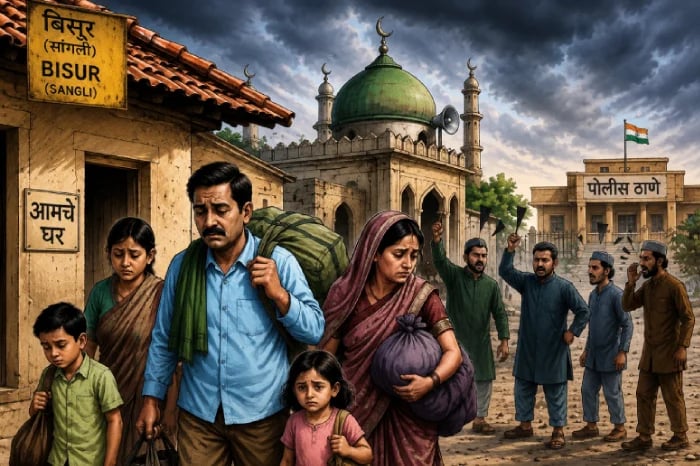
India’s constitutional framework protects freedom of conscience and the right to profess, practice, and propagate religion, subject to public order, morality, health, and other constitutional limitations. At the same time, the Supreme Court’s 1977 decision in Rev. Stanislaus v. State of Madhya Pradesh upheld the validity of state laws aimed at preventing conversions by force, fraud, or allurement. This legal background explains why several Indian states have enacted laws commonly described as Freedom of Religion Acts or anti-conversion laws. The challenge for Maharashtra is to ensure that any reform is precise, fair, and capable of protecting genuine victims without chilling legitimate religious expression or interfaith dialogue.
Recent reporting in 2026 indicated that Maharashtra moved toward a formal Freedom of Religion law aimed at preventing coercive or fraudulent conversions while asserting that voluntary religious choice would remain protected. Public discussion has included provisions such as notice procedures, penalties for unlawful conversion, enhanced punishment in cases involving women or vulnerable groups, and state obligations toward legal aid or rehabilitation. These reported elements make the proposed women-led review committee especially relevant, because legal rules written in general language often need practical scrutiny before they can work fairly in real workplaces.
The corporate sector adds a distinct layer of complexity. Unlike traditional religious settings, offices and workplaces are governed by employment contracts, human-resource policies, professional hierarchies, confidentiality obligations, and compliance systems. A conversion-related complaint in such an environment may involve questions of consent, privacy, discrimination, harassment, retaliation, and abuse of authority. A well-designed reform should therefore not treat every complaint as identical. It should ask whether there was coercion, whether the complainant had meaningful freedom to refuse, whether professional benefits or penalties were linked to religious conduct, and whether internal complaint channels functioned properly.
Women’s safety and dignity in the workplace already have a statutory framework through the POSH Act 2013, which addresses sexual harassment and mandates internal complaints committees in covered workplaces. Conversion-related allegations are not the same as sexual harassment, but both categories can involve power imbalance, fear of speaking up, and the need for confidential inquiry. Maharashtra’s committee could draw useful lessons from POSH compliance: clear definitions, time-bound procedures, trained committees, protection against retaliation, documentation standards, and safeguards against malicious or politically motivated misuse.
A technically sound reform should begin with definitions. Terms such as force, fraud, misrepresentation, allurement, undue influence, and institutional pressure must be drafted with legal clarity. Vague wording creates two dangers at once: genuine coercion may become hard to prove, while innocent conversations may be treated with suspicion. A modern law should make room for ordinary religious discussion, philosophical inquiry, interfaith friendship, spiritual reading, and voluntary association, while targeting conduct that compromises free consent.

The committee should also consider evidentiary standards. Workplace complaints often rely on messages, emails, witness testimony, meeting records, performance reviews, HR correspondence, and patterns of conduct. If the law is too dependent on dramatic proof, subtle coercion may go unaddressed. If it is too loose, reputations and livelihoods may be harmed without adequate verification. A balanced framework should require credible preliminary assessment, protection for complainants, protection for accused persons, and judicial oversight where criminal consequences are involved.
Another important question is institutional accountability. If a conversion-related complaint arises inside a company, the response should not depend only on police action after the damage is done. Corporations can be required to maintain neutral workplace policies that prohibit religious coercion, forced participation in religious activity, discriminatory employment decisions based on faith, and retaliatory conduct against employees who complain. At the same time, employers must avoid policing private belief or suppressing peaceful cultural and religious expression among employees.

This is where the all-women nature of the committee may matter in practice. Women in professional settings often face pressure in layered ways: as junior employees, as migrants in urban workforces, as first-generation professionals, as members of economically dependent families, or as individuals navigating both family expectations and workplace culture. A committee attentive to these realities can recommend reforms that are not merely punitive but preventive, educational, and institutionally enforceable.
For dharmic traditions such as Hinduism, Buddhism, Jainism, and Sikhism, the broader civilizational emphasis has often been on conscience, discipline, self-transformation, ethical conduct, and respect for multiple paths. A public conversation on religious conversion should therefore avoid hatred and collective blame. The proper focus is not hostility toward any community, but protection of voluntary faith, human dignity, and social harmony. A law that protects conscience must protect everyone’s conscience, including the right to remain within one’s inherited tradition, the right to study another tradition, and the right to make a sincere personal choice without pressure.
Political debates around anti-conversion laws often become polarized. Supporters argue that vulnerable individuals need protection from organized coercion, deceptive recruitment, and exploitation of economic distress. Critics warn that broad laws may be misused to harass minorities, interfere with interfaith relationships, or criminalize ordinary religious sharing. Both concerns deserve serious attention. Good legislation should not be judged by slogans, but by the precision of its drafting, the fairness of its procedures, the reliability of its safeguards, and its consistency with constitutional rights.
Maharashtra’s committee can strengthen the reform process by consulting women employees, corporate compliance officers, legal scholars, representatives of dharmic traditions, minority community voices, labor experts, HR professionals, police officials, and survivor-support organizations. Such consultation would help identify whether existing laws already cover certain misconduct, whether new provisions are necessary, and whether non-criminal remedies may be more effective in some cases. Criminal law is a powerful instrument, but it should be used with discipline and clarity.

A comprehensive recommendation may include several layers: a statutory definition of unlawful conversion in employment contexts, workplace policy obligations for larger companies, confidential reporting channels, protection from retaliation, mandatory training for HR and compliance teams, referral pathways for police complaints where coercion is credible, and penalties for both proven coercion and deliberate false complaints. It may also require anonymized annual reporting so the state can understand patterns without exposing private identities.
Data protection should be central to any reform. Religious belief is deeply personal, and workplace inquiries can easily become intrusive. Companies and authorities should collect only necessary information, maintain confidentiality, and avoid creating informal registers of employees’ faith identities. The goal should be to investigate specific misconduct, not to monitor belief. This distinction is crucial for a society that values pluralism and constitutional morality.
The committee must also consider how complaints are handled when they involve adults in consensual personal relationships. Interfaith relationships, friendships, and marriages cannot be presumed unlawful merely because religious change is alleged. The legal test must remain focused on consent and coercion. Adults must retain autonomy, while the state must intervene where there is deception, intimidation, confinement, exploitation, or institutional pressure. A mature legal system protects both freedom and vulnerability.
From a governance perspective, the announcement reflects a broader trend in Indian states: religious freedom laws are increasingly being evaluated not only as community-protection measures but also as instruments of administrative regulation. This raises questions about state capacity. Police officers, magistrates, labor departments, women’s commissions, and corporate compliance units would need training to distinguish lawful religious expression from unlawful coercion. Without training, even a well-written law may be implemented unevenly.

The reform process should therefore prioritize procedural fairness. Any accused person should receive notice of allegations, access to relevant evidence subject to privacy safeguards, and a meaningful opportunity to respond. Any complainant should receive protection, confidentiality, legal guidance, and freedom from pressure to withdraw a complaint. Institutions should be discouraged from informal settlements that bury serious allegations, especially where professional dependency or fear is involved.
In the long term, the healthiest answer is not law alone but a civic culture of mutual respect. Workplaces should be spaces where employees can carry their identity with dignity but cannot impose it on others through power. Spiritual traditions can be discussed, celebrated, and studied without turning professional environments into zones of pressure. This is consistent with India’s plural inheritance and with the dharmic principle that genuine conviction cannot be manufactured by fear, inducement, or manipulation.
Chief Minister Devendra Fadnavis’s proposed all-women committee will be judged by the seriousness of its process and the balance of its recommendations. If it produces narrowly drafted, evidence-based, constitutionally aware reforms, it could offer Maharashtra a stronger model for addressing conversion-related complaints in the corporate sector. If it becomes merely symbolic, the deeper problems of workplace vulnerability, religious mistrust, and procedural ambiguity will remain unresolved.
The most constructive path is clear: protect women, protect conscience, protect voluntary religious choice, and prevent coercion without encouraging suspicion between communities. In a diverse society, law must serve both liberty and harmony. Maharashtra’s all-women committee has an opportunity to move the debate beyond accusation and toward a disciplined framework rooted in justice, dignity, and constitutional balance.
Reference points for further context include Article 25 of the Constitution of India, the Supreme Court decision in Rev. Stanislaus v. State of Madhya Pradesh, contemporary reporting on Maharashtra’s Freedom of Religion legislation, and India’s established workplace compliance framework under the POSH Act 2013.
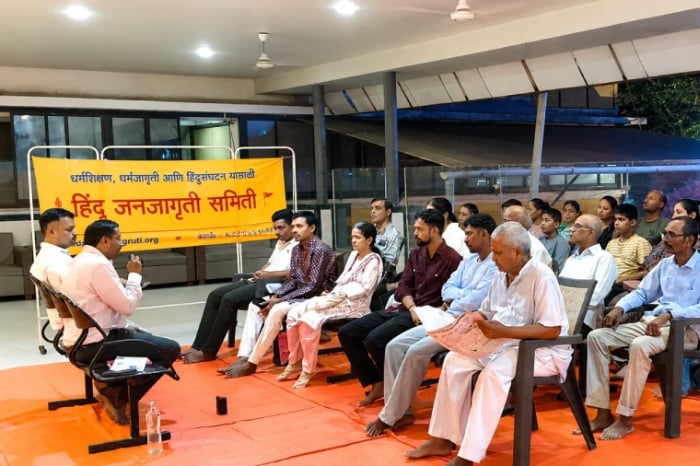
Inspired by this post on Hindu Jagruti Samiti.

Recent reporting in 2026 indicated that Maharashtra moved toward a formal Freedom of Religion law aimed at preventing coercive or fraudulent conversions while asserting that voluntary religious choice would remain protected. Public discussion has included provisions such as notice procedures, penalties for unlawful conversion, enhanced punishment in cases involving women or vulnerable groups, and state obligations toward legal aid or rehabilitation. These reported elements make the proposed women-led review committee especially relevant, because legal rules written in general language often need practical scrutiny before they can work fairly in real workplaces.
The corporate sector adds a distinct layer of complexity. Unlike traditional religious settings, offices and workplaces are governed by employment contracts, human-resource policies, professional hierarchies, confidentiality obligations, and compliance systems. A conversion-related complaint in such an environment may involve questions of consent, privacy, discrimination, harassment, retaliation, and abuse of authority. A well-designed reform should therefore not treat every complaint as identical. It should ask whether there was coercion, whether the complainant had meaningful freedom to refuse, whether professional benefits or penalties were linked to religious conduct, and whether internal complaint channels functioned properly.
Women’s safety and dignity in the workplace already have a statutory framework through the POSH Act 2013, which addresses sexual harassment and mandates internal complaints committees in covered workplaces. Conversion-related allegations are not the same as sexual harassment, but both categories can involve power imbalance, fear of speaking up, and the need for confidential inquiry. Maharashtra’s committee could draw useful lessons from POSH compliance: clear definitions, time-bound procedures, trained committees, protection against retaliation, documentation standards, and safeguards against malicious or politically motivated misuse.
A technically sound reform should begin with definitions. Terms such as force, fraud, misrepresentation, allurement, undue influence, and institutional pressure must be drafted with legal clarity. Vague wording creates two dangers at once: genuine coercion may become hard to prove, while innocent conversations may be treated with suspicion. A modern law should make room for ordinary religious discussion, philosophical inquiry, interfaith friendship, spiritual reading, and voluntary association, while targeting conduct that compromises free consent.
The committee should also consider evidentiary standards. Workplace complaints often rely on messages, emails, witness testimony, meeting records, performance reviews, HR correspondence, and patterns of conduct. If the law is too dependent on dramatic proof, subtle coercion may go unaddressed. If it is too loose, reputations and livelihoods may be harmed without adequate verification. A balanced framework should require credible preliminary assessment, protection for complainants, protection for accused persons, and judicial oversight where criminal consequences are involved.
Another important question is institutional accountability. If a conversion-related complaint arises inside a company, the response should not depend only on police action after the damage is done. Corporations can be required to maintain neutral workplace policies that prohibit religious coercion, forced participation in religious activity, discriminatory employment decisions based on faith, and retaliatory conduct against employees who complain. At the same time, employers must avoid policing private belief or suppressing peaceful cultural and religious expression among employees.
This is where the all-women nature of the committee may matter in practice. Women in professional settings often face pressure in layered ways: as junior employees, as migrants in urban workforces, as first-generation professionals, as members of economically dependent families, or as individuals navigating both family expectations and workplace culture. A committee attentive to these realities can recommend reforms that are not merely punitive but preventive, educational, and institutionally enforceable.
For dharmic traditions such as Hinduism, Buddhism, Jainism, and Sikhism, the broader civilizational emphasis has often been on conscience, discipline, self-transformation, ethical conduct, and respect for multiple paths. A public conversation on religious conversion should therefore avoid hatred and collective blame. The proper focus is not hostility toward any community, but protection of voluntary faith, human dignity, and social harmony. A law that protects conscience must protect everyone’s conscience, including the right to remain within one’s inherited tradition, the right to study another tradition, and the right to make a sincere personal choice without pressure.
Political debates around anti-conversion laws often become polarized. Supporters argue that vulnerable individuals need protection from organized coercion, deceptive recruitment, and exploitation of economic distress. Critics warn that broad laws may be misused to harass minorities, interfere with interfaith relationships, or criminalize ordinary religious sharing. Both concerns deserve serious attention. Good legislation should not be judged by slogans, but by the precision of its drafting, the fairness of its procedures, the reliability of its safeguards, and its consistency with constitutional rights.
Maharashtra’s committee can strengthen the reform process by consulting women employees, corporate compliance officers, legal scholars, representatives of dharmic traditions, minority community voices, labor experts, HR professionals, police officials, and survivor-support organizations. Such consultation would help identify whether existing laws already cover certain misconduct, whether new provisions are necessary, and whether non-criminal remedies may be more effective in some cases. Criminal law is a powerful instrument, but it should be used with discipline and clarity.
A comprehensive recommendation may include several layers: a statutory definition of unlawful conversion in employment contexts, workplace policy obligations for larger companies, confidential reporting channels, protection from retaliation, mandatory training for HR and compliance teams, referral pathways for police complaints where coercion is credible, and penalties for both proven coercion and deliberate false complaints. It may also require anonymized annual reporting so the state can understand patterns without exposing private identities.
Data protection should be central to any reform. Religious belief is deeply personal, and workplace inquiries can easily become intrusive. Companies and authorities should collect only necessary information, maintain confidentiality, and avoid creating informal registers of employees’ faith identities. The goal should be to investigate specific misconduct, not to monitor belief. This distinction is crucial for a society that values pluralism and constitutional morality.
The committee must also consider how complaints are handled when they involve adults in consensual personal relationships. Interfaith relationships, friendships, and marriages cannot be presumed unlawful merely because religious change is alleged. The legal test must remain focused on consent and coercion. Adults must retain autonomy, while the state must intervene where there is deception, intimidation, confinement, exploitation, or institutional pressure. A mature legal system protects both freedom and vulnerability.
From a governance perspective, the announcement reflects a broader trend in Indian states: religious freedom laws are increasingly being evaluated not only as community-protection measures but also as instruments of administrative regulation. This raises questions about state capacity. Police officers, magistrates, labor departments, women’s commissions, and corporate compliance units would need training to distinguish lawful religious expression from unlawful coercion. Without training, even a well-written law may be implemented unevenly.
The reform process should therefore prioritize procedural fairness. Any accused person should receive notice of allegations, access to relevant evidence subject to privacy safeguards, and a meaningful opportunity to respond. Any complainant should receive protection, confidentiality, legal guidance, and freedom from pressure to withdraw a complaint. Institutions should be discouraged from informal settlements that bury serious allegations, especially where professional dependency or fear is involved.
In the long term, the healthiest answer is not law alone but a civic culture of mutual respect. Workplaces should be spaces where employees can carry their identity with dignity but cannot impose it on others through power. Spiritual traditions can be discussed, celebrated, and studied without turning professional environments into zones of pressure. This is consistent with India’s plural inheritance and with the dharmic principle that genuine conviction cannot be manufactured by fear, inducement, or manipulation.
Chief Minister Devendra Fadnavis’s proposed all-women committee will be judged by the seriousness of its process and the balance of its recommendations. If it produces narrowly drafted, evidence-based, constitutionally aware reforms, it could offer Maharashtra a stronger model for addressing conversion-related complaints in the corporate sector. If it becomes merely symbolic, the deeper problems of workplace vulnerability, religious mistrust, and procedural ambiguity will remain unresolved.
The most constructive path is clear: protect women, protect conscience, protect voluntary religious choice, and prevent coercion without encouraging suspicion between communities. In a diverse society, law must serve both liberty and harmony. Maharashtra’s all-women committee has an opportunity to move the debate beyond accusation and toward a disciplined framework rooted in justice, dignity, and constitutional balance.
Reference points for further context include Article 25 of the Constitution of India, the Supreme Court decision in Rev. Stanislaus v. State of Madhya Pradesh, contemporary reporting on Maharashtra’s Freedom of Religion legislation, and India’s established workplace compliance framework under the POSH Act 2013.
Inspired by this post on Hindu Jagruti Samiti.







Leave a Reply
You must be logged in to post a comment.