

The reported embezzlement of offerings from the Shri Ram Mandir donation box raises a serious question that extends beyond one incident: how should Hindu temples protect the trust, devotion, and sacred intent carried by every contribution placed before the deity? The Hindu Janajagruti Samiti has demanded a swift government investigation and the strictest lawful action against those found guilty. Its demand reflects a wider concern among devotees that temple wealth is not merely financial property, but a sacred trust connected to worship, service, community welfare, and dharmic responsibility.
In any allegation of temple donation box embezzlement, accuracy and due process are essential. The available information states that offerings from the Shri Ram Mandir donation box were allegedly misappropriated, and that the Hindu Janajagruti Samiti has called for urgent investigation. Until a competent authority establishes guilt, the matter must be treated as an allegation requiring transparent inquiry. At the same time, the seriousness of the claim cannot be minimized, because misuse of temple offerings damages public confidence and wounds the emotional bond between devotees and religious institutions.

Temple donations occupy a distinctive place in Hindu society. A devotee may place money in a hundi or donation box with a personal prayer, a vow, gratitude after the fulfilment of a wish, or a quiet sense of duty toward seva. That act is often small in financial terms but immense in devotional meaning. For many families, especially those who visit temples across generations, the donation box represents continuity with ancestors, community memory, and faith in the sanctity of the temple space.

This is why allegations of embezzlement from a Ram Mandir donation box are felt so deeply. The issue is not only accounting irregularity. It is also the possible violation of a sacred relationship between the deity, the temple, the devotee, and the community. When offerings are misused, devotees may experience a sense of betrayal because their act of faith is diverted from its intended purpose. That emotional injury is difficult to measure, yet it is central to understanding the public demand for accountability.
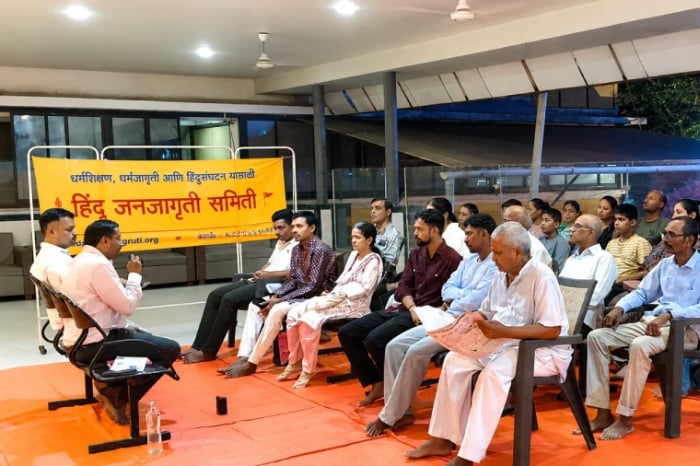
The Hindu Janajagruti Samiti’s position emphasizes two connected principles: strict investigation of wrongdoing and protection of temple sanctity through responsible administration. The organisation has argued that temple administration should be entrusted to genuine devotees so that corruption can be prevented and the spiritual purpose of temples can be preserved. This view is rooted in a broader concern that religious institutions require not only administrative efficiency but also inner commitment to dharma, seva, and reverence.

From a governance perspective, the central challenge is to combine devotion with institutional safeguards. Genuine devotion is important, but devotion alone cannot replace transparent systems. A temple that receives public offerings needs clear procedures for opening donation boxes, counting cash, recording receipts, depositing funds, auditing accounts, and reporting expenditure. These systems protect honest administrators as much as they deter dishonest conduct. They also ensure that temple resources are used for worship, maintenance, festivals, education, annadanam, cultural preservation, and welfare activities in accordance with the temple’s purpose.

Sound temple governance should begin with documented custody of donation boxes. The opening of a donation box should occur in the presence of authorized persons, preferably with written records, surveillance support where appropriate, and a clear chain of responsibility. Counting should be recorded, cross-verified, and deposited promptly into designated bank accounts. Periodic audits by qualified professionals can help identify discrepancies early. Public-facing summaries of income and expenditure, where legally and practically feasible, can strengthen trust without compromising security.
The demand for strict action must also be understood in legal and ethical terms. If an investigation proves embezzlement, the guilty should face consequences under applicable law. Such action is not vindictiveness; it is the restoration of public trust. A temple is sustained by collective faith, and faith requires assurance that sacred offerings are not treated casually. Accountability is therefore a form of protection for devotees, temple workers, priests, volunteers, and the wider Hindu community.

At the same time, public discussion should avoid reckless accusations against individuals or groups before facts are verified. A dharmic response requires firmness without unfairness. The principles of satya, nyaya, and dharma demand truth, justice, and righteous conduct. This means supporting investigation, preserving evidence, cooperating with authorities, and allowing lawful findings to determine responsibility. Responsible public discourse helps prevent the matter from becoming a source of rumor, polarization, or community mistrust.
The incident also invites a wider reflection on Hindu temple administration in contemporary India. Temples are not ordinary institutions. They are places of worship, repositories of art and architecture, centers of music and ritual, platforms for charity, and anchors of community identity. Their administration must therefore be spiritually sensitive and professionally competent. When either element is missing, problems emerge: devotion without procedure can become vulnerable to misuse, while procedure without reverence can become bureaucratic and detached from the temple’s sacred purpose.
The objective should not be to create suspicion around all temple administrations. Many priests, trustees, volunteers, and devotees serve temples with sincerity and personal sacrifice. The correct lesson is that even sincere institutions need strong systems because systems preserve integrity across time. Transparent governance prevents isolated misconduct from staining the reputation of an entire temple community. It also helps devotees continue their acts of offering with confidence.
For the unity of dharmic traditions, this issue carries relevance beyond one Hindu temple. Hinduism, Buddhism, Jainism, and Sikhism all place importance on ethical stewardship, self-discipline, truthfulness, and service. Whether one speaks of dana, seva, aparigraha, or collective responsibility, the common principle is clear: resources offered in faith must be handled with purity of intent and accountability in practice. Protecting sacred offerings is therefore not merely a sectarian concern; it is a shared dharmic responsibility.
There is also a practical lesson for devotees. Faith need not be passive. Devotees can respectfully seek transparency, participate in lawful temple committees where permitted, support audit-friendly practices, and encourage digital or receipted donations when available. Such engagement should be constructive rather than confrontational. A healthy temple culture is built when devotees, priests, trustees, and administrators understand themselves as custodians rather than owners of sacred resources.
In the Shri Ram Mandir donation box case, the immediate need is a swift, fair, and credible investigation. If wrongdoing is established, strict action should follow. If administrative weaknesses allowed the alleged misuse, those weaknesses should be corrected through better controls, audits, and oversight. The deeper goal is not only punishment after a breach, but prevention of future breaches through a culture of responsibility.
The sanctity of a temple is protected by ritual purity, spiritual discipline, ethical conduct, and institutional transparency. A donation box may appear to be a simple object, but it holds the trust of countless devotees. Preserving that trust is a sacred duty. The demand raised by the Hindu Janajagruti Samiti should therefore be read as part of a broader call for temple governance that is honest, devotee-centered, legally accountable, and rooted in dharma.
Inspired by this post on Hindu Jagruti Samiti.








Leave a Reply
You must be logged in to post a comment.