
In times of global uncertainty, spiritual traditions often become more than inherited customs; they become frameworks for understanding fear, impermanence, duty, and hope. The modern world carries impressive technological capacity, yet it also carries deep anxiety: armed conflict, terrorism, social fragmentation, ecological strain, economic insecurity, and a persistent sense that ordinary life can be disturbed without warning. Within such conditions, the teachings of the Bhagavad-gita and the broader Vedic tradition remain intellectually and spiritually significant because they address not only external danger but the inner restlessness that accompanies embodied life.
The central concern is not merely that the world is troubled, but that human beings often seek permanent security in a field that is, by its own nature, temporary. Families, careers, nations, institutions, and personal ambitions all have value, yet none can finally halt time, aging, loss, or death. This recognition is not meant to produce despair. In the Vedic view, it is the beginning of sober inquiry. A thoughtful person begins to ask what kind of happiness can endure, what kind of knowledge can guide life, and what kind of teacher can illuminate the path beyond repeated disappointment.
The Bhagavad-gita presents this inquiry through the dialogue between Lord Krishna and Arjuna. Spoken on the battlefield of Kurukshetra, the Gita is not an abstract philosophical text removed from crisis. It is a teaching delivered at a moment of moral pressure, emotional collapse, and civilizational consequence. This setting matters. The text does not ask the seeker to deny suffering; it asks the seeker to understand suffering in relation to the atma, dharma, karma, samsara, and the possibility of liberation through devotion, knowledge, and disciplined action.
One of the most direct verses on the instability of material existence appears in Bhagavad-gita 8.16:
abrahma-bhuvanal lokah
punar avartino’rjuna
mam upetya tu kaunteya
punar janma na vidyate
“From the highest planet in the material world down to the lowest, all are places of misery wherein repeated birth and death take place. But one who attains to My abode, O son of Kunti, never takes birth again.” (B.G. 8.16)
This verse condenses a major teaching of the Gita: material existence is marked by recurrence. The phrase “punar avartinah,” meaning “again returning,” points to samsara, the cycle of birth and death. From the Vedic perspective, the living being is not the temporary body but the atma, the conscious self, moving through embodied conditions according to karma and desire. The search for happiness becomes misdirected when the eternal self tries to find final satisfaction in temporary arrangements.
This does not mean that worldly responsibilities should be dismissed. The Bhagavad-gita never recommends careless escapism. Arjuna is not told to abandon dharma; he is instructed to act with spiritual understanding. The deeper point is that social duty, ethical action, family life, scholarship, and service become steadier when they are rooted in knowledge of the self and the Supreme. Without that grounding, even noble achievements remain vulnerable to fear, pride, grief, and impermanence.
Krishna’s statement in Bhagavad-gita 8.16 also offers a solution. The verse does not end with repeated birth and death; it ends with the possibility of attaining the divine abode, where there is no return to material bondage. In the devotional vocabulary of the Gaudiya Vaishnava tradition, this is often expressed as going “back home, back to Godhead.” The phrase carries both philosophical and emotional weight: spiritual life is not merely an escape from suffering, but a return to the soul’s original relationship with Krishna.
The practical question then arises: how does one move from philosophical recognition to lived spiritual progress? The Bhagavad-gita answers by emphasizing disciplined learning under a realized guide. In Bhagavad-gita 4.34, Krishna states:
tad viddhi pranipatena
pariprasnena sevaya
upadeksyanti te jnanam
jnaninas tattva-darsinah
“Just try to learn the truth by approaching a spiritual master. Inquire from him submissively and render service unto him. The self-realized soul can impart knowledge unto you because he has seen the truth.” (B.G. 4.34)
This verse is foundational for understanding the role of the guru in Hindu spirituality, especially within Vaishnava sampradaya traditions. It identifies three essential elements of discipleship: pranipata, humble approach; pariprasna, sincere inquiry; and seva, service. These three elements protect spiritual learning from two extremes: passive blind following and restless intellectual arrogance. The student is expected to inquire, but inquiry becomes fruitful when joined with humility and practical service.
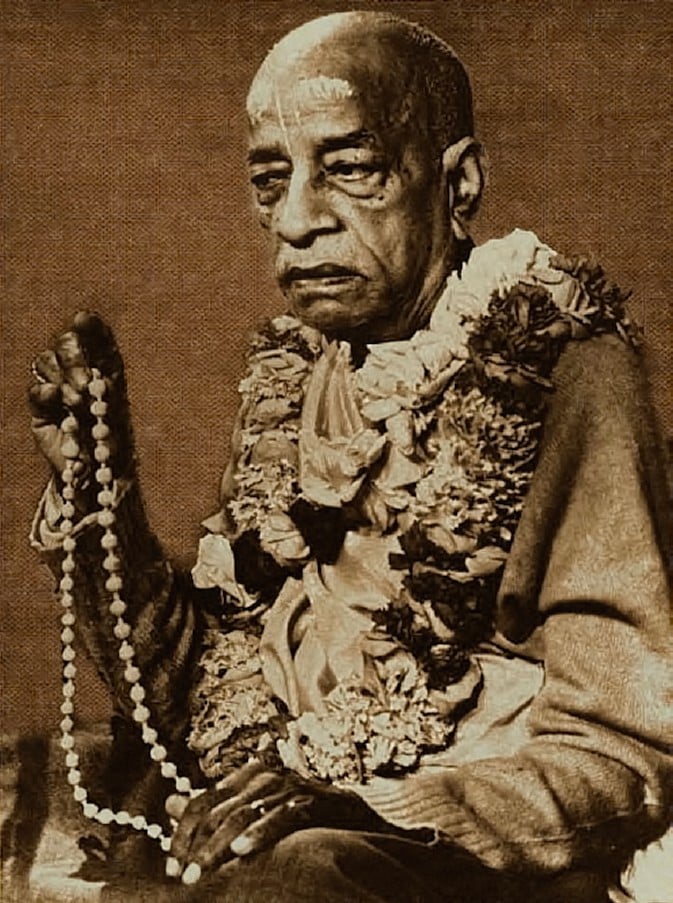
His Divine Grace A.C. Bhaktivedanta Swami Prabhupada, founder-acarya of the International Society for Krishna Consciousness and translator-commentator of Bhagavad-gita As It Is, repeatedly emphasized this balance. In his purport to Bhagavad-gita 4.34, he explains that the satisfaction of the self-realized spiritual master is central to advancement in spiritual life, and that submission, service, and inquiry form the proper combination for understanding. This teaching is not a call to irrational dependence. It is a disciplined model of learning in which the teacher has realized truth and the student approaches with seriousness.
The guru-shishya relationship has been central across many dharmic traditions. Hindu sampradayas, Buddhist lineages, Jain teacher traditions, and Sikh reverence for the Guru all demonstrate that sacred knowledge is not preserved only through texts, but also through living transmission, disciplined conduct, and embodied example. The specific theological meanings differ across traditions, yet the shared principle is clear: spiritual knowledge requires humility before truth, reverence for realized guidance, and a willingness to transform one’s life.
Within the Gaudiya Vaishnava understanding, the bona fide spiritual master is honored because he represents the disciplic succession, or parampara, descending from Krishna. Such honor is not directed toward an ordinary personality cult. It is directed toward the transparent representative who serves the Supreme Lord and transmits the teachings without adulteration. The guru is revered not as an independent object of worship, but as the servant of Krishna and the servant of the previous acaryas.
This distinction is essential for preserving both devotion and philosophical clarity. Reverence for the spiritual master does not replace reverence for Krishna; it deepens it. Worship of the pure devotee is meaningful because the pure devotee does not claim independent glory. The authentic acarya directs praise upward and backward through the parampara, acknowledging the mercy of his own spiritual master and the authority of the Vedic scriptures. This is why honoring Srila Prabhupada is understood by his followers as honoring the entire disciplic succession and ultimately honoring Lord Krishna.
Srila Prabhupada’s life offers a historically significant example of this principle. Born in 1896 in Calcutta and later instructed by his spiritual master, Srila Bhaktisiddhanta Sarasvati Thakura, Prabhupada carried the teachings of Gaudiya Vaishnavism beyond India at an advanced age. His work included translation, commentary, temple establishment, institutional leadership, public teaching, devotional practice, and the global distribution of Krishna consciousness. His mission became one of the most visible modern expressions of bhakti yoga in the world.
The force of his example lies not only in organizational achievement, but in alignment between teaching and conduct. In the classical meaning of acarya, the teacher instructs by personal example. Prabhupada’s daily discipline, early rising, writing, chanting, lecturing, traveling, and constant engagement in seva became a model for devotees seeking to understand practical bhakti. His life demonstrated that devotion is not sentiment alone; it is sustained discipline, scriptural fidelity, compassion, and tireless service.
At the same time, his writings repeatedly stress humility. In a letter dated June 1, 1968, Srila Prabhupada wrote: “A Krishna Consciousness person thinks always about himself as the lowest creature in the world, and the more one thinks like that he becomes elevated more and more. A Krishna Conscious person is never falsely puffed-up; he is satisfied with his humble position as the servant of the servant of the servant of Krishna.” (Srila Prabhupada letter, June 1, 1968)
This statement reflects a central feature of bhakti: spiritual advancement is measured not by domination, display, or self-importance, but by humility and service. The phrase “servant of the servant of the servant of Krishna” captures the devotional psychology of parampara. It situates the individual not at the center of religious life, but within a chain of service. For readers shaped by modern ideals of individual assertion, this can be challenging. Yet spiritually, it proposes a different freedom: freedom from the burden of egoic self-importance.
In the same letter, Prabhupada also wrote: “Personally I have no credit for myself, but I am trying to act as faithful servant of my predecessors and just presenting without any adulteration the message which I have received from my Spiritual Master. Similarly, if this message is presented by you all who have accepted me as the Spiritual Master, then all the people of the world may be benefited by receiving this transcendent message of Krishna Consciousness. Try to execute this mission wholeheartedly and faithfully, and all of you try to broadcast the message to your best capacity.”
The theological importance of this passage is considerable. Prabhupada does not present himself as an inventor of doctrine. He presents himself as a faithful transmitter. This matters because Vedic knowledge, in traditional understanding, is not validated by novelty alone. It is validated through scripture, realized teachers, and consistency with sadhu, sastra, and guru. Innovation may have a place in presentation, language, and outreach, but the core message must remain connected to the parampara.
This principle also helps explain why his books remain central to his legacy. Bhagavad-gita As It Is, Srimad-Bhagavatam, Sri Caitanya-caritamrta, and his many lectures, letters, and essays provide a systematic presentation of Krishna consciousness. They engage metaphysics, ethics, devotion, cosmology, social order, spiritual psychology, and the practical disciplines of bhakti yoga. For serious students, these works offer not only inspiration but a structured worldview grounded in Vaishnava theology.
The original reflection on honoring the pure devotee emphasizes that Srimad-Bhagavatam and Bhagavad-gita are to be understood through devotional service and through hearing from a pure devotee. This follows the traditional claim that sacred texts disclose their deepest meaning not simply through linguistic analysis, but through purified consciousness. Academic study can clarify history, language, and context, and such study has value. Yet from within the tradition, realization requires sadhana, humility, and service to the divine purpose of the text.
This point is especially relevant in an age of abundant information. Many people can access scriptures, commentaries, lectures, and translations instantly. Yet access is not the same as assimilation. A verse may be quoted without being understood; a doctrine may be debated without being practiced. The guru principle reminds spiritual communities that knowledge must be received in a mood that transforms character. The goal is not to accumulate religious vocabulary, but to become truthful, disciplined, compassionate, and God-centered.
Honoring Srila Prabhupada, therefore, is not merely a ceremonial act. It implies a willingness to study his teachings carefully, evaluate his claims in relation to the Bhagavad-gita and the Vaishnava tradition, and observe the discipline he asked his followers to adopt. It also requires recognizing his global contribution with fairness. He brought Sanskrit texts, kirtan, japa, prasadam, deity worship, Vaishnava philosophy, and the practice of bhakti yoga into public life across continents. For many people outside India, he became the first sustained point of contact with Krishna, the Gita, and devotional Hindu spirituality.
At the human level, this legacy carries emotional force. Many readers encounter the Gita during moments of grief, anxiety, illness, family uncertainty, or moral confusion. The idea that life is temporary is not an abstract proposition when one has witnessed loss. The teaching of samsara becomes deeply personal when the fragility of the body and relationships is no longer theoretical. In such moments, the presence of a realized teacher and a tested tradition can provide not simplistic comfort, but a disciplined way to face reality without losing spiritual hope.
Bhakti offers this hope through relationship. The soul is not presented as an isolated unit seeking private liberation alone, but as a conscious being capable of loving service to Krishna. Devotion, in this sense, restores meaning to ordinary life. Chanting, hearing, serving, cooking, teaching, studying, worshiping, and remembering become ways to reconnect the finite moment with the eternal. The guru guides this process by showing how daily life can be spiritualized without denying practical responsibility.
For a broader dharmic audience, the example of honoring the guru also supports unity among traditions without erasing differences. Hinduism, Buddhism, Jainism, and Sikhism each maintain distinctive teachings, disciplines, and metaphysical commitments. Yet all recognize, in different ways, that spiritual transformation requires more than ego-driven opinion. Reverence, discipline, ethical living, contemplative practice, and respect for realized beings remain common civilizational values. A culture that honors true spiritual teachers strengthens its capacity for humility, dialogue, and moral seriousness.
This is why honoring a pure devotee should not be dismissed as fanaticism when it is grounded in scripture, reasoned understanding, and lived virtue. Sectarianism arises when reverence becomes contempt for others or when loyalty abandons truth. Authentic guru-bhakti, however, produces humility, compassion, steadiness, and service. In Prabhupada’s own formulation, the devotee does not become falsely puffed-up; the devotee becomes the servant of the servant of Krishna.
The Bhagavad-gita’s instruction to approach a self-realized teacher remains one of its most practical teachings for the modern world. Without guidance, spiritual life can become either sentimental or speculative. With guidance, inquiry becomes disciplined, service becomes meaningful, and devotion becomes anchored in parampara. The teacher does not remove the responsibility of the student; rather, the teacher deepens it. The student must hear, question, serve, practice, and gradually internalize the teachings.
Srila Prabhupada’s relevance lies in this combination of fidelity and accessibility. He presented ancient Vedic wisdom in English, addressed modern doubts, built communities of practice, and insisted that Krishna consciousness was not restricted by nationality, caste, race, or social background. This universality is central to his appeal. Krishna is for everyone, and the path of bhakti, as he taught it, is open to anyone willing to hear sincerely, chant the holy names, live ethically, and serve with humility.
The world remains uncertain, and no generation can claim immunity from crisis. Yet the Vedic response is not paralysis. It is awakened inquiry. Bhagavad-gita 8.16 identifies the instability of material existence, while Bhagavad-gita 4.34 identifies the method of approaching truth through a realized spiritual master. Together, these teachings form a coherent path: recognize the limits of temporary existence, seek eternal shelter, approach the guru with humility and inquiry, and transform knowledge into devotional service.
To honor Srila Prabhupada is to honor that path as it was carried into the modern world by a dedicated acarya. It is to recognize the value of parampara, the discipline of bhakti yoga, the power of scripture, and the humility required for genuine spiritual advancement. Such honor is not merely historical remembrance. It is an invitation to study more deeply, live more carefully, and seek spiritual shelter beyond the fragile arrangements of material life.
All glories to Srila Prabhupada.
Inspired by this post on Dandavats.









Leave a Reply
You must be logged in to post a comment.