
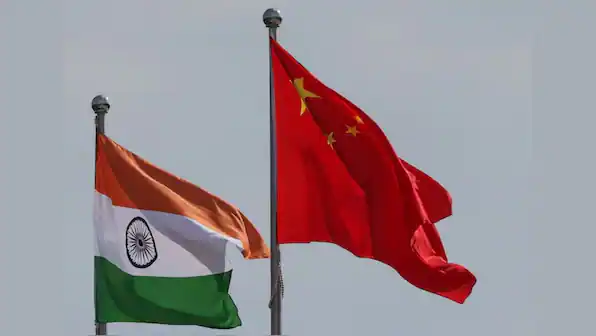
The debate over whether Bharat must ‘de-Americanise’ its statecraft has become sharper in a period of visible strain between New Delhi and Washington. Tariff pressure, disagreements over Russian crude, and American engagement with Pakistan have understandably revived old anxieties within India’s strategic community. Yet a serious assessment must begin with a disciplined distinction: reducing overdependence on the United States is one matter; romanticising accommodation with China is quite another.
Strategic autonomy has never meant emotional opposition to one power and sentimental attachment to another. For Bharat, it has meant the preservation of decision-making freedom in a world of shifting alignments, coercive economics, military pressure, and ideological narratives. The question, therefore, is not whether India should blindly follow Washington. It should not. The more important question is whether disappointment with America should push India into underestimating the structural challenge posed by China. It must not.
Indian foreign policy was never fully Americanised in the first place. The post-independence architecture built around non-alignment was designed precisely to prevent India from becoming an appendage of either Cold War bloc. The 1961 Belgrade conference, associated with Jawaharlal Nehru, Josip Broz Tito, Gamal Abdel Nasser, Sukarno, and Kwame Nkrumah, formalised a worldview that refused compulsory enrolment in superpower camps. Its moral language often exceeded its strategic discipline, but its central instinct was unmistakable: Bharat would not outsource its sovereignty.
The memory of 1971 remains especially important. When the Bangladesh Liberation War reached its decisive phase, Washington’s tilt toward Pakistan and the dispatch of Task Force 74, led by USS Enterprise, into the Bay of Bengal left a lasting imprint on India’s strategic mind. New Delhi’s answer was not submission to America but the Indo-Soviet Treaty of Peace, Friendship and Cooperation signed in August 1971. That treaty was not an abandonment of autonomy; it was a hard-nosed response to an immediate geopolitical threat.
This historical record matters because it challenges the idea that Bharat has somehow become an American strategic derivative. India endured American pressure after the 1974 nuclear test, faced sanctions after Pokhran-II in 1998, and still retained its nuclear doctrine, defence posture, and independent diplomatic voice. The later India-US civil nuclear agreement, expanding defence cooperation, technology partnerships, and the Indo-Pacific convergence were not signs of surrender. They reflected overlapping interests at a particular historical moment.
That convergence has limits, and those limits should be clearly understood. The United States remains a great power driven by its own electoral cycles, commercial lobbies, alliance commitments, and global priorities. It can pressure India on trade, disagree on energy purchases, revive tactical dealings with Pakistan, and apply moral vocabulary selectively. A mature Indian state cannot treat American partnership as sentimental friendship. It must treat it as a negotiated relationship among unequal but increasingly convergent powers.
At the same time, the American problem is different in kind from the Chinese problem. The United States can be frustrating, transactional, and intrusive. China is a direct continental adversary with unresolved territorial claims, a history of military conflict with India, a hardened posture along the Line of Actual Control, and deep strategic coordination with Pakistan. The difference is not merely rhetorical. It is geographic, military, economic, and civilisational in consequence.
The 1962 war cannot be reduced to an archival grievance. It created a security reality that still shapes the Himalayan frontier. Later confrontations at Nathu La and Cho La in 1967, the Sumdorong Chu crisis of the 1980s, the Doklam standoff in 2017, and the violent Galwan clash in 2020 show that the border is not a symbolic dispute. It is an active theatre of coercion, infrastructure competition, surveillance, and military signalling.
For ordinary citizens, these events are not abstract diplomatic episodes. They are connected to the sacrifice of soldiers, the anxiety of border communities, and the emotional weight of national security. Bharat’s public memory carries the pain of repeated strategic underestimation. Any call for a soft reset with Beijing must therefore pass a demanding test: does it reduce coercion, restore trust, and protect sovereignty, or does it merely provide the appearance of calm while facts on the ground harden against India?
China’s challenge is also embedded in the China-Pakistan strategic axis. The China-Pakistan Economic Corridor passes through Pakistan-occupied territory claimed by India, making it not just an infrastructure project but a sovereignty issue. Beijing’s long-standing military, nuclear, diplomatic, and economic support to Pakistan complicates every Indian security calculation. When India examines China, it cannot examine Beijing in isolation from Rawalpindi and Islamabad.
The Belt and Road Initiative illustrates the broader pattern. Across Asia, Africa, and the Indian Ocean region, China has used infrastructure finance, ports, industrial corridors, digital systems, and political access to widen its influence. Not every Chinese project is a trap, and simplistic slogans can weaken analysis. Yet the pattern of leverage through debt, dependency, standards, and strategic access is real enough to demand caution. For Bharat, the Indian Ocean is not a distant theatre; it is the maritime extension of national security.
Economic dependence deepens the problem. India imports significant categories of manufactured goods, electronics components, active pharmaceutical ingredients, telecom equipment, solar modules, and industrial inputs from China. This trade imbalance is not merely a commercial statistic. It has strategic implications because supply chains can become instruments of pressure during crises. A serious de-Americanisation agenda must therefore include de-risking from China, not deepening vulnerability to it.
Here the vocabulary of self-reliance requires precision. Atmanirbhar Bharat cannot mean autarky, nor can it mean performative rejection of global markets. It should mean resilient production, diversified supply chains, technological depth, defence indigenisation, trusted partnerships, and the ability to absorb external shocks. In this sense, strategic autonomy is built in factories, laboratories, ports, universities, financial systems, semiconductor ecosystems, and military logistics networks, not merely in diplomatic speeches.
De-Americanisation, if it is to be useful, should mean de-risking India’s exposure to American unpredictability. It should not mean discarding the practical benefits of India-US cooperation in defence technology, intelligence sharing, maritime domain awareness, higher education, digital innovation, clean energy, and diaspora networks. The United States is not a civilisational guardian of Bharat’s interests, but it is a major partner in areas where Chinese power directly pressures India’s room for manoeuvre.
The Indo-Pacific framework is a case in point. India does not need to become a treaty ally of the United States to recognise the value of balancing power in the maritime commons. Cooperation with the United States, Japan, Australia, France, ASEAN states, and other partners can strengthen India’s ability to protect sea lanes, deter coercion, and support a rules-based regional order. Such cooperation should be guided by Indian priorities, not alliance reflexes.
There is also a deeper conceptual issue. Anti-American rhetoric can sometimes masquerade as strategic depth, but it may simply reproduce another dependency in reverse. If the mind is still organised around resentment toward the West, it remains externally defined. Bharat’s civilisational confidence should not require reflexive hostility to America or romantic indulgence toward China. It should rest on a clear-eyed reading of power, geography, culture, economics, and historical experience.
This is especially important for a society rooted in diverse dharmic traditions. Hinduism, Buddhism, Jainism, and Sikhism have preserved distinct philosophical paths while sharing a civilisational respect for disciplined inquiry, self-mastery, ethical action, and plural ways of seeking truth. That inheritance encourages neither servility nor hatred. It encourages viveka, the capacity to discriminate between appearances and realities. In foreign policy, viveka means refusing both naïve dependence and naïve appeasement.
China should be studied with seriousness, not caricatured. Chinese civilisation is ancient, sophisticated, and worthy of scholarly respect. The issue for Indian statecraft is not Chinese culture or the Chinese people. The issue is the conduct of the Chinese Communist Party-led state: territorial pressure, opaque decision-making, civil-military fusion, aggressive infrastructure along disputed borders, cyber and information operations, and the use of economic leverage to shape political choices. Respect for civilisation cannot become blindness toward state behaviour.
Likewise, criticism of American policy should not collapse into rejection of all engagement with the West. Bharat has benefited from technology flows, education links, capital markets, entrepreneurial networks, and democratic exchanges. Millions of people of Indian origin in the United States contribute to both societies. These realities do not erase disagreements, but they make simplistic disengagement impractical. Statecraft must be judged by outcomes, not emotional satisfaction.
The most durable Indian approach is multi-vector diplomacy. Bharat should engage the United States without dependence, cooperate with Russia without nostalgia, negotiate with China without illusion, strengthen ties with Japan and Europe without imitation, deepen neighbourhood diplomacy without condescension, and build Global South partnerships without rhetorical excess. This is not fence-sitting. It is the disciplined management of national interest in a fragmented world order.
Such a policy requires domestic strength. No foreign policy can remain autonomous if the economy is brittle, the military-industrial base is shallow, the education system underproduces technical excellence, or political debate rewards slogans over strategic literacy. The real foundation of autonomy is internal capacity. Bharat must invest in advanced manufacturing, frontier technologies, energy security, rare earth processing, defence research, cyber resilience, maritime infrastructure, and institutional competence.
India must also improve its China expertise. Serious policy requires language training, economic intelligence, border studies, military analysis, technology assessment, and cultural literacy. It is not enough to oscillate between fear and admiration. A country of Bharat’s scale should produce deep scholarship on Chinese politics, provincial economies, military doctrine, supply chains, elite politics, and strategic culture. Without knowledge, autonomy becomes a slogan; with knowledge, it becomes policy.
The same applies to America. India should understand the United States as a complex system: federal institutions, Congress, courts, business interests, state governments, diaspora politics, universities, defence industry, technology firms, and electoral pressures. A transactional America is not necessarily an anti-India America, but it can become unreliable when Indian policy assumes permanence where only interests exist. The answer is not bitterness; the answer is diversified leverage.
In practical terms, Bharat should pursue five linked objectives. First, it should keep diplomatic channels open with Beijing while insisting that peace on the border is the foundation of normal relations. Second, it should reduce critical supply chain dependence on China through domestic production and trusted partners. Third, it should continue defence and technology cooperation with the United States where interests align. Fourth, it should strengthen regional partnerships in South Asia and the Indian Ocean. Fifth, it should build enough internal capacity that external pressure becomes less effective over time.
The danger in the current debate is not the call for autonomy. That call is necessary. The danger is the assumption that autonomy from America requires accommodation with China on Beijing’s terms. A sovereign Bharat should not replace one imagined dependency with another, especially when the second carries a direct territorial and military challenge. The cure for overreliance is capability, not capitulation.
Therefore, the wiser formulation is not de-Americanisation as an emotional project, but Indianisation of statecraft as a strategic project. Indianisation means placing Bharat’s civilisational confidence, constitutional sovereignty, economic resilience, and security interests at the centre of every external relationship. It means dealing with America, China, Russia, Europe, Japan, West Asia, ASEAN, Africa, and the neighbourhood through the same test: does this relationship expand India’s freedom of action?
In the final analysis, Bharat need not romanticise any power. Not America, not China, not Russia, and not any coalition that promises easy answers. The discipline of Indian foreign policy lies in remembering history without becoming trapped by it, engaging partners without surrendering judgment, and seeking peace without ignoring coercion. Strategic autonomy is not a mood. It is a demanding national practice.
Inspired by this post on Hindu Post.
