
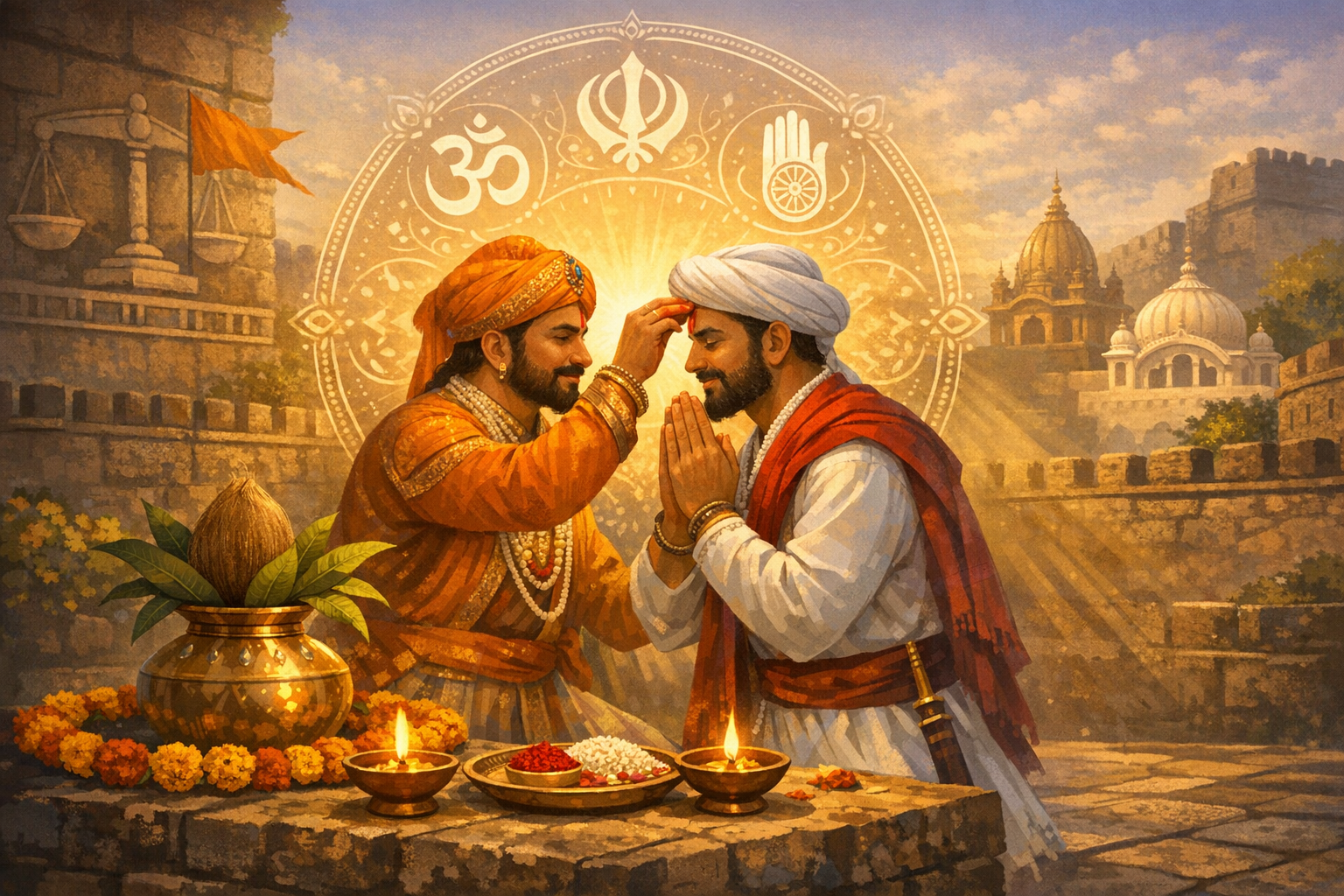
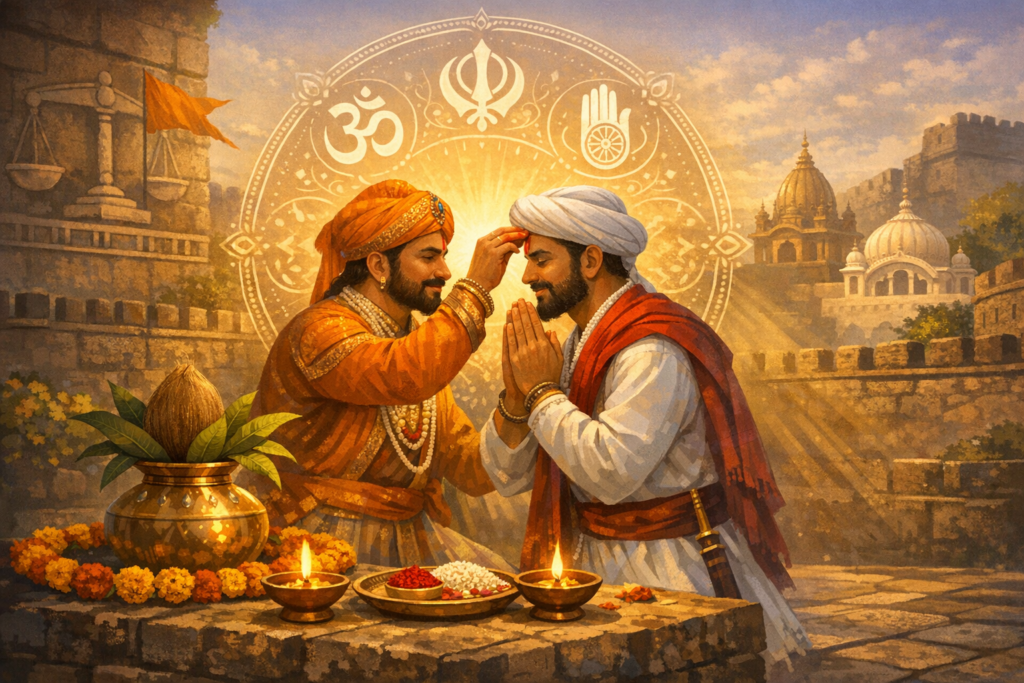
Hindu Janajagruti Samiti (HJS) has appealed to Hindu organisations across India to observe 19 June as ‘National Ghar Wapsi Diwas’, marking 350 years since Chhatrapati Shivaji Maharaj welcomed Netaji Palkar back into the Hindu fold through Shuddhikaran. Beyond the commemoration of a singular historical episode, the observance invites reflection on religious freedom, community reintegration, and the shared ethical foundations that bind the dharmic traditions of Hinduism, Buddhism, Jainism, and Sikhism.
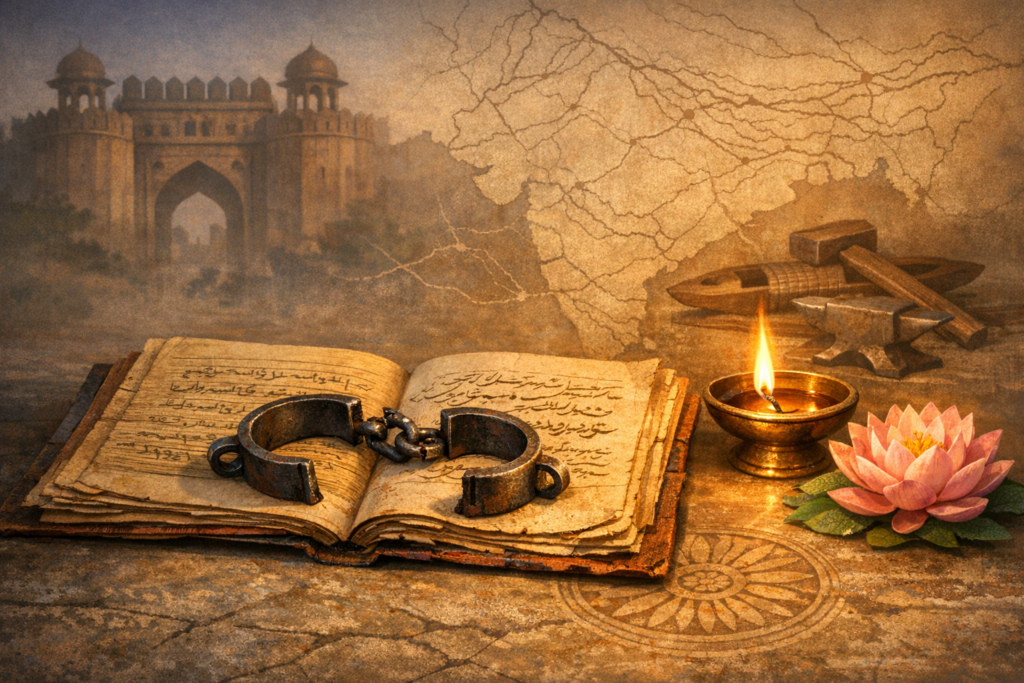
In the tumultuous politics of the seventeenth-century Deccan, Chhatrapati Shivaji Maharaj consolidated Maratha statecraft while navigating complex relations with the Mughal Empire. Netaji Palkar—renowned as a senior Maratha commander—figures prominently in this milieu. Historical narratives widely hold that Palkar was, for a time, separated from his natal faith under duress and later returned, a turn that was ritually acknowledged through Shuddhikaran, symbolising both personal conscience and communal acceptance.
While the details of Palkar’s captivity and return are reported with minor variations across chronicles, the thematic significance is clear: re-entry into one’s community, when freely chosen, has deep roots in Indic jurisprudence and custom. As interpreted in many Smritis and Dharmashastric discussions, ritual restitution (prāyaścitta) and community readmission (śuddhi) were anchored in the restoration of social harmony, not in stigma.
Ritually, Shuddhikaran in Hindu traditions has been linked with concepts such as prāyaścitta and, in older Vedic discourse, vratyastoma—frameworks that discuss purification, expiation, and a return to normative communal life. Later medieval digests also deliberated on Mlēccita-śuddhih, reflecting the ongoing jurisprudential engagement with the challenges of conversion, coercion, and reintegration. The core principle is restorative: the individual’s agency leads, and the community recognises.
Comparable pathways exist across the dharmic spectrum. In Sikh practice, Amrit Sanchar (Khande di Pahul) initiates or renews one’s vows to Sikh tenets and the Khalsa code. Jain traditions emphasise pratikraman and prāyaścitta as disciplined, ethical returns to right conduct (samyak-cāritra). Buddhist frameworks, whether through taking the Three Refuges (Buddha, Dhamma, Sangha) or renewed upāsaka/upāsikā vows, similarly centre volition, ethical self-cultivation, and sangha participation. In each case, conscience—not compulsion—animates the journey, and reintegration is framed by compassion, truthfulness, and responsibility.
Marking 19 June as ‘National Ghar Wapsi Diwas’ thus acquires contemporary relevance on several planes. Historically, it recalls Maratha history and the legacy of Chhatrapati Shivaji Maharaj’s inclusive statecraft. Ethically, it foregrounds the voluntary nature of any “return” and the dignity of individual choice. Socially, it encourages communities to support seekers with empathy, learning, and lawful conduct—nurturing bonds that transcend labels and heal ruptures.
The Indian constitutional framework provides the relevant normative horizon. Article 25 guarantees freedom of conscience and the right to freely profess, practise, and propagate religion, subject to public order, morality, health, and other fundamental rights. Jurisprudence has underscored that propagation cannot entail coercion, fraud, or undue inducement, and several Indian states maintain Freedom of Religion (anti-conversion) statutes that criminalise such abuses. Within this landscape, ghar wapsi—when genuinely voluntary and respectful of due process—falls squarely under freedom of conscience.
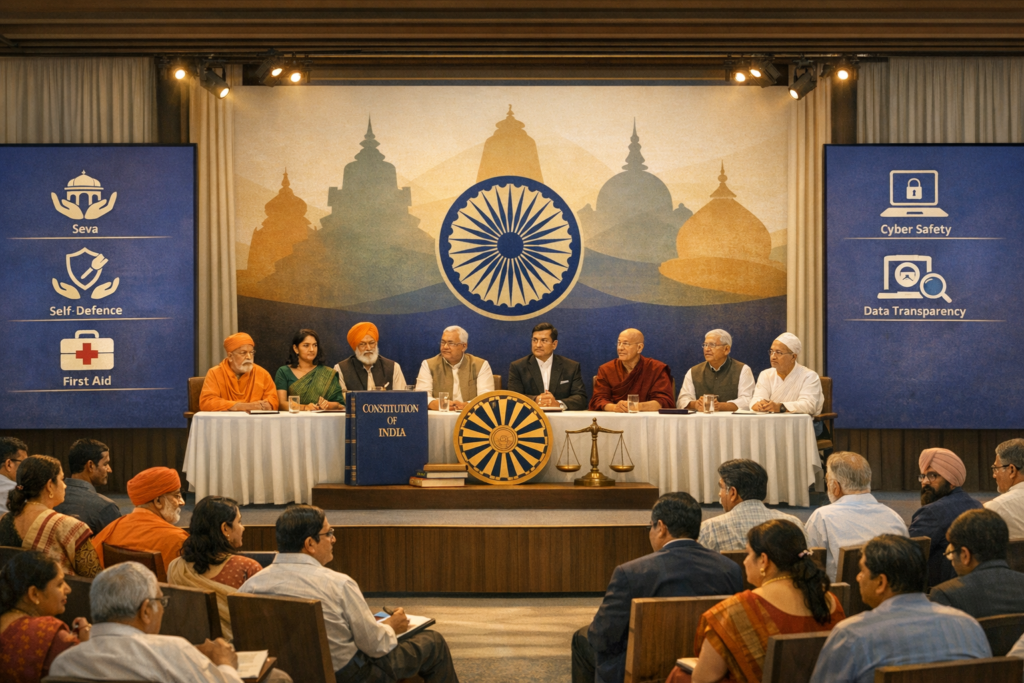
Practical observance on 19 June can be framed around education, service, and solidarity. Historical seminars on Maratha sources and scholarly works (including standard narratives used in studies of seventeenth-century Deccan polity) can be paired with reading circles on dharmic ethics—ahimsa, satya, seva, and karuṇā—that guide conduct in plural societies. Community service (seva) initiatives—health camps, river or temple clean-ups, food distribution—translate ideals into shared action. Dialogues among Hindus, Buddhists, Jains, and Sikhs can highlight both common ground and the unique contributions of each path, reinforcing the spirit of Vasudhaiva Kutumbakam.
Ethical safeguards are pivotal. Communities that choose to support ghar wapsi should maintain clear protocols: screening for coercion, ensuring informed consent, providing patient counselling and spiritual mentorship, and documenting processes in line with local law. Zero tolerance for pressure, inducement, or triumphalism protects the dignity of all involved and aligns practice with constitutional and dharmic duty.
From a historiographical standpoint, the Shivaji–Palkar episode is preserved through a mosaic of sources—Maratha bakhars and later scholarly syntheses—each with its own conventions and possible biases. Standard academic practice therefore triangulates narratives, recognising where accounts converge, and carefully qualifying contestations. This critical method strengthens—not weakens—the commemoration by anchoring public memory in rigorous, transparent inquiry.
Sociologically, ghar wapsi can be understood as identity repair and the reknitting of social ties. For many families, such returns arise from long reflection—sometimes after experiences of isolation or ideological fatigue—and can be profoundly healing when approached with humility and mutual respect. In the Indic ethos, the journey back to one’s dharma is not a spectacle but a quiet affirmation of interior conviction supported by a compassionate community.
The unifying purpose of ‘National Ghar Wapsi Diwas’ must remain constructive and inclusive. Messaging that honours Chhatrapati Shivaji Maharaj, recognises Netaji Palkar’s return, and underscores inter-dharmic harmony can uplift civic culture. Music, literature, and art inspired by the period, alongside temple and gurudwara sabhas and lay Buddhist or Jain study meets, can help younger generations encounter history not as polemic but as shared heritage and living responsibility.
Ultimately, the day’s power lies in its alignment with dharmic first principles and constitutional promise: freedom of conscience, non-violence in word and deed, and respect for diverse paths to truth. Remembering Shuddhikaran in the Shivaji–Palkar narrative is not about exclusion; it is about the ethical return to one’s chosen way of life and the community’s embrace of that choice. Observed in this spirit, 19 June becomes an occasion to strengthen harmony, renew commitment to righteous conduct, and celebrate the civilisational breadth of India’s dharmic traditions.
Inspired by this post on Hindu Jagruti Samiti.




Leave a Reply
You must be logged in to post a comment.