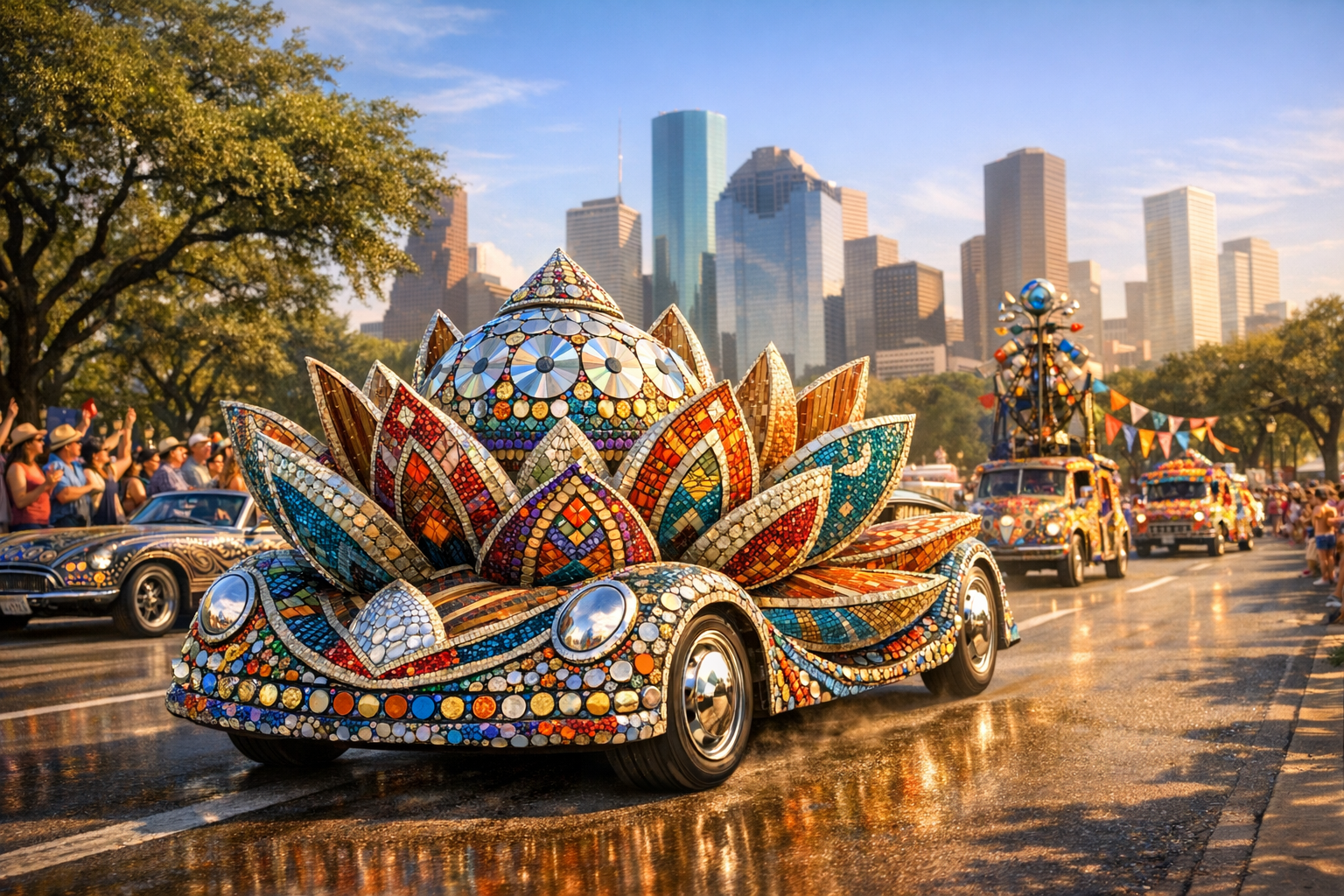
The Houston Art Car Parade has matured from a bold civic experiment into a signature cultural celebration, reaffirming each year that public art can move, mesmerize, and unite. The most recent edition once again demonstrated how community engagement, cultural heritage, and interfaith goodwill can converge through the language of visionary vehiclescars, trucks, and trailers transformed into rolling sculptures that turn the city’s streets into a living museum.
The parade’s origin story traces to 1986, when a well-worn vehicle donated to a Houston arts organization inspired the idea of converting an everyday car into a mobile artwork. That spark yielded a first gathering of eleven art cars, followed by forty the next yearan early sign that the concept resonated with artists, fabricators, and onlookers. From that modest start, the Houston Art Car Parade has grown into a widely recognized platform for participatory, community-centered artmaking.
Anchored institutionally by the Orange Show Center for Visionary Art, the event channels grassroots creativity into an accessible public forum. The Center’s stewardship has provided continuity, curatorial rigor, and educational outreach, ensuring that the parade remains as much about people and place as it is about the vehicles themselves. The collaboration between artists, volunteers, civic partners, and local businesses has become a model of community engagement in urban cultural programming.
Each spring, Houston’s downtown-and-park corridortraditionally including stretches along Allen Parkwaybecomes a procession route and gathering space. Families, students, and visitors line the sidewalks for an experience that blends the atmosphere of cultural festivities with the intimacy of neighborhood parades. The result strengthens civic pride, reinforces Houston’s reputation for artistic innovation, and encourages sustained community participation.
The Houston Art Car Weekend typically extends beyond the parade itself. A signature outreach component, often known as “Main Street Drag,” brings selected art cars to schools, hospitals, and community centers on the eve of the event. This direct contact demystifies the creative process, invites young people into STEAM-oriented conversations, and transforms spectators into co-creators by showing that materials, mechanics, and imagination can productively intersect.
As a public ritual of making and meaning, the parade celebrates unity in diversity. Artists and community groups bring forward visual narratives that reflect Houston’s extraordinary cultural tapestry. The gathering space is intentionally porousneighbors, visitors, and participants meet at street level, exchange stories, and recognize common aspirations. The effect is an uncontrived form of interfaith dialogue, where aesthetics and hospitality, rather than debate, cultivate mutual respect.
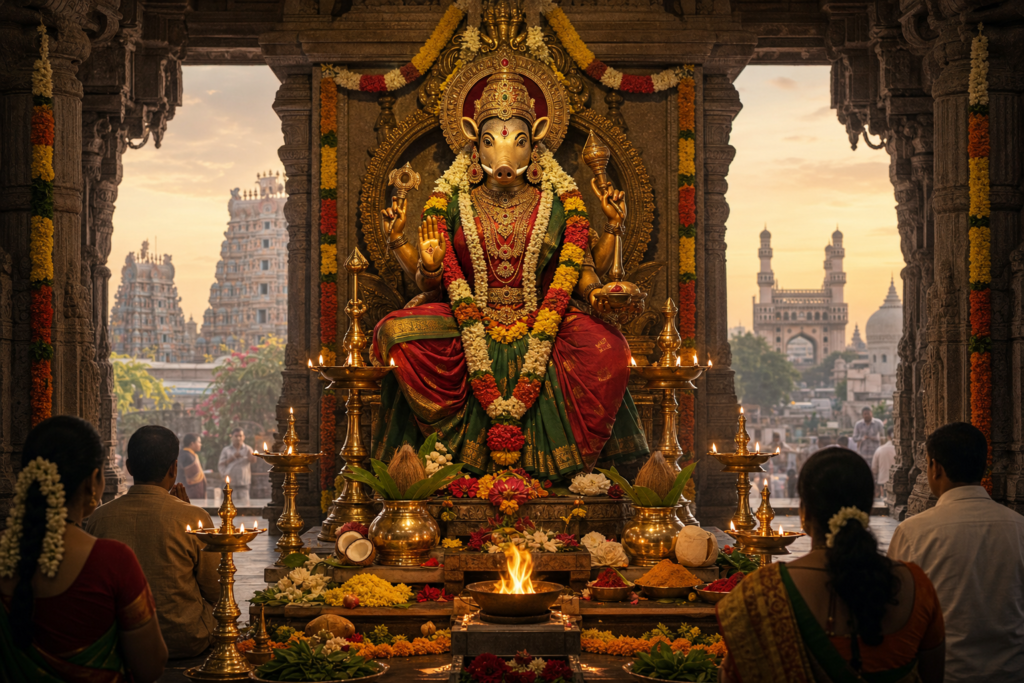
This ethos naturally resonates with dharmic traditionsHinduism, Buddhism, Jainism, and Sikhismwhose shared values include ahimsa (non-harm), seva (service), dana (generosity), karuna (compassion), and maitri (friendship). The parade’s volunteerism, care for public space, and celebration of plural voices parallel time-honored processional cultures and community service practices. In this sense, the event’s cultural inclusivity and collaborative spirit actively model social harmony while leaving ample space for each tradition’s distinct identity.
Environmental sustainability is another quiet triumph of the art car movement. Many entries feature upcycling and creative reusebottle caps, CDs, fabric, wood offcuts, wheel covers, and found metalreimagined as ornament and structure. This practice reduces waste streams, extends material life cycles, and provides a tangible lesson in resourcefulness. It also aligns with dharmic sensibilities that honor stewardship of the natural world and responsible consumption.
From a technical perspective, robust art car construction balances visual ambition with roadworthy safety. Common methods include lightweight subframes, marine-grade fasteners, and weather-resistant adhesives and coatings. Builders prioritize weight distribution (keeping mass low and centered), structural reinforcement at mounting points, and non-obstructed airflow for engine cooling. Electrical add-ons are typically fused and isolated from vehicle systems, and drivetrain, braking, and steering integrity remain non-negotiable.
Best practices emphasize driver visibility and situational awareness, requiring 360-degree sightlines through windows, mirrors, or cameras. Attachment systems should be redundant (mechanical plus adhesive where appropriate), and overhangs or kinetic elements are evaluated for sway, wind loading, and pedestrian clearance. Interior heat management, emergency egress, and the placement of a rated fire extinguisher are widely recognized safety norms in mobile art contexts.
Compliance with Texas transportation regulations provides an additional layer of assurance. Modifications should not obscure license plates or mandatory lighting, and may not mimic restricted emergency signals. Height and width must suit permitted corridors and clearances; sound amplification follows event guidelines and municipal ordinances. These standards ensure that even the most imaginative entries remain respectful of shared roads and public safety.
The curatorial ecosystem around the parade accommodates a spectrum of formats: daily drivers ornamented with sculptural surfaces, trailered works with architectural complexity, lowrider and custom builds that showcase mechanical artistry, and community projects that emerge from classrooms, makerspaces, and local organizations. This diversity cultivates learning loops across skill levels, where novice teams glean techniques from veteran builders and reciprocate with fresh ideas.
Behind the scenes, volunteer coordination is a feat of civic choreography. Route marshals, staging teams, medical staff, information stewards, and waste-management crews sustain the event’s flow and accessibility. Family zones, ADA viewing areas, and clear wayfinding create a welcoming environment, while security and communications protocols maintain continuity across a large, dynamic footprint.
Digital storytelling now amplifies the parade’s reach. Maker diaries, build timelapses, and oral histories circulate alongside archival photographs, allowing audiences to trace a vehicle’s evolution from concept sketch to street-ready sculpture. This open knowledge culture encourages replication and adaptation, accelerating the spread of practical skills and the ethic of collaborative creation.
Educational impacts are measurable in classrooms and studios where art car techniques migrate into STEAM curricula. Students encounter applied geometry, materials science, and electrical basics through the irresistible prompt of “How can we make this move?” At the same time, the parade strengthens intangible cultural heritageshared memories, neighborhood pride, and intergenerational mentorshipby embedding learning within a lively, public celebration.
Taken together, these attributes explain why the Houston Art Car Parade consistently succeeds: it is accessible, technically rigorous, environmentally mindful, and deeply humane. It invites communitiesincluding those shaped by dharmic traditionsto contribute labor, imagination, and service in ways that honor both personal creativity and the common good. In doing so, it reinforces unity in diversity not as slogan, but as lived civic experience.
From the first eleven entries in 1986 to today’s expansive, citywide celebration, the parade’s arc shows how visionary art can become a durable civic institution. With each passing year, Houston’s streets remind onlookers that a shared future is built not only by moving people and goods, but also by moving hearts and mindsone art car at a time.
Inspired by this post on Dandavats.