RSS Chief Mohan Bhagwat’s statement, “India is already a Hindu Rashtra, no formal declaration needed,” has catalyzed a high-stakes debate across Bharat about identity, statecraft, and the practical meaning of dharmic values in public life. The conversation is not merely semantic; it carries implications for constitutional governance, social cohesion, and the long-term project of civilizational renewal in an inclusive and lawful manner.
Careful analysis benefits from a basic distinction often lost in public discourse: Rashtra (civilization/nation) and Rajya (state/government) are not identical. Rashtra signals a cultural-civilizational continuumBharat’s unbroken heritage of Sanatana Dharma, Buddhism, Jainism, and Sikhismwhile Rajya denotes the constitutional and institutional machinery that governs a modern republic. Confusing these terms risks either overreach or complacency in policy debates about the future.
Bhagwat’s phrasing admits at least two readings. One is civilizational: Bharat’s social fabric is already steeped in dharmic sensibilitiesseva (service), satya (truth), ahimsa (non-violence), daya (compassion)and therefore a legal proclamation is unnecessary. Another is political: a formal state declaration is neither intended nor desirable because it could be misread as a theocratic shift incompatible with India’s Constitution and plural society. A responsible discourse must clarify these readings rather than polarize around slogans.
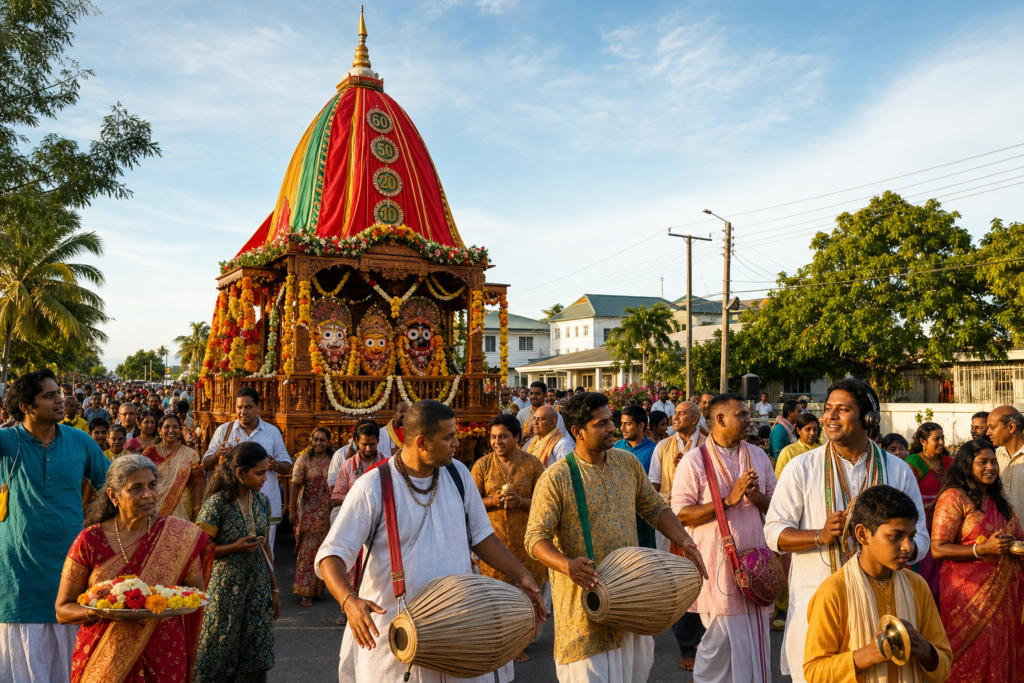
A civilizational reading is consonant with the lived reality of millions who experience unity in diversity in mandirs, gurdwaras, viharas, and basadis; in shared festivals from Diwali and Gurpurab to Vesak and Mahavir Jayanti; and in values such as Vasudhaiva Kutumbakam. This view emphasizes an already-present dharmic ethos that binds the country without privileging one sampradaya over another.
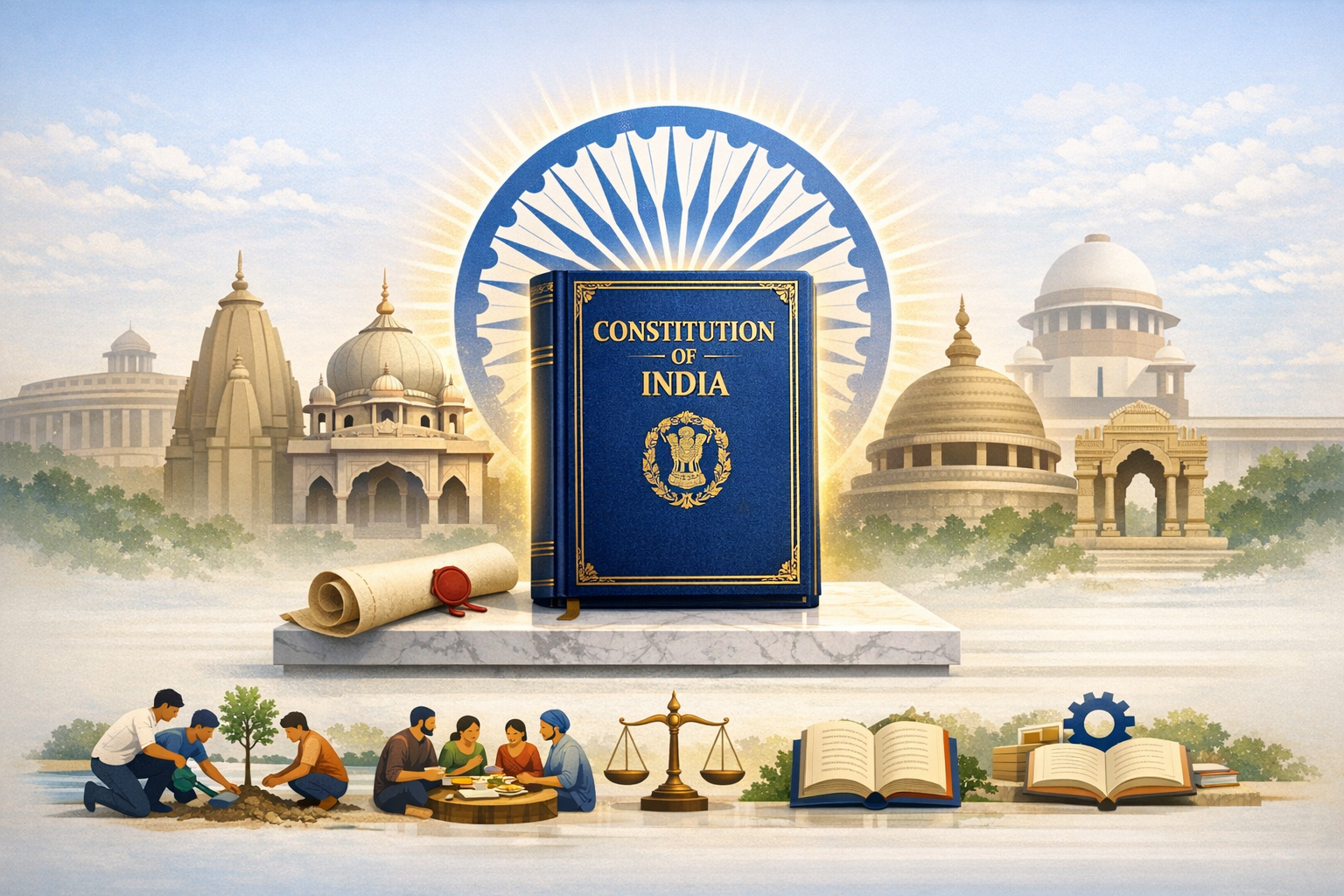
The political reading raises constitutional guardrails: the Indian republic is a sovereign, democratic, and secular state, with “secular” reflecting equal respect for all faiths rather than hostility to religion. In this sense, a “Constitutional Hindu Rashtra” cannot mean a theocracy; it must mean a values-driven republic grounded in dharma’s ethical universalsdignity, responsibility, restraint, and compassionwhile protecting fundamental rights for all communities, including minorities and non-dharmic traditions.
Historically, “Hindu Rashtra” has expressed varied meaningsfrom cultural nationality to normative ethics in public life. Contemporary usage benefits from clarifying that the intent is civilizational and constitutional, not sectarian. When framed through a dharmic lens, the term aligns with pluralist doctrines already native to the subcontinent: Anekantavada in Jainism, Ishta in Hinduism, Karuna in Buddhism, and Sarbat da Bhala in Sikhism. These doctrines elevate conscientious coexistence over uniformity.
Jurisprudentially, the Supreme Court has read secularism as part of the basic structure of the Constitution, and Articles 25–28 guarantee freedom of religion alongside limits that preserve public order, morality, and health. Articles 29–30 protect cultural and educational rights of minorities. A “practical” or “constitutional” approach must therefore integrate dharmic ethics with rights-based constitutionalism rather than replace one with the other.
This synthesis yields a simple proposition: a Constitutional Hindu Rashtra is not a project of declaration but of delivery. It rests on institutionalizing dharmic principlessatya, ahimsa, daya, dana (public-spirited giving), and dharma (justice-order)through transparent governance, equal citizenship, and a culture of mutual respect across Hindu, Buddhist, Jain, and Sikh traditions. The focus shifts from symbolism to state capacity and social trust.
Practical Hindutva, in this light, becomes a governance ethic rather than a party plank. It centers on seva, constitutional patriotism, and sarvodaya (uplift of all), encouraging institutions that resolve disputes fairly, deliver welfare efficiently, and cultivate civic virtue. The yardstick for success is whether citizensacross regions and traditionsexperience dignity, safety, and opportunity under the same rule of law.
Education is a foundational lever. A values-infused curriculum can introduce Indian Knowledge Systems and ethical reasoning from dharmic sources while reaffirming constitutional morality. Exposure to the Upanishadic inquiry, the Buddha’s Middle Way, Jain Anekantavada, and Sikh seva traditions can be taught alongside scientific temper, critical analysis, and civic duties, building character and competence together.
Cultural heritage policy should protect temples, gurdwaras, viharas, and basadis with transparency, community participation, and clear financial accountability. Heritage conservation must be paired with inclusive access, safety, and non-discriminatory administration to ensure that spiritual spaces exemplify the dharma they enshrine.
Environmental stewardship is a natural arena for dharmic statecraft. Framing river regeneration, biodiversity protection, and sustainable agriculture through the ethics of ahimsa and reverence for nature creates broad social consensus. Practical instruments include rigorous pollution control, wetlands restoration, urban tree cover, and riverine ecosystems revitalizationpolicies that couple scientific rigor with cultural resonance.
Social justice remains non-negotiable. A dharmic public ethic recognizes the moral urgency of eliminating discrimination, expanding access to opportunity, and dignifying labor. Policies to reduce learning gaps, enhance women’s safety and mobility, and accelerate skilling for youth align with both constitutional rights and the civilizational duty of lokasangraha (social cohesion).
Federalism and local self-governance can translate ideals into everyday outcomes. Empowered panchayats and urban local bodies, backed by timely funds, functionaries, and data systems, can deliver water, sanitation, health, and livelihood services effectively. When governance meets people where they live, lofty debates become lived confidence in the republic.
Rule-of-law impartiality is essential for communal harmony. Swift, even-handed enforcement against violence, vandalism, and hate speech protects all communities. This is dharma operationalized: when the state’s impartiality is visible, social trust grows and opportunistic polarizations lose oxygen.
An inclusive economy, favoring micro, small, and medium enterprises, agriculture modernization, and digital public infrastructure, promotes prosperity with dignity. Ethical finance, fair competition, and consumer protection support a market that rewards innovation without eroding social well-beingaligning artha (prosperity) with dharma (justice and restraint).
Pluralism must be expressed as policy design, not only rhetoric. Interfaith civic platformsshared skill centers, health camps, disaster response networks, and heritage walksbuild neighborly bonds among Hindus, Buddhists, Jains, Sikhs, and others. These practical bridges reinforce the dharmic intuition that unity grows through shared service.
Measured against these standards, Bhagwat’s assertion can be read as a call to de-escalate the quest for labels and to escalate the quest for outcomes. Declaring that Bharat already embodies a Hindu Rashtra, in the civilizational sense, can reassure minorities if paired with transparent, rights-respecting governance that delivers safety, fairness, and dignity for all.
There is nevertheless a legitimate caution: describing the destination as “already achieved” may breed complacency. Stakeholders worried about stalled reforms seek evidence of progresscleaner rivers, safer streets, better schools, and dignified livelihoodsrather than symbolic comfort. This tension can be resolved by substituting semantic debates with measurable public goods.
A constructive way forward is to articulate a Dharmic Governance Index aligned with constitutional benchmarks. Core dimensions could include justice delivery timelines, crime resolution and victim support, learning outcomes and skilling, environmental restoration indicators, transparency in religious endowments, and interfaith community service metrics. Such an index would convert values into verifiable public performance.
Media and academia can assist by prioritizing conceptual clarity over caricature. Distinctions between civilizational identity and constitutional architecture ought to be foregrounded. Responsible scholarship can excavate Rajadharma from classical sources while mapping its consonance with fundamental rights and duties in a modern republic.
Lived experience ultimately decides whether any national idea unifies people. When families across traditions learn together, trade together, and celebrate together, unity becomes intuitive and self-reinforcing. Stories of joint seva during floods, shared langar after festivals, or Buddhist and Jain groups partnering on health camps with local mandirs are not exceptions; they are templates for a practical Hindu Rashtra understood as a dharmic, constitutional commonwealth.
Reconciling positions in this debate thus requires replacing binary rhetoric with a layered framework: civilizational confidence, constitutional fidelity, and community-centered delivery. With this triad, the republic can embody a values-led order without sectarian drift, ensuring that dharma informs statecraft while the Constitution secures equal citizenship.
In summary, whether or not a formal proclamation is pursued is less important than whether governance reflects dharmic ethics and constitutional rights in action. A unifying path for Bharat lies in Practical Hindutvaseva-driven, inclusive, and transparentunder a constitutional umbrella that protects belief, non-belief, and diverse dharmic traditions alike. If Bhagwat’s statement helps shift emphasis from labels to outcomes, it can serve as a catalyst for the Constitutional Hindu Rashtra understood not as a theocracy, but as a just, compassionate, and plural republic.
Inspired by this post on Struggle for Hindu Existence.