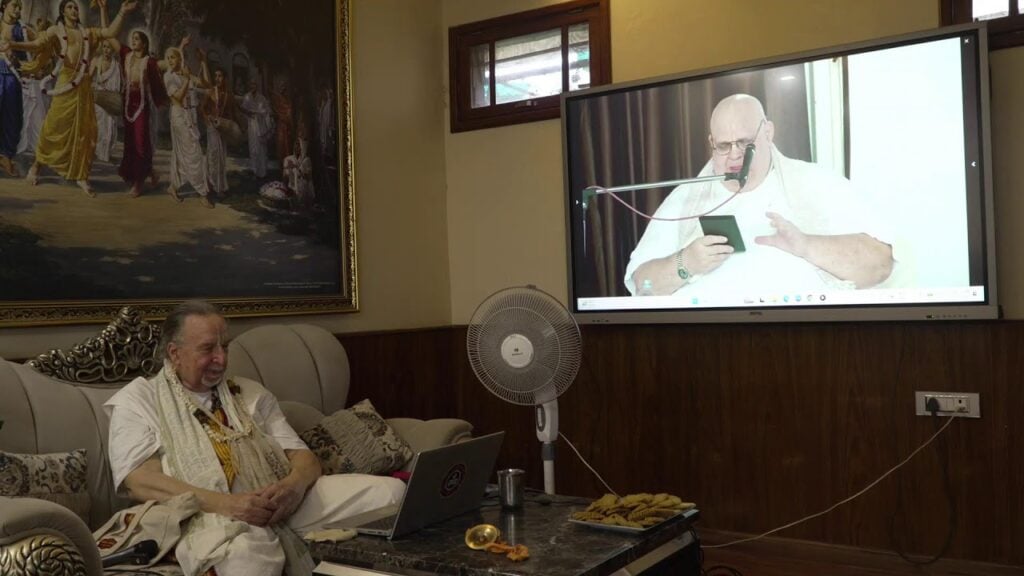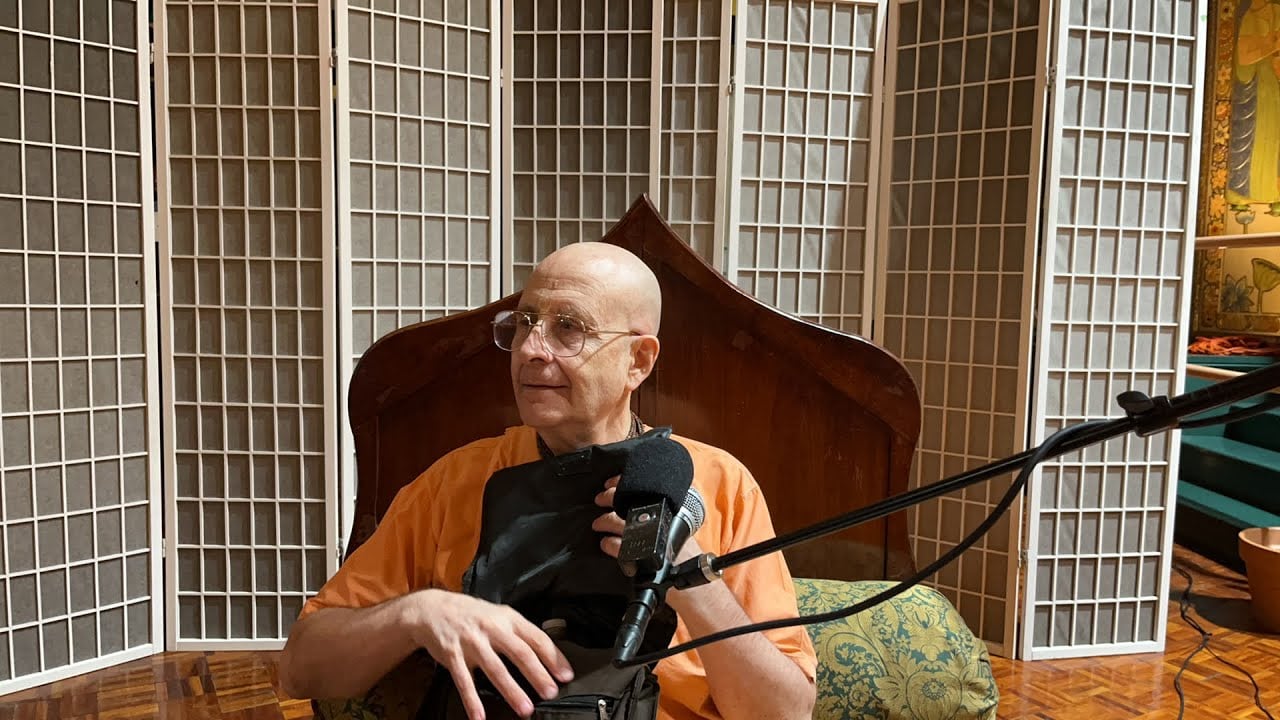
Śrīmad Bhāgavatam (Canto 3, Chapter 22) places the householder āśrama within a larger arc of yogic life and God-centered duty. Verse 3.22.28, as discussed in a recent discourse by HH Chandrasekhara Swami, foregrounds themes of vow, mutual responsibility, and divinely aligned intent. In this frame, domestic life is not a detour from transcendence but a crucible for sattva, character formation, and steady bhakti-yoga. Read in continuity with the Purāṇic narrative, the verse becomes a precise lens on how everyday ethical commitments become vehicles of liberation when harmonized with the Supreme (parama-puruṣārtha).
Chapter 22 situates Kardama Muni and Devahūti within a dharmic template that prioritizes consent, responsibility, and spiritual purpose over mere social formality. The householder covenant is presented not as a purely private arrangement but as a social trustaligned with cosmic order (ṛta) and upheld by mutual vows. Though succinct, 3.22.28 is commonly interpreted to underscore that vows gain transformative efficacy when rooted in remembrance of the Lord (smaraṇa) and enacted through compassion, restraint, and truthfulness. In this analysis, the verse becomes a charter for integrating spiritual intentionality into daily life.
Situated against this textual background, Nṛsiṁha Caturdaśī (Narasimha Jayanti)observed on the Śukla Pakṣa Caturdaśī of Vaiśākhailluminates a complementary axis of Vaishnava theology: protective grace. The festival commemorates the appearance of Nṛsiṁhadeva, who arises not merely to punish adharma but to protect steadfast devotion, epitomized by Prahlāda’s unwavering faith. The same ethical seriousness that Śrīmad Bhāgavatam 3.22.28 attaches to vows in the home is reflected, on a cosmic canvas, in the Lord’s vow to protect the surrendered (rakṣaṇa). The result is a unified ethic: household dharma is sustained by divine compassion, and divine compassion invites humans into faithful, vow-based living.
Prahlāda’s narrative, central to the liturgical mood of Nṛsiṁha Caturdaśī, does not valorize confrontation; it valorizes devotion (bhakti) under trial. The text and its commentarial tradition consistently highlight that inward orientationremembrance of Nārāyaṇa under all conditionstransforms fear into clarity. Hiraṇyakaśipu’s boons and the Lord’s “liminality” (emerging at twilight, neither indoors nor outdoors, neither man nor beast) reveal a theological grammar of truth transcending literalism. This grammar mirrors the way Śrīmad Bhāgavatam treats domestic vows: form matters, but spirit transforms; structure stabilizes, but remembrance liberates.
As emphasized by HH Chandrasekhara Swami, reading 3.22.28 on Nṛsiṁha Caturdaśī vividly joins ethics and theology. When vows are undertaken as offerings to the Supreme rather than as egoic projects, they produce courage and clarityeven under duress. This is Prahlāda’s lesson in situ: a child’s truthfulness, humility, and steadiness become the soft power through which the Lord’s hard protection manifests. The devotee’s inner satya calls forth the Lord’s outer kṣatraprotection without cruelty, strength without hatred.
From a liturgical perspective, Nṛsiṁha Caturdaśī typically involves fasting, evening or night worship when the Caturdaśī tithi prevails, and observances that emphasize protection and purification. Many traditions recite the Nṛsiṁha-kavaca and sing prayers that celebrate both the Lord’s awe-inspiring form (ugra) and His benevolent shelter (bhadra). Cooling, sattvic offerings are made to honor the Lord who appears at twilight to end the fever of tyranny. As with all vrata observances, local pañcāṅga guidance is indispensable for accurate timing and parāṇa (fast-breaking) the following day.
At home, the festival’s contemplative power can be anchored by simple, precise practice: mindful fasting, quiet japa, reading the Prahlāda episodes in the Bhāgavata Purāṇa, and offering tulasī with gratitude. Where temple access is available, community abhiṣekam (Abhishekam) to Lakṣmī-Nṛsiṁha mūrtis, kīrtana, and dramatized readings of Prahlāda’s trials deepen experiential understanding. These practices textured by bhakti tradition build continuity between scriptural study and lived devotion, aligning personal ethics with communal remembrance.
Philologically, “Nṛ-siṁha” is a karmadhāraya compoundman-lionsignifying a threshold form that dismantles rigid categories. Theologically, the avatāra demonstrates the sovereignty of compassion over the letter of boons, a point often highlighted in classical commentaries. The Lord’s appearing neither from the ground nor sky, neither by weapon nor hand alone, encodes a hermeneutic of divine freedom: cosmic law protects devotees without violating justice. In the same spirit, 3.22.28 intimates that vows are most potent when flexible in method yet firm in purposeever aligned to remembrance of the Supreme.
Across dharmic traditions, this protective ethic resonates deeply. In Buddhism, the bodhisattva’s karuṇā safeguards beings through upāya (skillful means), mirroring Nṛsiṁha’s compassionate precision. In Jainism, ahiṁsā and vigilant self-restraint protect life at every scale, nurturing the very atmosphere in which devotion matures. In Sikh dharma, seva and the universal aspiration sarbat da bhala embody a commitment to collective well-being and fearless defense of the vulnerable. These convergences do not dilute distinctive paths; they reveal a shared moral grammar that prizes protection, truth, and compassion.
Psychologically, Nṛsiṁha’s appearance can be read as the triumph of fearless clarity over the internal “Hiraṇyakaśipu”anger, arrogance, and absolutism. Daily vowstruthfulness in speech, compassion in action, discipline in consumptionbecome concrete countermeasures to inner tyranny. The practice of bhakti-yoga, particularly as taught within the Bhāgavata Purāṇa, stabilizes attention (ekāgratā), refines emotion (bhāva), and subordinates impulsivity to discernment (viveka). In the home, these disciplines turn ordinary routines into sites of transformation, echoing the practical thrust of 3.22.28.
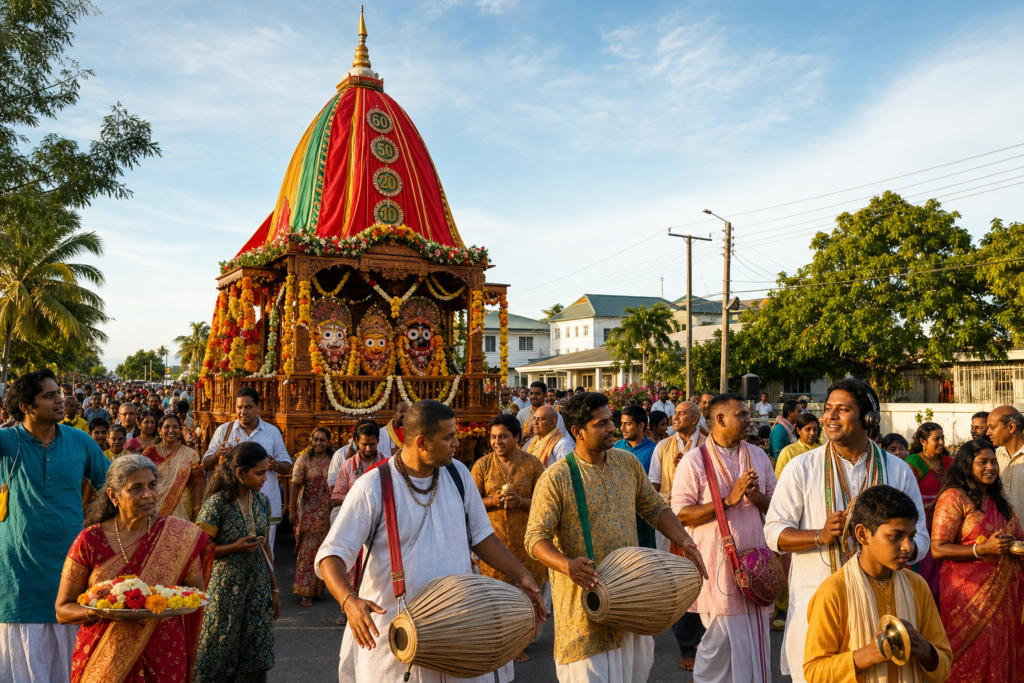
Socially, Nṛsiṁha devotion has inspired architecture, music, and communities of care across Bhāratavarṣa and beyond. From Ahobilam and Simhachalam in the south to Narasimha shrines across the subcontinent, temples have functioned as schools of ethics and sanctuaries of service. Festivals animate these spaces as places where learning, worship, and charity meetwhere scriptural concepts are rehearsed through song, ritual, and hospitality. This lived synthesis strengthens the civic fabric and preserves cultural memory without antagonism.
Methodologically, reading Śrīmad Bhāgavatam benefits from triangulating narrative, ethics, and theology. Narrative frames experience; ethics orders conduct; theology assures meaning and hope. Verse 3.22.28, while embedded in a specific episode, travels across these three axes: it calls for vowed, deliberate living as an instrument of remembrance; it assures that the Lord protects such remembrance; and it implies that social stability follows from spiritual sincerity. These are not mere abstractions; they are testable in the laboratory of daily life.
For practitioners and students alike, the festival’s praxis can be organized into an integrative sādhana: study (svādhyāya) of Prahlāda’s narrative; devotion (bhakti) through kīrtana and prayer; discipline (tapas) through vrata; and service (seva) through acts of protection and kindness in one’s community. Each element, modestly done, links household vows to protective grace. In this way, Nṛsiṁha Caturdaśī becomes a living commentary on 3.22.28an annual rehearsal of vow-centered, God-centered life.
Such integration also supports unity among dharmic traditions by foregrounding what is highest and shared: the protection of life, the pursuit of truth, and the cultivation of compassion. Without erasing differences in doctrine or practice, this focus invites mutual respect and practical collaboration. Shared celebrations, inter-monastic dialogues, and joint service initiatives can make the protective ethos of Nṛsiṁha a civic resource, not merely a private inspiration.
HH Chandrasekhara Swami’s exposition underscores that scripture speaks most clearly when applied responsibly. When vows are made lightly, they fray; when vows are made Godward, they endure. When power is grasped, it corrupts; when power is consecrated, it protects. The Bhāgavata’s ethic is precise: live deliberately, worship sincerely, protect courageously.
In contemporary lifemarked by distraction, polarization, and fatiguethis ethic is profoundly practical. Gentle vows around speech, diet, finance, and digital use can reintroduce sattva into the day. The rhythms of festival observance, keyed to the lunar calendar, steadily recalibrate attention from anxiety to gratitude. Over time, such practice reconditions habit, broadens compassion, and makes inner space for the kind of remembrance that Prahlāda embodied and Nṛsiṁha protected.
Ultimately, Śrīmad Bhāgavatam 3.22.28 and Nṛsiṁha Caturdaśī converge on a single promise: where devotion is sincere and vows are aligned with dharma, protection is never far. The home becomes a sanctum; festivals become laboratories of virtue; community becomes a shelter. In honoring Nṛsiṁhadeva’s appearance and absorbing the verse’s counsel, households and communities can cultivate an atmosphere where truth is safe, compassion is active, and courage is gentle.
This conjunction of scripture and festival offers a clear invitation: ground life in vow, saturate it with remembrance, and let protection flow outward as service. Read this way, the Bhāgavata’s wisdom becomes both timeless and immediately actionablean ethic of devotion that dignifies the home, fortifies society, and honors the protective grace celebrated on Nṛsiṁha Caturdaśī.
Inspired by this post on Dandavats.