Narada Jayanti, also known as Devarshi Narad Jayanti or Narada Jayanthi, commemorates the birth anniversary of Sage Narada, revered in Hindu tradition as Brahma Manasa Putra and the paradigmatic messenger of dharma and devotion. In 2026, Narada Jayanti falls on May 2 in the Indian calendar context. The observance aligns with Vaishakha bahula Pratipada in South Indian Amanta calendars and Krishna Paksha Pratipada of Jyeshta month in North Indian Purnimanta calendars, reflecting the well-known month-reckoning divergence within Hindu calendrical practice.
The calendrical placement is precise: the festival is observed on Krishna Paksha Pratipada, the first lunar day immediately following Vaishakha Purnima (Amanta) or opening Jyeshta (Purnimanta). While the civil date for India in 2026 is May 2, communities outside the Indian subcontinent should verify local tithi spans, as the lunar day may begin or end on adjacent civil dates depending on time zone and longitude. Panchang guidance remains the gold standard for local observance.
Narada Jayanti’s timing is governed by the tithi system of Indian astronomy and ritual timekeeping. A tithi marks each 12-degree increment of elongation between the Moon and the Sun. The shift from Purnima (full Moon) to Pratipada (the first day of the dark fortnight) inaugurates the Krishna Paksha, and Pratipada is the operative criterion for the Jayanti. Because tithis may straddle two civil dates and vary by locale, householder practice generally privileges the tithi prevailing during the principal daylight period for puja.
Devarshi Narada occupies a singular place in the spiritual imagination of Bharatavarsha. The designation Devarshi“seer among the devas”signifies a rishi whose insight and tapas function across realms. Described as Brahma Manasa Putra, he is mind-born of Brahma, and is celebrated as Triloka-sanchari, the ceaseless traveler across the three worlds who bears divine counsel, tests ethical resolve, and catalyzes the unfolding of dharma through narrative, music, and inspired instruction.
Scriptural literature situates Narada at crucial junctures in itihasa and purana. In Valmiki’s Ramayana (Bala Kanda), Narada’s concise account of Rama’s life directly inspires the composition of the epic. In the Mahabharata, Narada appears repeatedly as a moral and political counselor, pressing kings toward righteous statecraft and self-mastery. The Bhagavata Purana portrays Narada as spiritual guide to seekers such as Dhruva (whose mantra-dikshaOm Namo Bhagavate Vasudevayacomes through Narada’s grace) and Prahlada (whose prenatal absorption in devotion is traced to Narada’s instruction to his mother). Narada also redirects Vyasa’s literary genius: Bhagavata Purana 1.5 narrates how Narada diagnoses Vyasa’s inner dissatisfaction and urges a work devoted wholly to bhakti-tattva, culminating in the Bhagavata itself.
Textual traditions associated with Narada span both devotion and jurisprudence. The Narada Bhakti Sutra distills the phenomenology and practice of bhaktideclaring devotion to be of the nature of supreme, selfless lovewhile guiding aspirants away from distractions and toward single-pointed remembrance of the Divine. The Naradasmriti, a major dharmashastra text, is noteworthy for its systematic treatment of legal procedure (vyavahara), illustrating the breadth of insight traditionally attributed to Narada across spiritual and social domains.
Iconographically, Narada is depicted as a radiant rishi bearing a veena (often named Mahati), moving effortlessly between realms while invoking the Divine NameNarayana, Narayana. The veena and the constant nama-smarana mark him as exemplar of nadopasana (worship through sound), making Narada Jayanti a natural occasion for kirtan, bhajan, and contemplative study of texts linked to music, devotion, and sacred storytelling.
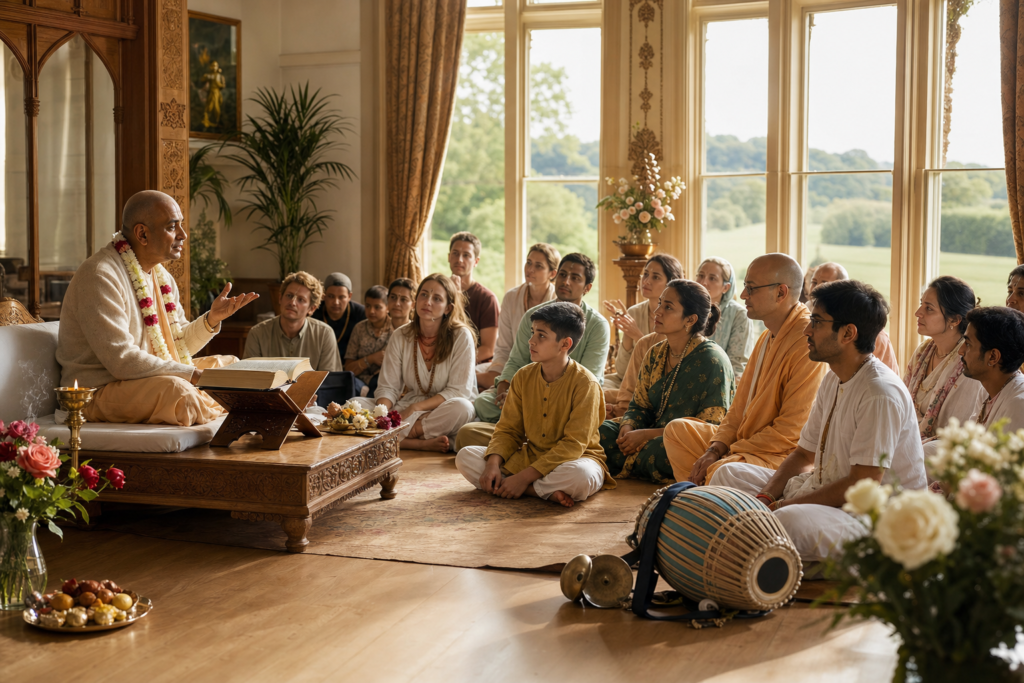
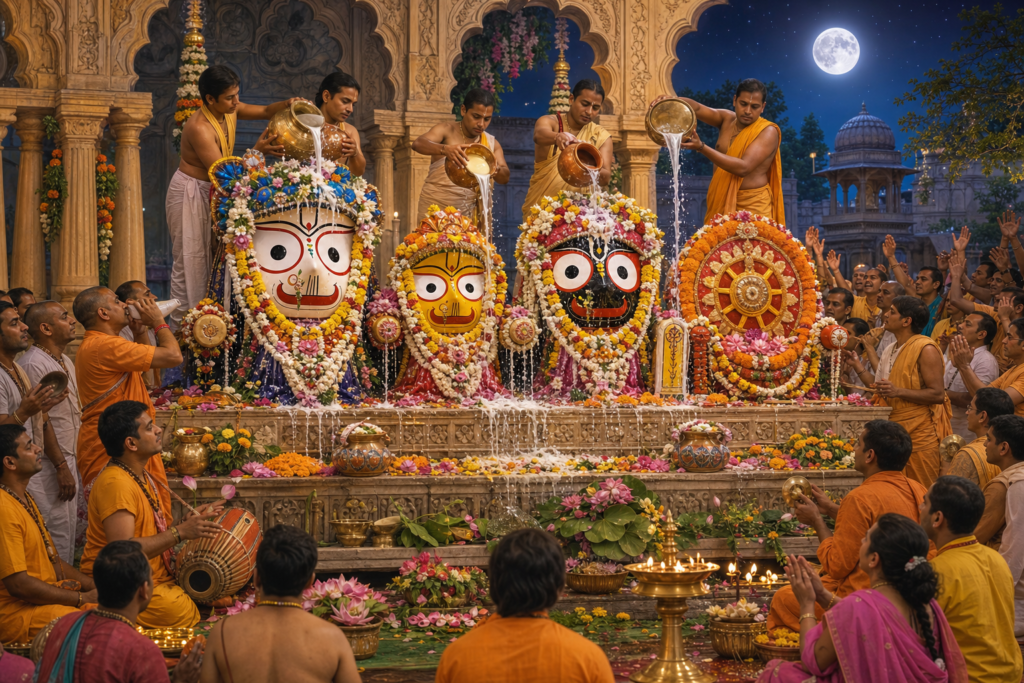
Religiously, Narada Jayanti 2026 offers a structured opportunity to cultivate bhakti alongside viveka (discernment). In many Vaishnava, Smarta, and bhakti-oriented communities, the day centers on satsanga (holy company), nama-japa, collective kirtan, charitable service (dana), and the study of Bhagavata Purana and Narada Bhakti Sutra. Where images of Narada Muni are available, devotees perform simple puja; more commonly, worship is offered to Vishnu, Lakshmi-Narayana, or one’s Ishta Devata, with Narada invoked as the teacher who opens the heart to devotion.
Puja vidhi on Narada Jayanthi is typically satvika and uncluttered. After sankalpa (vow of intent) tied to Vaishakha bahula Pratipada/Krishna Paksha Pratipada, worshippers light a deepa, offer fragrant flowers, tulasi leaves (for Vishnu), naivedya, and water. Many recite selections from the Narada Bhakti Sutra, Bhagavata Purana (particularly Skandhas 1, 4, 7, and 10), Vishnu Sahasranama, or simple nama-japa with a focus on Narayana-Narayana. Concluding arati and distribution of prasada anchor the observance in gratitude and community sharing.
Fasting customs are flexible and tradition-dependent. Some observe upavasa from sunrise to evening arati, others adopt a phalahara or milk-fruit fast, and many simply follow a strictly satvika diet while maintaining regular work duties. The emphasis is less on austerity for its own sake and more on mental clarity, restraint of speech, and directing the voice toward kirtan and dharmic conversationapt homages to the Devarshi who personifies sacred communication.
For home observance, practical steps enhance both focus and fidelity to tithi. Preparing a short reading list the day before (for example, Bhagavata Purana 1.5, 4.8–4.12 on Dhruva, and 7.5 on Prahlada), arranging a clean space for a lamp and texts, and setting aside time brackets for japa and bhajan help align practice with the day’s intent. Abhijit muhurta or the forenoon period when the tithi is in effect are commonly chosen for puja, while the evening is ideal for collective kirtan and pravachan.
Because Narada Jayanti is a tithi-based festival, regional almanacs may present slight variations in civil dates beyond India. Observers in North America, Europe, Southeast Asia, and Oceania should consult a reliable local Panchang to confirm when Krishna Paksha Pratipada prevails during daytime in their location. In all cases, the guiding principle is to privilege the living tithi for worship rather than a fixed civil-date convention.
Narada’s legacy is inseparable from the ecology of bhakti in the subcontinent. His catalytic role in nava-vidha-bhakti (the ninefold matrix of hearing, chanting, remembering, serving, worshipping, prostrating, servitude, friendship, and surrender described in the Bhagavata Purana) emerges through the lives he touches. Dhruva’s tapas, Prahlada’s fearlessness, and the aesthetic outpouring of devotion in later eras all trace, in part, to the narrative-and-music-centered pedagogy associated with Narada.
Equally significant is the ethical dimension of Narada’s interventions. Classical narratives sometimes portray him as provoking turning points or moral tests. The tradition interprets these episodes not as mischief but as a sacred pedagogy: by surfacing latent tendencies and confronting adharma, he accelerates the realization of dharmic order. In contemporary terms, Narada’s model encourages honest dialogue, courageous truth-telling, and compassionate course-correctionpillars of both personal sadhana and public life.
From a civilizational perspective, Narada Jayanti naturally resonates with the broader dharmic family. The emphasis on sacred music, narrative ethics, disciplined speech, and compassionate service echoes through Hindu bhajan-kirtan, Sikh shabad kirtan, Jain and Buddhist didactic storytelling, and the shared South Asian reverence for sabda (sacred sound) as a vehicle of insight. Marking Devarshi Narada’s day thus becomes an occasion to honor interrelated practices that cultivate harmony, wisdom, and community across Hinduism, Buddhism, Jainism, and Sikhism.
For students and practitioners, recommended study pathways on Narada Jayanti 2026 include: (1) the Narada Bhakti Sutra for a concise map of devotion’s nature and pitfalls; (2) Bhagavata Purana selections on Dhruva and Prahlada to understand Narada’s guru-bhava; (3) Bala Kanda episodes that frame Valmiki’s poetic vocation; and (4) passages from Naradasmriti to appreciate classical reflections on social order and legal procedure. Together, these texts illuminate the breadth of Narada’s attributed wisdomfrom inner love to outer law.
Households and temples often complement study and kirtan with seva. Classic themes include vidyadana (support for education), anna-dana (food service), and arts patronage for music and scriptural recitationeach reflecting Narada’s identity as guardian of learning, sound, and righteous community life. Small, consistent acts of service embody the day’s message that devotion matures through loving action.
The 2026 observance is also a time to renew mindful communication. Traditional counsel for Narada Jayanthi emphasizes satya (truthful speech), hita (beneficial speech), and priya (pleasant and non-harmful tone), aligning personal conduct with the Devarshi’s exemplary use of voice. Families may adopt household resolutions for conscious listening, daily nama-japa, and weekly scriptural reading circles, ensuring the festival’s insights carry into the year ahead.
In sum, Narada Jayanti 2026 foregrounds a classical synthesis: the astronomical precision of tithi-based ritual time, the philosophical clarity of bhakti-tattva, the ethical courage of dharma-centered counsel, and the aesthetic devotion of sacred sound. Observed on May 2, in accord with Vaishakha bahula Pratipada/Jyeshta Krishna Paksha Pratipada, the day invites devotees to listen deeply, speak truthfully, serve compassionately, and sing the Divine Name with the musical heart of Devarshi NaradaNarayana, Narayana.
Inspired by this post on Hindu Pad.