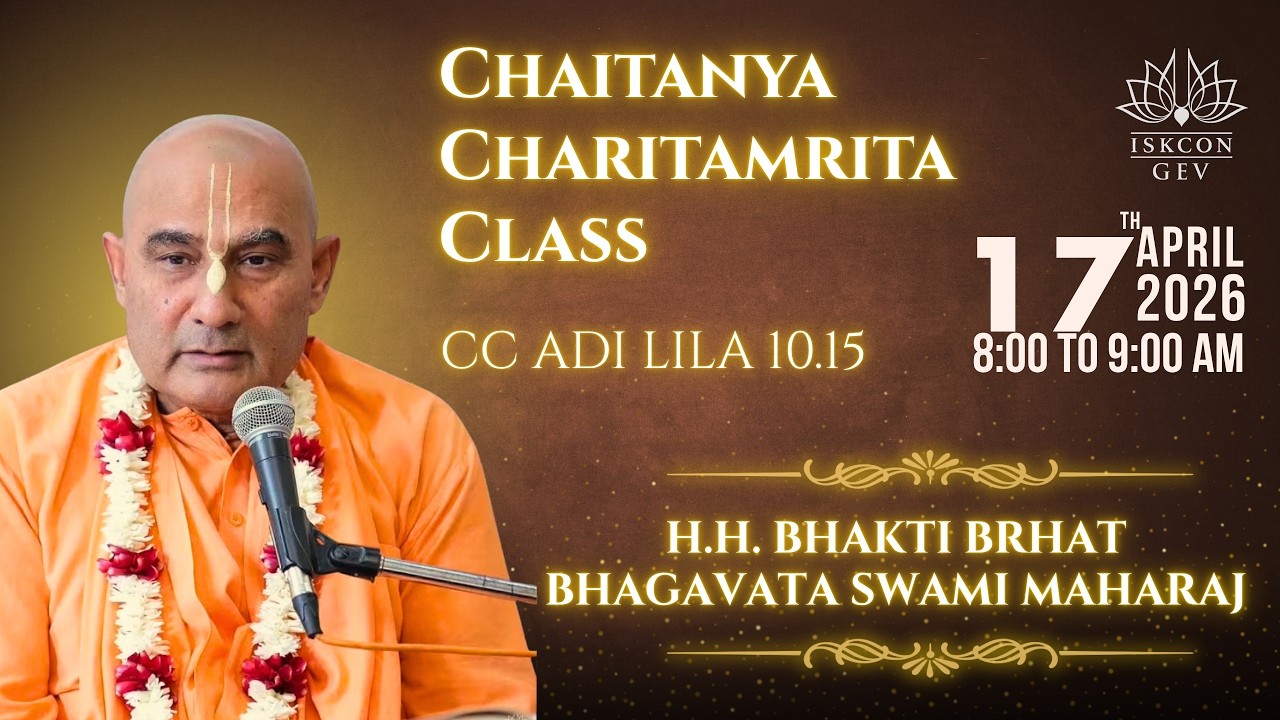
Caitanya-caritāmṛta (CC) Ādi-līlā 10.15 encapsulates a keystone of Gaudiya Vaishnavism by situating Gadādhara Paṇḍita within the theology of śakti-tattva, the doctrine of divine energies central to the Bhakti Tradition and Hindu Dharma. Read with care, the verse clarifies how devotion, bliss, and compassion cohere in the person of Gadādhara, a figure whose life and service have inspired practitioners across centuries, including contemporary readers familiar with ISKCON (International Society For Krishna Consciousness). It also invites a wider appreciation of unity in spiritual diversity across India’s dharmic family.
CC Ādi 10.15 translates: “Gadādhara Paṇḍita, the fourth branch, is described as an incarnation of the pleasure potency of Śrī Kṛṣṇa. No one, therefore, can equal him.” The “fourth branch” phrase belongs to the larger literary motif of the “bhakti-kalpataru,” the wish-fulfilling tree of devotion that maps the unfolding of Śrī Caitanya’s mission into numerous branches and sub-branches. Within this image, Gadādhara’s role is presented as unique, not in a sectarian sense, but as a precise theological designation within śakti-tattva.
Gaura-gaṇoddeśa-dīpikā (147–53) corroborates and deepens the identification: “The pleasure potency of Śrī Kṛṣṇa formerly known as Vṛndāvaneśvarī is now personified in the form of Śrī Gadādhara Paṇḍita in the pastimes.” Here, Vṛndāvaneśvarī denotes Śrī Rādhā, and the text signals a continuity between Vraja-līlā (Kṛṣṇa’s pastimes) and Gaura-līlā (Caitanya’s pastimes), a hallmark of Gaudiya hermeneutics.
In Gaudiya Vaishnavism, Kṛṣṇa’s internal energy (svarūpa-śakti) is threefold: sandhinī (existence/support), saṁvit (cognition/awareness), and hlādinī (bliss/beatitude). Hlādinī-śakti is the power by which Kṛṣṇa experiences and bestows ānanda, and in its highest condensation as prema (divine love) it manifests as Śrī Rādhā. Identifying Gadādhara Paṇḍita with hlādinī-śakti in Gaura-līlā thus communicates that the fountainhead of compassion, tenderness, and relishable devotion is present and active in Caitanya’s historical community.
Acintya-bhedābheda, the theology of “inconceivable, simultaneous oneness and difference,” explains this identification. Within śakti-tattva, śakti (divine potency) is non-different from śaktimān (the possessor of potency) yet functions distinctly to exhibit attributes such as mercy, love, and bliss. Accordingly, “No one, therefore, can equal him” in CC Ādi 10.15 is understood as a praise of Gadādhara’s singular śakti-role, not a statement that negates the dignity or potential of others; it honors a particular function in the divine economy of grace.
CC Ādi-līlā also frames the Pañca-tattvaŚrī Kṛṣṇa Caitanya (Bhagavān), Nityānanda Prabhu (first expansion), Advaita Ācārya (Viṣṇu-tattva/avatāra-inciter), Gadādhara (śakti), and Śrīvāsa (bhakta)to articulate how transcendence descends into history. Within this fivefold articulation, Gadādhara embodies the compassionate, bliss-bestowing current of devotion, the living wellspring from which transformative spiritual emotions arise and mature.
Historically, Gadādhara Paṇḍita is remembered as a childhood associate of Śrī Caitanya in Navadvīpa who later resided in Jagannātha Purī. There, he embraced kṣetra-sannyāsaa vow to remain in the Lord’s sacred kṣetraand served the deity of Toṭā-Gopīnātha. Hagiographies recount Gadādhara’s regular recitation of Śrīmad-Bhāgavatam to Caitanya Mahāprabhu, offering a model of devotion that is quiet, scholarly, and profoundly affectionate. His life illustrates how learning (śāstra) and love (prema) converge in lived spirituality.
Technically, “pleasure potency” can mislead modern readers if heard through the lens of sensory indulgence. In this context, however, “pleasure” names a spiritual axiom: the bliss (ānanda) intrinsic to the Absolute that overflows as compassion and loving reciprocation. Rūpa Gosvāmī’s bhakti-rasa theory systematizes this experience, showing how the taste (rasa) of devotion is cultivated, stabilized, and perfected in the heartan analysis that aligns cleanly with Gadādhara’s identification as hlādinī-śakti in practice.
Intertextually, Gaura-gaṇoddeśa-dīpikā’s mapping of Gaura-līlā participants to Vraja-līlā counterparts creates a theological bridge between the two revelatory horizons. When it names Vṛndāvaneśvarī now “personified in the form of Śrī Gadādhara Paṇḍita,” the text affirms a continuity of divine compassion operative across times, places, and forms, while preserving the humility and self-effacing qualities for which Gadādhara is revered.
Read within the broader corpus of Scriptures and Vedic philosophy cherished in the Bhakti Tradition, CC Ādi 10.15 centers a spirituality that is rigorous (rooted in Sanskrit śāstra) yet relational (rooted in love). Such a synthesis helps today’s readers appreciate why Gadādhara is revered among Vaishnava Saints: he stands as a living testament to devotional integrityprecise in theology, gentle in temperament, and unwavering in service.
This teaching also resonates with the dharmic ideal of unity in spiritual diversity. Across India’s traditionswhether one considers Buddhist karuṇā, Jain ahiṁsā and the soul’s innate ānanda, or Sikh reflection on nām and anandthere emerges a shared intuition that ultimate reality is experienced as liberating compassion and joy. Without collapsing doctrinal distinctiveness, CC Ādi 10.15 invites a respectful dialogue among Hinduism, Buddhism, Jainism, and Sikhism, highlighting convergences around compassion, self-discipline, and the transformative power of sacred remembrance.
For contemporary seekers, reflecting on Gadādhara’s service suggests practical applications: centering regular engagement with sacred texts, cultivating humility in scholarship, participating in kīrtana and community service (seva), and nurturing a heart inclined to forgive and to protect others’ spiritual journeys. These disciplines translate hlādinī-śakti from a doctrinal category into a living ethic of care, consonant with Hindu Dharma’s commitment to the welfare of all beings.
From a philological standpoint, terms such as hlādinī-śakti, svarūpa-śakti, and Vṛndāvaneśvarī carry layers of meaning shaped by usage across Gaudiya commentarial literature. Preserving such Sanskrit terms in study and translation safeguards nuance while enabling a faithful transmission of insight. When these terms are situated within their theological architecture, CC Ādi 10.15 becomes more than a historical note; it becomes a precise lens for understanding devotion’s inner anatomy.
In sum, CC Ādi 10.15 and Gaura-gaṇoddeśa-dīpikā together present Gadādhara Paṇḍita as the personification of divine compassion and bliss in Gaura-līlā. His identification as hlādinī-śakti situates him at the heart of Gaudiya Vaishnavism’s experiential philosophy, while his life offers a replicable pathway of humility, scholarship, and love. Approached in this manner, the verse not only deepens appreciation of ISKCON’s scriptural foundations but also advances a constructive vision of unity across India’s dharmic traditions, where multiple paths are honored and the shared pursuit of truth, peace, and compassion is celebrated.
Such an academic-and-devotional reading remains faithful to the text while foregrounding the ethical imperative implicit in śakti-tattva: to recognize, receive, and reflect divine compassion in everyday conduct. Honoring Gadādhara Paṇḍita thus becomes inseparable from honoring the dignity of other seekers, an approach that strengthens interfaith respect within the dharmic family and sustains a culture of harmony, learning, and service.
Inspired by this post on Dandavats.