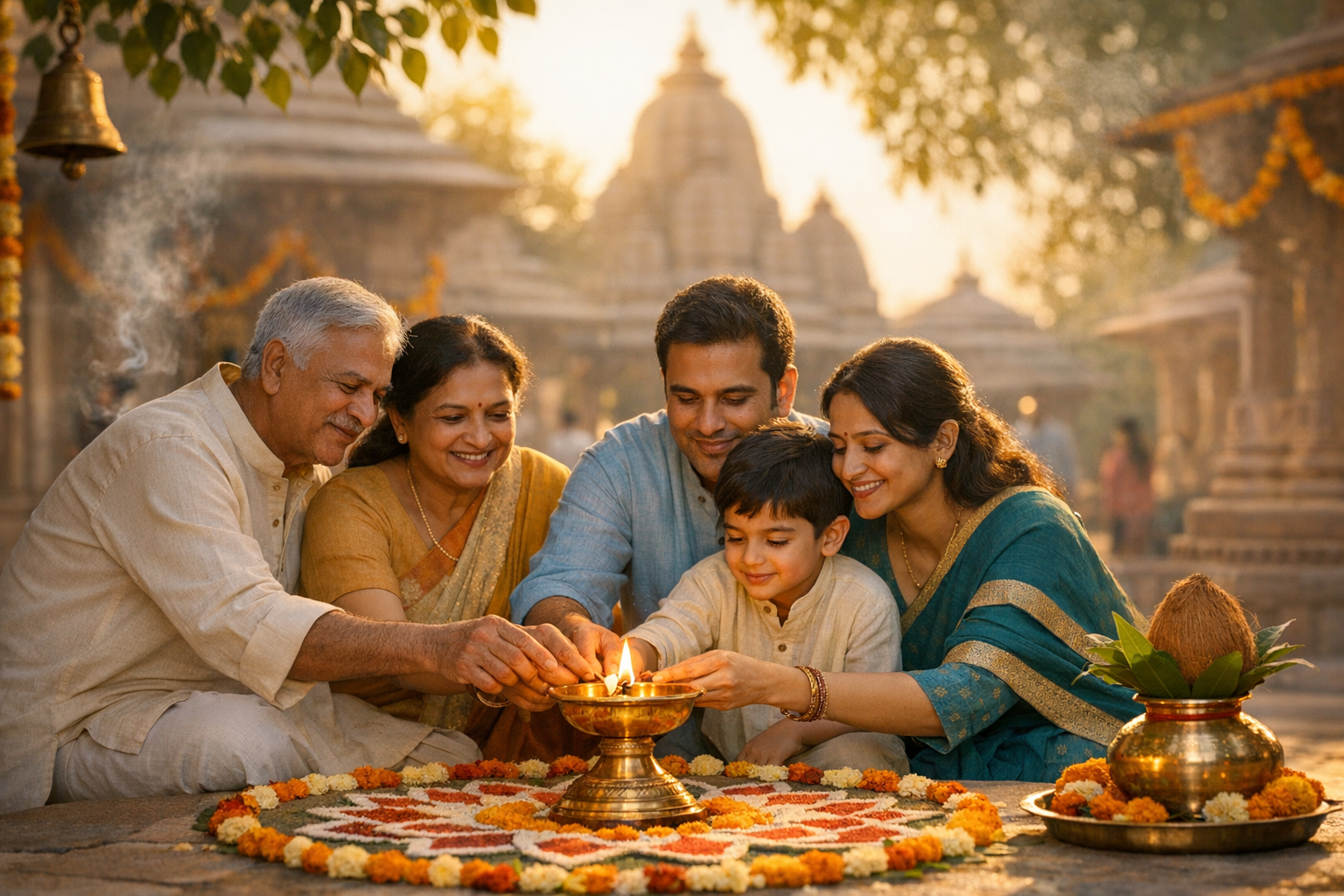
On April 1, 2026, at Bageshwar Dham in Chhatarpur, Madhya Pradesh, public reports documented a family formerly identifying as Muslim choosing to embrace Sanatan Hindu Dharma. In the ceremony, names were reported as changing from Anwar to Arjun Singh and from Hasina to Priya Singh. Rather than sensationalizing the episode, this analysis considers the ethical, legal, ritual, and interfaith dimensions of such a transition, placing it within the broader dharmic ethos of inclusivity and mutual respect.
Bageshwar Dham has emerged as a contemporary devotional hub associated with large congregations, pravachans, and community rites, including events linked to Dhirendra Krishna Shastri. As with many publicized transformations of faith, the setting provides a useful case study in how modern pilgrimage sites interface with personal conscience, community reception, and the social responsibilities that accompany visible expressions of belief. The focus here remains on principles and lived realities rather than personalities.
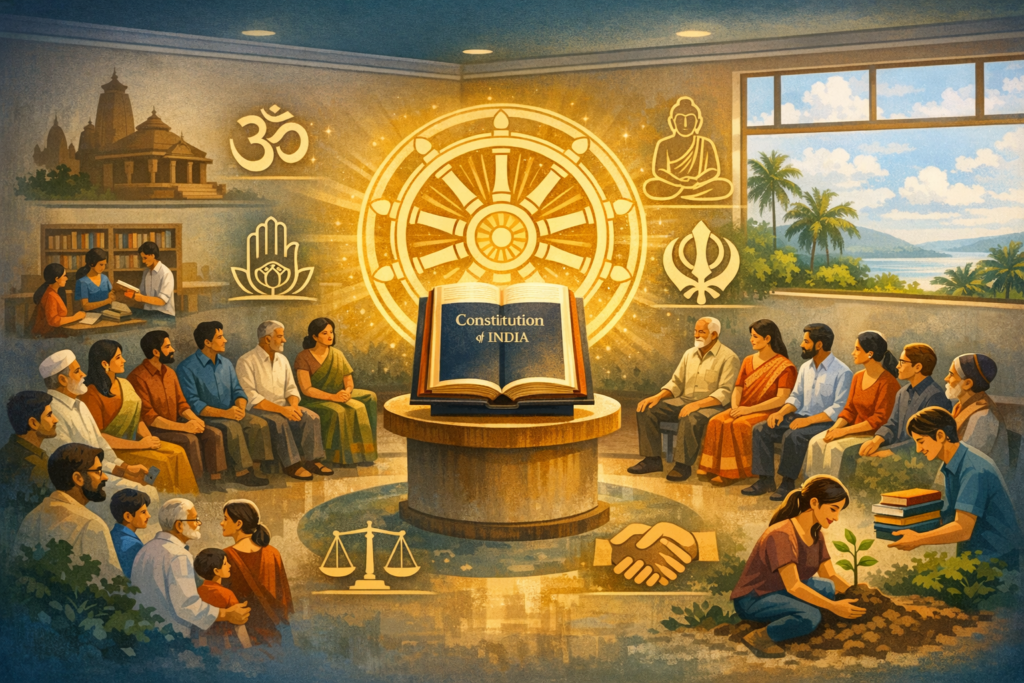
In the Indian constitutional framework, Article 25 guarantees “freedom of conscience and the right freely to profess, practice and propagate religion,” subject to public order, morality, health, and other fundamental rights. Several Indian states have enacted Freedom of Religion statutes that regulate conversions to ensure the absence of force, fraud, or unlawful inducement, often requiring declarations to the District Magistrate within prescribed timelines. Responsible faith transitions therefore proceed with transparent intent, lawful documentation where required, and the unambiguous free will of the adults involved.
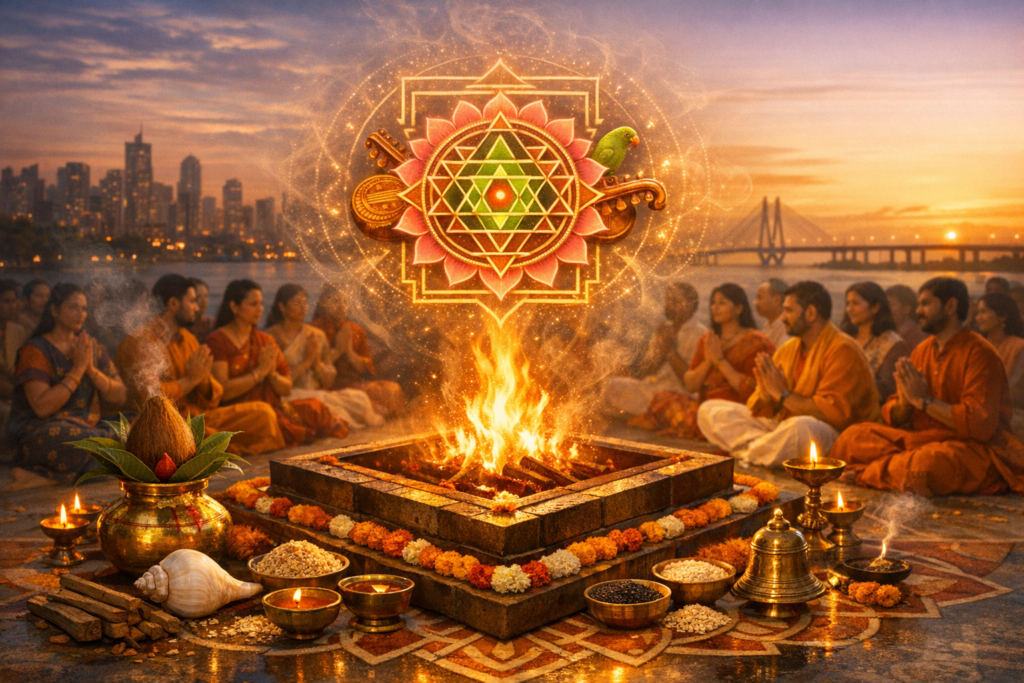
Sanatan Dharma’s ritual and philosophical tradition offers a nuanced vocabulary for personal transformation. Historically, terms such as Shuddhi (purificatory rites) and Parāvartana (re-conversion) have been used in different periods and contexts, while the broader rubric of samskaras situates identity within a lifecycle of sacral affirmations. Nama-karaṇa (naming) is one such samskara; adopting names like Arjun Singh and Priya Singh can be read as an affirmational step into a new cultural and devotional lexicon. Notably, the surname “Singh” is widely used across communities in the subcontinent, including Hindu and Sikh lineages, signaling a broader cultural rather than exclusively sectarian marker.
Philosophically, Sanatan Dharma is anchored in pluralism—Ishta devata (chosen form of the Divine) and the maxim “Ekam sat vipra bahudha vadanti” reflect the idea that truth is one though expressed in many ways. This inner architecture of plurality naturally aligns with the inclusive temper of other dharmic traditions: ahimsa and anekantavada in Jainism, karuṇa and the middle path in Buddhism, and seva and Ik Onkar in Sikhism. Unity in spiritual diversity is not a rhetorical flourish but a methodological principle: multiple valid paths to the sacred can and do coexist, and no single path exhausts the fullness of truth.
Viewed through that lens, a family’s decision to embrace Sanatan Dharma is best interpreted as an exercise in conscience rather than a verdict on any other faith. Healthy interreligious relations are sustained when such choices are met with dignity, empathy, and dialogue. Families navigating change often carry complex emotional ties; maintaining bonds of kinship and community friendship across lines of practice helps prevent polarization and honors the shared civic fabric.
The social phrase “Ghar-Wapsi” appears in many public discussions to denote returns to a perceived ancestral fold. Analytically, it describes a trajectory some individuals adopt based on family memory, cultural proximity, or personal conviction. The principle that should govern any such journey is simple and non-negotiable: no force, no fraud, and no material inducement—only informed, adult consent. When that standard is upheld, the act registers as a conscientious transition, not a contest of communities.
Ritually and pastorally, communities that receive new adherents carry obligations. Good practice includes: offering clear explanations of beliefs and daily sādhanā; providing accessible translations of basic prayers and rites; ensuring supportive mentorship; and creating space for questions without fear of judgment. A dignity-first approach avoids triumphalism and models the dharmic virtues of satya, ahimsa, karuṇa, and seva.
Historically, the subcontinent has seen varied forms of religious mobility—from local shifts across sects within Hinduism to well-known conversions, such as mass embraces of Buddhism in 1956. Across these episodes, a recurring constant is the aspiration for dignity, clarity of meaning, and ethical community. The present case at Bageshwar Dham fits within that larger civilizational tapestry, where spiritual self-definition coexists with mutual respect across traditions.
Names such as Arjun and Priya also carry semantic and symbolic weight. “Arjun” evokes the seeker-warrior of the Mahabharata, called to discern dharma amidst complexity; “Priya” connotes what is beloved, aligning spiritual aspiration with gentleness and care. Names, in this view, are not merely labels but vectors of value—reminders to embody courage, compassion, and responsibility.
Public narratives around such transitions can be vulnerable to politicization. Responsible coverage avoids framing that vilifies any community or reduces complex choices to spectacle. Interfaith Dialogue—rooted in listening, integrity, and humility—remains the antidote to reactive narratives, strengthening trust and social cohesion.
For civil society and faith leadership, a practical checklist can help align such events with constitutional, ethical, and pastoral best practices: verify adult consent without pressure; comply with applicable state procedures; communicate aims in non-adversarial language; foreground ongoing spiritual education; and reaffirm respect for all faiths at every public touchpoint. These norms do not dilute conviction; they elevate it by placing conscience and compassion at the center.
Ultimately, the family’s decision at Bageshwar Dham is one story within a diverse landscape of Indian spirituality. Its significance lies less in headline drama and more in the reaffirmation of a core civilizational promise: spiritual freedom tethered to mutual regard. When communities choose empathy over antagonism, the idea of Vasudhaiva Kutumbakam—one earth, one family—moves from motto to lived reality.
According to contemporaneous reporting (including HENB), this event occurred in Chhatarpur, Madhya Pradesh, on April 1, 2026. While the names and place have been publicly noted, the deeper meaning rests in principles long shared across Hinduism, Buddhism, Jainism, and Sikhism: that sincere seekers deserve both the freedom to choose and the embrace of a society that honors many ways to the One.
Inspired by this post on Struggle for Hindu Existence.