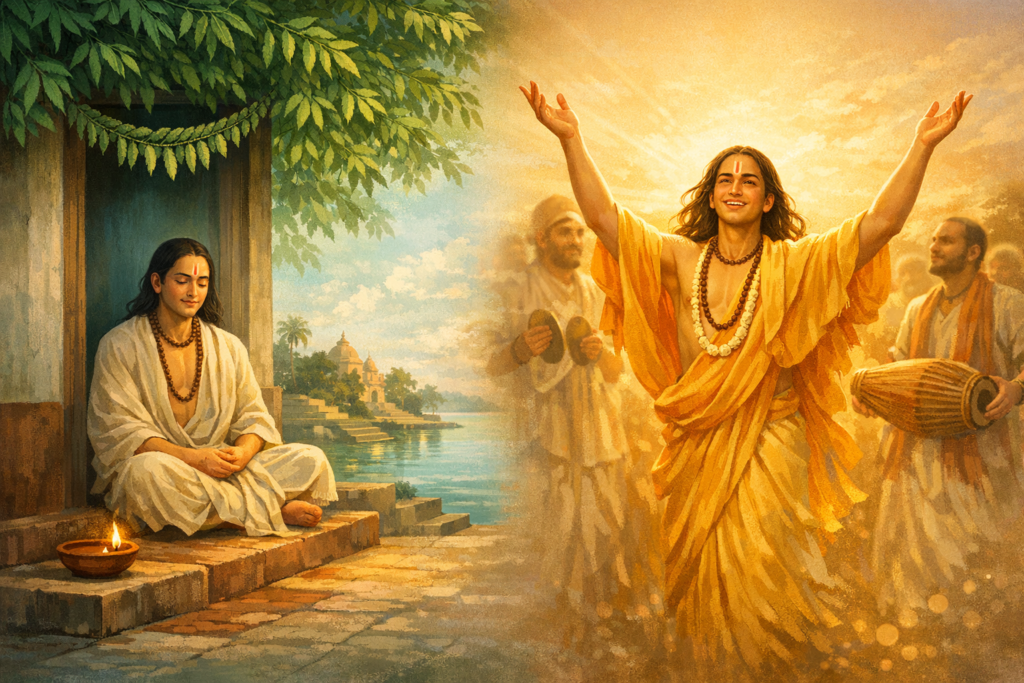
Vishukkani Vili is a distinctive folk practice of the Vishu festival in Kerala’s North Malabar region, where groups of children move from house to house calling out ‘vishukaniye, vishukaniye.’ Situated within the wider framework of Vishu—which marks the Malayalam New Year in Medam—this custom animates village lanes and urban neighborhoods alike with a spirit of generosity, auspicious beginnings, and communal bonding. While Vishu is known across Kerala for the dawn viewing of the Vishukkani and for the giving of Vishukkaineettam, Vishukkani Vili foregrounds children as cultural carriers, transforming the day into a community-wide exchange of blessings and goodwill.
Understanding the ritual begins with the core of Vishu: the Vishukkani, literally the “auspicious first sight.” The arrangement typically features a lit nilavilakku, an uruli (traditional metal vessel) filled with rice and grains symbolizing prosperity, fresh produce such as golden cucumber and lemon, betel leaves and arecanuts, a metal mirror (kani kannadi), coins or gold ornaments, and the blossoms of kanikkonna (Cassia fistula). An image of Sri Krishna is commonly placed at the heart of the kani. Households prepare this tableau on Vishu eve, so that family members—often led to the kani with eyes covered—can witness it at sunrise, setting an optimistic tone for the year ahead.
Vishukkani Vili unfolds after this sunrise rite. Children, usually in friendly groups, fan out through neighborhoods calling ‘vishukaniye, vishukaniye’ at gates and thresholds. In many localities of North Malabar, householders respond by welcoming the children and offering Vishukkaineettam (a token of money), along with, in some places, small gifts such as fruits or sweets. In certain villages, the visitors are also invited to glimpse the household Vishukkani, extending the symbolic “first sight” beyond kin to the wider community. The practice turns private auspiciousness into shared fortune.
Socially, the custom functions as a seasonal mechanism of cohesion. Intergenerational ties are refreshed as elders bless the young, and children learn—experientially rather than didactically—the values of gratitude, restraint, and reciprocity. Neighbors interact in a spirit of conviviality that transcends social boundaries typical of everyday life. Oral histories from North Malabar frequently emphasize how the distinctive chorus of ‘vishukaniye’ evokes a collective memory of safety, trust, and abundance associated with harvest cycles and the opening of a new year.
Etymologically, the phrase combines “Vishukkani,” the ceremonial arrangement viewed at dawn, with “Vili,” the Malayalam word for calling out. The cry is therefore not merely an invitation but a performative reminder of the day’s sacred beginning. Residents routinely describe how this call transforms the sonic landscape on Vishu morning: the crackle of later-day fireworks (Vishu padakkam) might punctuate the evening, but at daybreak it is the human voice—clear, expectant, and joyous—that carries the festival’s meaning from door to door.
Material culture surrounding the Vishukkani frames the experience for the young visitors as well. The polished gleam of the metal mirror symbolizes self-knowledge; grains and rice in the uruli signify plenty; the brilliant kanikkonna blossom heralds seasonal renewal; and the lighted lamp stands for inner illumination. When households share Vishukkaineettam at the threshold, the gesture sits at the intersection of these symbols and action—translating aspiration into tangible dana (giving), a virtue celebrated across dharmic traditions.
From a ritual studies perspective, Vishukkani Vili complements the normative family-centered sequence of Vishu. Instead of remaining an inward-looking domestic rite, the day acquires an outward, communal arc. Ethnographic accounts note that groups may be mixed-age, with older children guiding younger ones respectfully across courtyards and lanes, adhering to neighborhood rhythms and ensuring that visits occur only after families have completed their own kani-kanal (viewing of the kani). This peer-to-peer transmission of etiquette preserves the custom without formal instruction.
Across North Malabar, variations exist. In some villages, the tradition centers almost entirely on Vishukkaineettam at the threshold. Elsewhere, the children are briefly ushered in to witness the kani before they receive tokens. The scale, too, fluctuates: in smaller hamlets, nearly every household is visited by mid-morning, while in larger towns, apartment associations often arrange a collective Vishukkani in a community hall so that visiting groups can be greeted together. Such local adaptations illustrate a dynamic, living heritage rather than a static relic.
The ethical core of Vishukkani Vili—generosity offered with humility, and joy received with restraint—echoes shared values across dharmic cultures. As Vishu coincides with other spring new year observances in South Asia, the season as a whole becomes a tapestry of renewal and service. Parallels can be observed in the spirit of dana and seva characteristic of Vaisakhi in Sikh communities, as well as in the emphasis on auspicious beginnings and reciprocal giving evident in South Asian new-year practices more broadly. Seen in this light, Vishukkani Vili contributes to a wider civilizational ethos that affirms unity in diversity among Hindu, Buddhist, Jain, and Sikh traditions.
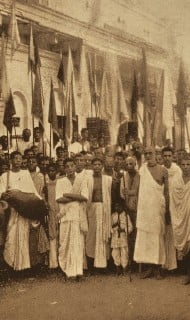
Historically, elders in North Malabar recall the practice as long-standing, with memories stretching back through several generations. While textual references are sparse—typical for many localized customs—the ritual’s continuity is attested through family narratives, village lore, and community photographs. Scholars of Kerala’s cultural history often interpret such practices as agrarian-communitarian adaptations, where seasonal prosperity and social security were ritually “distributed” through neighborly circuits of blessings and small gifts, strengthening a village’s moral economy.
In contemporary settings, Vishukkani Vili continues to evolve. Urbanization has shifted the geography of visits from sprawling homesteads to gated compounds and apartment corridors; yet residents frequently coordinate visiting windows, organize collective kanis, and establish simple norms of courtesy. Digital payments may occasionally supplement the coin-in-the-hand symbolism, though many households still prefer tangible tokens for their sensory and mnemonic value. Schools and cultural organizations in North Malabar sometimes use the occasion for curated walks, documentation drives, and talks on Kerala’s intangible heritage.
Safety, inclusion, and sustainability are now integral to mindful practice. Communities commonly emphasize adult accompaniment for very young children, ensure visits happen only during daylight hours, and encourage plastic-free tokens—favoring fruits or reusable envelopes for kaineettam. These micro-choices align the ritual with contemporary environmental sensibilities while retaining the heart of the tradition.
A typical Vishu day sequence in North Malabar might unfold as follows: at dawn, households complete Vishu Puja and kani-kanal; after sunrise, children assemble in small groups; moving from one house to another, they call out ‘vishukaniye, vishukaniye’; householders greet them with smiles, blessings, and Vishukkaineettam; in some homes, the children are invited to behold the Vishukkani; by late morning, the lanes quieten as families sit down to the Vishu sadhya (festive meal). The day’s rituals thus trace a meaningful arc—from inner sight to outward sharing.
For cultural documentation, elders’ testimonies and neighborhood maps of traditional visit routes are invaluable. Recording the changing soundscape of Vishu—lamps being lit before sunrise, children’s choruses mid-morning, subdued festivity by afternoon—can help future generations understand how ritual and environment co-create meaning. Simple archives maintained by local libraries, temple committees, and youth clubs can preserve the practice’s fine-grained textures without over-formalizing it.
Ultimately, Vishukkani Vili endures because it places children at the center of a communal celebration of hope. By carrying blessings from threshold to threshold, they enact a vernacular philosophy: auspiciousness is most potent when shared. In a year increasingly defined by speed and individualism, Vishu in North Malabar—through the living cadence of ‘vishukaniye, vishukaniye’—reminds communities that abundance grows when generosity is ritualized and joy is made audible.
Inspired by this post on Hindu Pad.