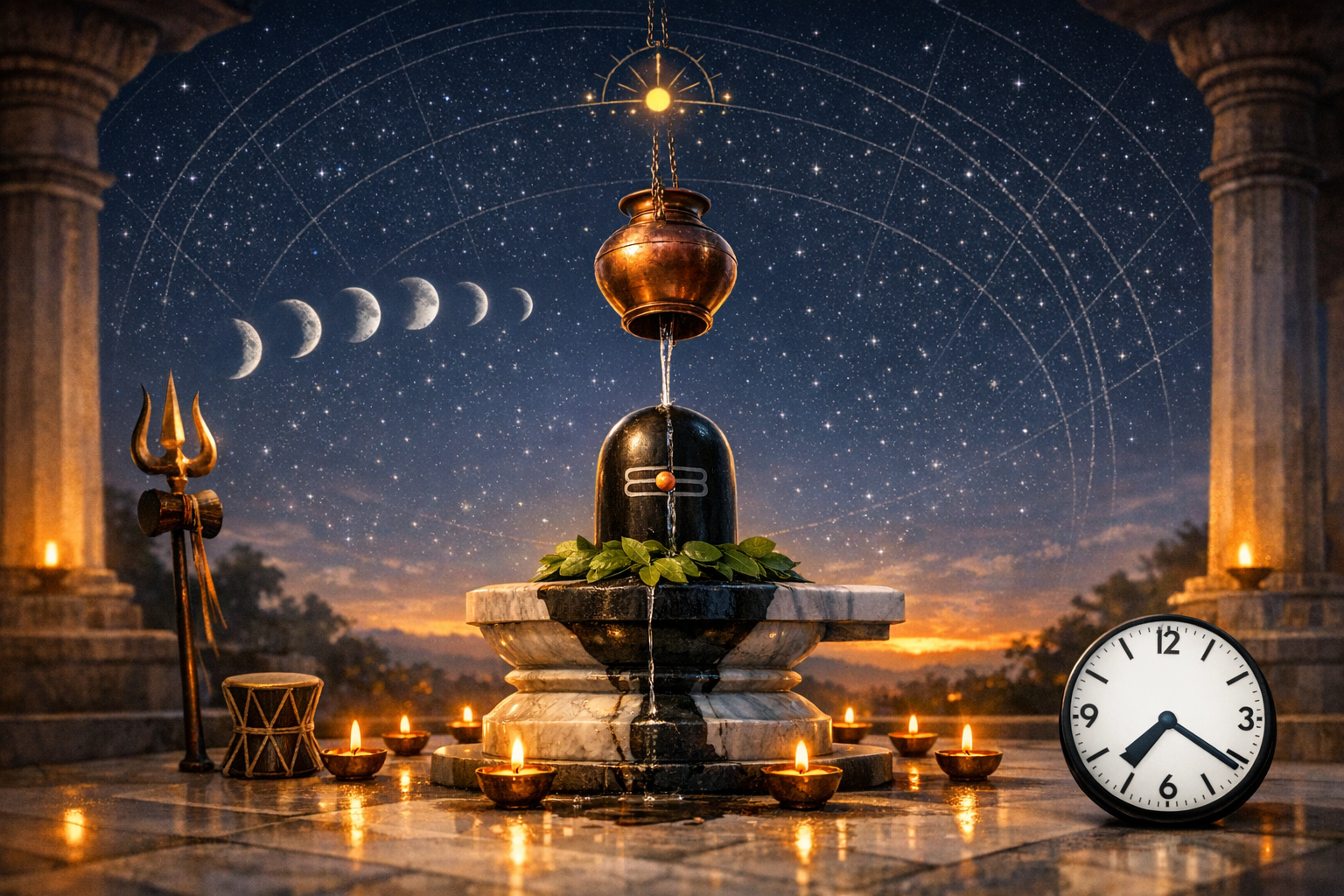
Monday, March 30, 2026 is marked in the Hindu calendar (Panchang) by Shukla Paksha Dwadashi tithi until 07:20 AM (IST), after which Shukla Paksha Trayodashi prevails for the remainder of the day in most regions. As with all Panchang computations, minor variations may occur by longitude, latitude, and the calendrical school followed; local verification is recommended.
A tithi is a lunar day determined by the relative angular distance between the Sun and the Moon, with each tithi spanning a 12° increment. Shukla Paksha denotes the waxing phase of the Moon, and Dwadashi is the twelfth tithi (Sun–Moon elongation approximately 132°–144°). The shift from Dwadashi to Trayodashi occurs at the precise moment this angular boundary is crossed; on this date, that boundary is reached at 07:20 AM (IST), thus commencing Trayodashi, the thirteenth tithi of the waxing fortnight.
In most regional traditions, this period falls within the Chaitra Shukla phase. Month nomenclature and fortnight reckoning can differ (Amanta vs. Purnimanta systems), but the underlying astronomical framework remains unified across dharmic calendars. This shared lunar reckoning supports a living heritage that connects Hindu, Buddhist, Jain, and Sikh lineagescommunities that, historically and in practice, have engaged with lunar observances in complementary ways.
Practical observance on this date often centers on the completion of Ekadashi-related vows. Those who observed Ekadashi fasting the previous day should perform Parana (fast-breaking) after sunrise and within Dwadashi, ideally observing the traditional rule to complete Parana after Hari Vasara has elapsed. Because Dwadashi remains until 07:20 AM (IST) in many locations, the Parana window is brief; households typically prepare a simple, sattvic repast so the rite can be completed mindfully and on time. When local sunrise times are late or Dwadashi ends earlier for a given longitude, practitioners should follow regional guidance or a trusted local Panchang.
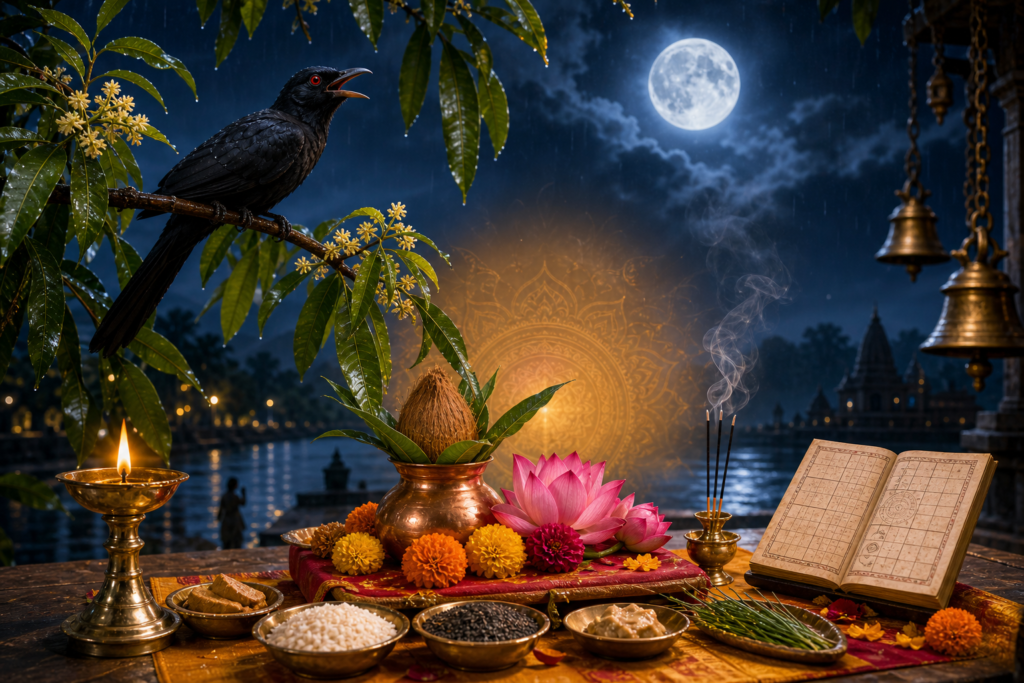
Since Trayodashi prevails at sunset on March 30, the evening is suitable for observing Pradosha Vrata (Pradosh/Pradosham). Falling on a Monday, this is Som Pradosh, traditionally cherished for Shiva upasana. The core worship window is during the pradosha kalaapproximately the 72 minutes bracketing local sunsetwhen devotees perform Shiva abhisheka, light deepas, chant stotras, and offer naivedya. The devotional focus is on inner restraint, humility, and grace, sentiments that resonate across dharmic traditions emphasizing compassion and self-cultivation.
Nakshatra (lunar mansion) and Rashi (the Moon’s zodiac sign) are determined from the Moon’s ecliptic longitude. Nakshatra segments the ecliptic into 27 arcs of 13°20′ each, while Rashi divides it into 12 signs of 30° each. Because these values depend on the exact time and location (and on the astronomical modeldrik/observational vs. traditional parameters such as Surya Siddhanta), practitioners should consult a reliable regional Panchang or astronomical ephemeris for the specific Nakshatra and Moon Rashi prevailing at their place of residence during the desired muhurta.
The remaining Panchang limbsYoga and Karanafurther refine the day’s qualitative tone. Yoga is computed from the sum of solar and lunar longitudes and is used to nuance auspiciousness; Karana (half-tithi) indicates task-suitability across shorter intervals. Given their dependence on precise solar-lunar positions, these values should be taken from a trusted local listing for March 30, 2026, to align puja, study, travel, or community work with the most appropriate intervals.
Commonly referenced muhurta frameworks can be applied with care. Abhijit Muhurta, a widely respected midday interval, is centered on local solar noon and extends for roughly 24 minutes on either side (total ~48 minutes). Because its exact timing varies with sunrise and sunset, one should compute it by first determining local noon (the midpoint of daylight between sunrise and sunset) and then bracketing that point symmetrically. Abhijit Muhurta is often used when other auspicious windows are unavailable, especially for prayers, study, and decisions requiring clarity.
Rahu Kaal (Rahu Kalam), Yamaganda, and Gulikai are avoidance periods derived by dividing the daylight (sunrise to sunset) into eight equal parts. On Mondays, Rahu Kaal falls in the second division of the day; Yamaganda and Gulikai are similarly allocated by weekday patterns and require local sunrise and sunset to compute accurately. For practical planningsuch as commencing travel, formal negotiations, or the start of new venturesone should first determine these intervals for the local city and then schedule around them, while using Abhijit or other favorable muhurta windows where feasible.
Choghadiya is another widely used day–night planner that divides daylight and nighttime into eight equal segments each. Labels such as Shubh, Labh, and Amrit are generally favorable; Char is acceptable for movement and travel; Rog, Kaal, and Udveg are typically avoided. Because Choghadiya is computed from local sunrise and sunset, location-specific calculations offer the best alignment. Many families keep a simple day-planner noting these segments to streamline errands, ceremonies, seva, and study sessions throughout the fortnight.
In lived practice, March 30, 2026 encourages a contemplative rhythm: a measured Parana in the morning honors Ekadashi discipline, while the Pradosha evening invites Shiva-centered reflection. Communities often find that such harmonized observancecombining Vaishnava vrata completion and Shaiva pradosha worship within the same civil daybeautifully illustrates the dharmic spirit of unity in diversity. The shared emphasis on ethical living, restraint, and devotion resonates equally with the values championed in Buddhist, Jain, and Sikh teachings on self-regulation, compassion, and service.
Key takeaways for accuracy and planning are straightforward. Shukla Paksha Dwadashi ends at 07:20 AM (IST), then Shukla Paksha Trayodashi continues through sunset, enabling Som Pradosh in the evening. Parana for Ekadashi should be completed after sunrise during Dwadashi according to regional guidance. Nakshatra, Rashi, Yoga, Karana, Abhijit Muhurta, Rahu Kaal, Yamaganda, Gulikai, and Choghadiya all require local sunrise/sunset and a reliable Panchang for precise timing. Aligning personal and community activities with these intervals transforms the day into a well-orchestrated cycle of discipline, reflection, and shared devotion.
Inspired by this post on Hindu Blog.