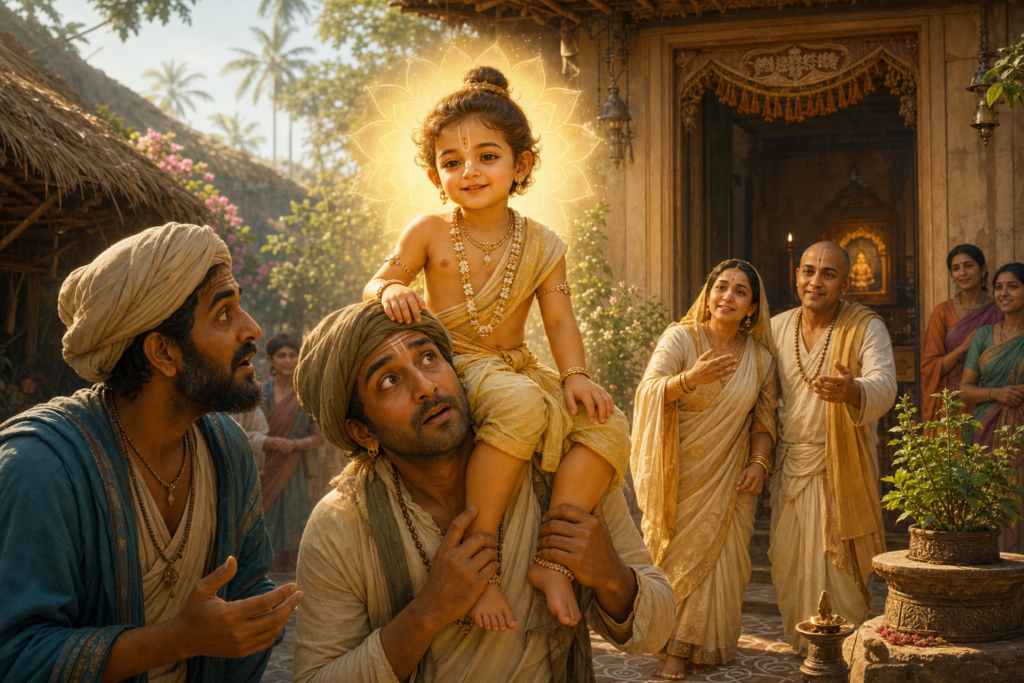
On 09.02.2026, a dawn pilgrimage to the Trichy Rockfort Temple complex in Tiruchirappalli began from Kalyanapuram, with an auto ride to Kumbakonam and an onward rail connection toward the Kaveri basin. The intent was simple yet profound: to participate in a complete sequence of sacred baths (Abhishekam)Honey, Milk, Curd, and Panchamirthamand to experience the ascent, darshan, and silence that the hill and its shrines are known to confer.
Known locally as the Rockfort, this ancient granite outcrop rises abruptly above the plains and hosts a triad of temples and mandapas arranged along a stepped axial climb. The complex integrates Manikka Vinayakar Temple at the foothill, the Thayumanaswamy Temple (Shiva) approximately midway, and the Ucchi Pillayar Temple (Ganesha) at the summit, collectively forming one of South India’s most distinctive sacred landscapes.
Geologically, the rock itself is the monument. Composed mainly of hard charnockite and allied gneissic formations, it is often dated to the Archean eon and cited in scholarly and popular literature as among the oldest exposures in India, with estimates approaching 3.0–3.8 billion years. The sanctuaries are thus not merely built upon stone; they converse with a timescale far older than the Himalayas, aligning ritual time with deep geological time.
The historical development of the complex reflects successive cultural and political strata. Early cave-temple initiatives are attributed to the Pallavas (circa 6th–7th centuries CE), followed by Chola-era embellishments. The Madurai Nayaks substantially fortified the rock in the 16th–17th centuries, raising bastions and gateways that imparted the term “fort” to the site. During the Carnatic Wars of the 18th century, this vantage point became strategically significant for European and regional polities, further embedding the complex in the subcontinent’s early modern history.
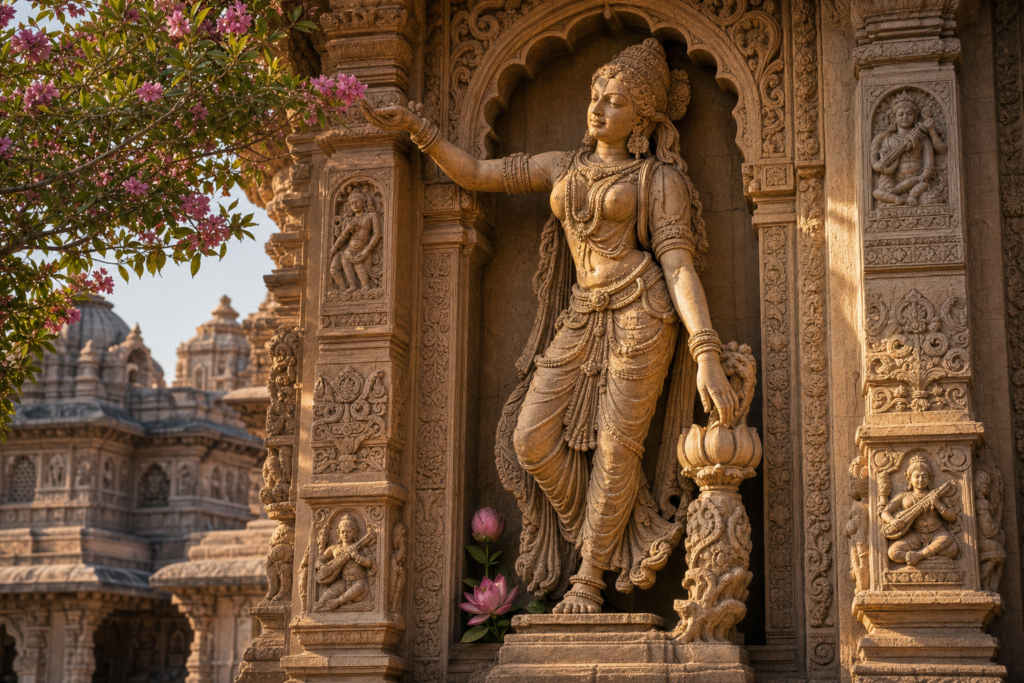
Architecturally, the pathway to sanctity is literal: approximately 417 hewn steps lead pilgrims through portals, pillared halls, and occasional rock-cut recesses that frame the Kaveri and the riverine island of Srirangam. The Thayumanaswamy Temple presents classic South Indian (Dravidian) elementsgopuram, prakara, and shrine axesconfigured to the topographic constraints of the rock, while Ucchi Pillayar crowns the hill with a compact sanctum that opens to a sweeping horizon.
On this particular day, the pilgrimage unfolded as a sequence that mirrored canonical temple praxis: ascent before the heat built on the stone, quiet intervals between bells and conches, and a rhythm of waiting and witnessing that characterizes Tamil Nadu’s living temple culture. Each landing on the climb offered a studied pausepart vantage, part veneration.
Abhishekam, the ritual bathing of the murti, draws from the Kriyā-pāda of the Śaiva Āgamas and cognate South Indian temple manuals. Substances are chosen for their guṇa (qualitative) attributes and their purificatory, cooling, or nourishing symbolism. When performed in sequence, Abhishekam systematically enacts the theological idea that the Divine both receives and returns auspiciousness (śrī) to devotees and the surrounding world.
The Honey Abhishekam (Madhu) is associated with sweetness, healing, and soothing qualities; its viscous sheen clarifies contours of the icon before it is washed. Milk (Kṣīra) connotes purity, maternal nourishment, and sattvic calm; its translucence upon the linga or deity form evokes a luminous, cooling presence. Curd (Dadhi) is linked to fertility, prosperity, and digestive well-being, marking a grounded plenitude. Panchamirtham (often spelled Panchamrita in Sanskrit), here preserved as Panchamirtham, is prepared as a balanced blend of five nectarsclassically milk, curd, ghee, honey, and sugar/jaggerywith regional traditions sometimes adding ripe banana for aroma and texture. Together, these offerings render a progressive purification and embellishment before alankara (adornment) and deepa-ārādhana (lamp worship).
In observational terms, the movement of these substances over stone is pedagogy as much as piety: sheen gives way to whiteness; whiteness to a tangy density; and density to a fragrant, ambrosial glazeeach phase concluding with rinsing, vibhūti or sandal application, floral alankara, and the offering of light. The devotee’s sensory fieldsound of conch, scent of tulasi and sandal, feel of granite underfootserves as a holistic frame for meditation (dhyāna) in motion.
Thayumanaswamy’s sanctum, linked to the lore of Shiva as the “Mother Who Nurtures” (referring to the legend of Shiva assisting a devotee’s childbirth), lends a tenderness to the morning’s rites. Ucchi Pillayar, reached at the summit, meets the pilgrim with Ganapati’s assurance of removal of impedimentshere, both literal (the climb) and figurative (life’s contingencies). The culmination at the peak joins devotion with geography, where the sweep toward Srirangam and the Kaveri’s braided channels encode the perennial link between water, fertility, and temple settlement.
The journey’s logistics are straightforward yet benefit from planning. From Kalyanapuram, an early auto to Kumbakonam facilitates timely rail or road options to Tiruchirappalli Junction. From the city base, local transport or a brief rideshare reaches the Rockfort foothill. Arriving around sunrise reduces heat fatigue while aligning with morning Abhishekam windows commonly observed in Tamil temples.
General temple hours at Thayumanaswamy and Ucchi Pillayar typically span early morning to midday and reopen late afternoon to evening, with variations on festival days. Abhishekam slots often cluster in the early hours; however, devotees should verify current timings locally, as schedules adjust for lunar tithis, special vratas, and monthly observances like Pradosham. Modest attire, respectful silence near sanctums, and adherence to line discipline uphold the temple’s ritual ecosystem.
Practical considerations improve comfort on the climb. Hydration and light, breathable clothing are advisable, especially in the dry season. Non-slip footwear can be left at designated counters before ascending shoeless zones. Those with knee concerns may pace rest stops at terraces and mandapas; handrails are present in steeper segments, and shaded alcoves provide intermittent respite.
Photography policies generally restrict images within sanctums; respectful observation is therefore paramount. Panoramic views are, however, accessible from open terraces and the summit, where careful attention to crowds and ledges ensures safety while appreciating the Kaveri’s floodplain geomorphology and the visual axis to Srirangam’s gopurams.
The Rockfort’s ritual calendar brings multiple peaks in footfall and festivity. Maha Shivaratri animates Thayumanaswamy with nocturnal vigils and special Abhishekams; Vinayaka Chaturthi heightens activity at Ucchi Pillayar. Karthigai Deepam, Navaratri, and local Adi and Panguni observances interweave temple-specific and pan-regional rhythms, making schedule awareness valuable for those prioritizing either quieter contemplation or festival immersion.
In the wider sacred geography, the Rockfort sits within a triad of major Kaveri-side shrines. To the north lies Srirangam’s Sri Ranganathaswamy Temple; to the east, the Jambukeswarar Temple at Thiruvanaikaval; and within Trichy itself, ancillary shrines and tanks (teppakulams) that articulate the city’s long-standing alignment of water management, urbanism, and temple ritual. A half or full day can thus be thoughtfully planned as a circuit of darshan and historical study.
Beyond sectarian boundaries, this pilgrimage speaks to the shared dharmic grammar of devotion, ethics, and contemplative practice. The values embodied in Abhishekampurity, nourishment, balance, and gratituderesonate across Hindu, Buddhist, Jain, and Sikh traditions in distinct yet harmonious ways. The Rockfort ascent, when approached as mindful movement, becomes an embodied lesson in discipline (tapas), compassion (daya), and service (seva), reinforcing the unity-in-diversity that characterizes the subcontinent’s spiritual heritage.
By day’s end, the sequence of Honey, Milk, Curd, and Panchamirtham had framed a clear arc: approach, offering, reflection, and return. The stone preserved the cool of morning long enough to ease the climb; the bells created intervals for attention; and the vistas sealed memory with place. In historical, geological, architectural, and ritual terms, the Trichy Rockfort Temple offers an exemplary field for study and a deeply relatable space for devotiona convergence that rewards both the scholar and the pilgrim.
Inspired by this post on Hindu Pad.