The fifth day of Chaitra Navratri 2026, observed on 23 March 2026, is dedicated to Goddess Skandamata, the compassionate and protective form of Devi who nurtures Lord Skanda (Kartikeya). This day emphasizes motherly grace (karuna), inner courage (vira-bhava), and the disciplined warmth of dharma upheld through family and community. In many traditions, the worship of Skandamata is believed to bestow peace of mind, prosperity, child-welfare, and spiritual progress (adhyatmika shanti) for householders and practitioners alike.
As a calendrical note, the 5th day of Navratri typically aligns with Chaitra Shukla Panchami. Local Panchang should be consulted for precise tithi start–end times, sunrise and sunset, and regional muhurta refinements. For daily sadhana, Brahma muhurta (approximately 96 minutes before sunrise), the morning sandhya after sunrise, Abhijit muhurta around local solar noon, and the evening sandhya during Pradosh kala are time-tested windows for puja and japa.
1) Worship of Skandamata with sankalpa: A clear sankalpa (intention) anchors the vrata. It may include date, location, deity name (Skandamata), purpose (kshama, shanti, arogya, aishvarya), and a resolve to act with compassion and truth. One may mentally dedicate the day’s puja to the well-being of children, mothers, teachers, guardians, and the wider community.
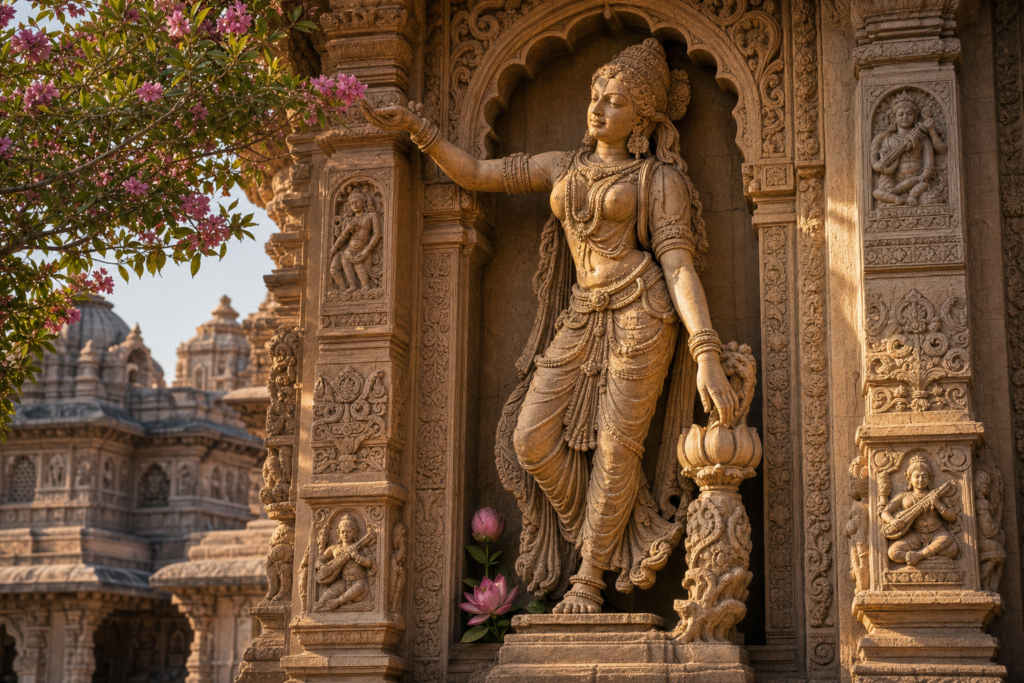
2) Altar setup and iconography: Prepare a clean altar oriented east or north. Place an image or murti of Skandamatadepicted with four arms, seated on a lotus (Padmasana), holding baby Skanda on the lap, two hands holding lotuses, and with the lion as vahanabeside a kalasha or a simple copper lota with clean water. A ghee diya, incense, fresh flowers (preferably lotus, rose, or marigold), a yellow or white cloth, and a banana offering are traditional. As Skanda’s vahana is the peacock, peacock feathers or motifs may also be used respectfully as symbols of valor and purity.
3) Systematic Skandamata puja-vidhi (brief): After a short achamana and pranayama, begin with a simple Ganesha vandana. Offerings may follow a simplified shodashopachara sequence: avahana (invocation), asana, padya, arghya, achamaniya, snana/abhisheka (if performing murti abhisheka, use panchamrita judiciously), vastra/alankara, gandha, akshata, pushpa, dhoopa, deepa, naivedya, tambula, stuti, and kshamapana. Conclude with aarti and pradakshina. If ghata-sthapana was done on day one, continue the daily upacharas to the kalasha also.
4) Mantras, dhyana, and japa: Skandamata is invoked with the widely recited mantra “Om Devi Skandamatayai Namah.” A traditional dhyana often recited is: “Simhasanagata nityam, padmasritakaradvaya; shubhadastu sada devi, skandamata yashasvini.” Practitioners typically undertake 9, 27, or 108 japa repetitions using a tulsi or rudraksha mala. Recitation of Durga Saptashati (especially the Narayani stuti), Devi Kavacham, Argala, and Keelakam is also customary for those who follow that path; others may read a Skandamata katha or verses from Skanda Purana to deepen bhakti and understanding.
5) Offerings and bhog: A sattvic naivedyaripe bananas, kheer (preferably with jaggery), honey, and dry fruitsis considered auspicious for Skandamata. Freshly prepared phalahara, milk-based sweets, and panchamrita are common. Avoid onion, garlic, and stimulants. Offer water after naivedya, and distribute prasad with humility. Lighting a steady ghee diya enhances a calm meditative atmosphere; safety precautions should be observed at all times.
6) Vrat (fasting) guidelines with care: Observances range from nirjala (no water) to phalahara (fruits, milk) or satvik meals once a day. Devotees often use sendha namak (rock salt) and avoid grains and processed foods. Those with health conditions, elders, pregnant individuals, and children should prioritize nourishment and medical guidance; the essence of vrata lies in inner discipline and kindness, not harsh austerity.
7) Optional Skandamata homa: Where feasible and guided, a simple homa may be performed with clarified butter and sesame or havan samagri, offering with “Om Hreem Skandamatayai Svaha.” Maintain fire safety and local compliance. Even without a formal homa, a brief agnihotra or lighting a small camphor aarti while chanting the mantra cultivates focused devotion.
8) Seva and dana reflecting motherly compassion: Acts of service (seva) aligned with Skandamata’s nurturing aspect include supporting children’s education, maternal health, lactation support programs, meals for families, or temple/community kitchens. In a dharmic spirit of unity, this seva resonates with ahimsa in jainism, karuna/metta in buddhism, and seva in sikhism, affirming shared values across traditions.
9) Meditation and breathwork: Many traditions associate Skandamata with the Vishuddha chakra (pure expression) and, by extension, with the Anahata (heart) qualities of love and forgiveness. A balanced practice may include 5–10 minutes of diaphragmatic breathing, gentle ujjayi, and silent mantra japa on “Hreem” or “Om Devi Skandamatayai Namah.” Maintain a straight spine, soften the jaw and throat, and rest attention between heart and throat centers; conclude with a brief metta (loving-kindness) contemplation for all beings.
10) Cultural expression and community: Bhajans, Garba/Dandiya, or simple puspanjali at home or temple nurture shared joy. Visiting a nearby Durga or Subrahmanya Swamy temple for darshan strengthens community bonds. Journaling spiritual insights, expressing gratitude to parents and teachers, and setting a modest sankalpa for the remaining Navratri days are meaningful ways to internalize the day’s teachings.
Skandamata’s iconography encodes a profound theology: the lotus signifies purity in the midst of worldly duties; the lion reflects disciplined courage; and the presence of Skanda (Kartikeya/Murugan/Subrahmanya) signifies the union of wisdom and valor born of maternal love. Worship thus becomes both devotional and pedagogicaleducating the heart to be fearless yet tender.
Color and associations for day five often include vibrant yellow, orange, or white garments and flowers; these vary regionally. Yellow is linked with clarity and auspiciousness, while orange reflects energy tempered by wisdom. Devotees may harmonize attire, altar cloth, and flowers to one palette as a symbolic aid to one-pointedness (ekagrata).
A practical materials checklist includes clean altar cloth, diya (preferably ghee), incense, fresh flowers, akshata, kumkum, chandan, water in a copper vessel, panchamrita for optional abhisheka, fruits (banana preferred), sweets (kheer), a japa mala, and a simple bell for aarti. Those observing a pared-down home puja can keep it minimal yet mindfulpurity of intent outweighs ornamentation.
For students of ritual grammar, even a simplified upachara setavahana, asana, padya, arghya, achamaniya, gandha, akshata, pushpa, dhoopa, deepa, naivedya, stotra, and kshamapanapreserves the inner arc from invocation to gratitude. The sequence educates attention, moving from external gestures to inward absorption and finally to release, aligning with the broader Navratri sadhana that refines body, speech, and mind.
Parents and caregivers often find day five uniquely resonant. Skandamata’s presence is a contemplative mirror for responsible strength: defending without harshness, guiding without domination, and loving without attachment. This ethic translates into everyday dharmapatient listening, truthful speech, and consistent carequalities that also harmonize with the shared moral imagination across hinduism, buddhism, jainism, and sikhism.
Health and safety considerations remain paramount. Diyas and incense should never be left unattended; homa fire must be contained and supervised; food hygiene should be maintained for prasada distribution; and fasting must respect individual health needs. When in doubt, consult a qualified guide or physiciandharma is always compassionate to embodied realities.
On 23 March 2026, the fifth day of Navratri offers a focused, transformative opportunity to cultivate compassion with courage. Through a careful puja-vidhi, thoughtful japa, mindful fasting, and seva grounded in motherly love, Skandamata worship becomes a lived pedagogyuniting communities and reinforcing the dharmic values that sustain households and society through wisdom, protection, and grace.
Inspired by this post on Hindu Pad.