On Sunday, March 29, 2026, the Daily Hindu Calendar (Panchang) notes Shukla Paksha Ekadashi tithithe eleventh lunar day of the bright fortnightin most regions. This Ekadashi prevails until 8:31 AM on March 29. Thereafter, the day transitions to Shukla Paksha Dwadashi tithi, the twelfth lunar day of the waxing phase of the Moon, for the remainder of the day.
Understanding this transition benefits from a brief review of tithi mechanics. In Vedic calendrical astronomy, a tithi is a 12° elongation step between the Moon and the Sun. Formally, tithi number = ⌊(Moon’s geocentric ecliptic longitude − Sun’s geocentric ecliptic longitude)/12°⌋ + 1. Shukla Paksha denotes the bright fortnight (waxing phase) that begins after Amavasya and culminates at Purnima, while Krishna Paksha denotes the waning phase that runs from Purnima to Amavasya. Ekadashi, therefore, marks a precise harmonic step in the synodic cycle rather than an arbitrary calendar page.
Ekadashi has enduring spiritual, cultural, and health-oriented significance across the dharmic world. In Hindu traditions, Ekadashi vrata is often observed with upavasa (fasting), japa, and Vishnu-oriented worship. Many families experience this fortnightly rhythm as a gentle realignmentan opportunity to cultivate clarity, sattva, and one-pointedness. While practices vary, the shared cadence of lunar time remains a unifying thread across communities.
In a spirit of dharmic unity, it is also noteworthy that allied time-honoring practices appear across traditions. Jains maintain intricate observances tethered to lunar phases (including poshad/uposadha), Buddhists traditionally align select observances with uposatha cycles, and Sikhs emphasize remembrance (simran), seva, and ethical living anchored in a disciplined daily rhythm. Though liturgical details differ, the collective reverence for cosmic time and inner refinement reinforces inter-traditional harmony.
With Ekadashi ending at 8:31 AM and Dwadashi thereafter, many observers of the Ekadashi fast plan parana (breaking the fast) on Dwadashi. Textual guidance commonly notes avoiding parana during Hari Vasara (the initial portion of Dwadashi) and favoring appropriate daylight windows once Dwadashi is established. Because exact muhurta spans are location-dependent, consulting a Panchang tailored to one’s locale is prudent to honor both tradition and astronomical precision.
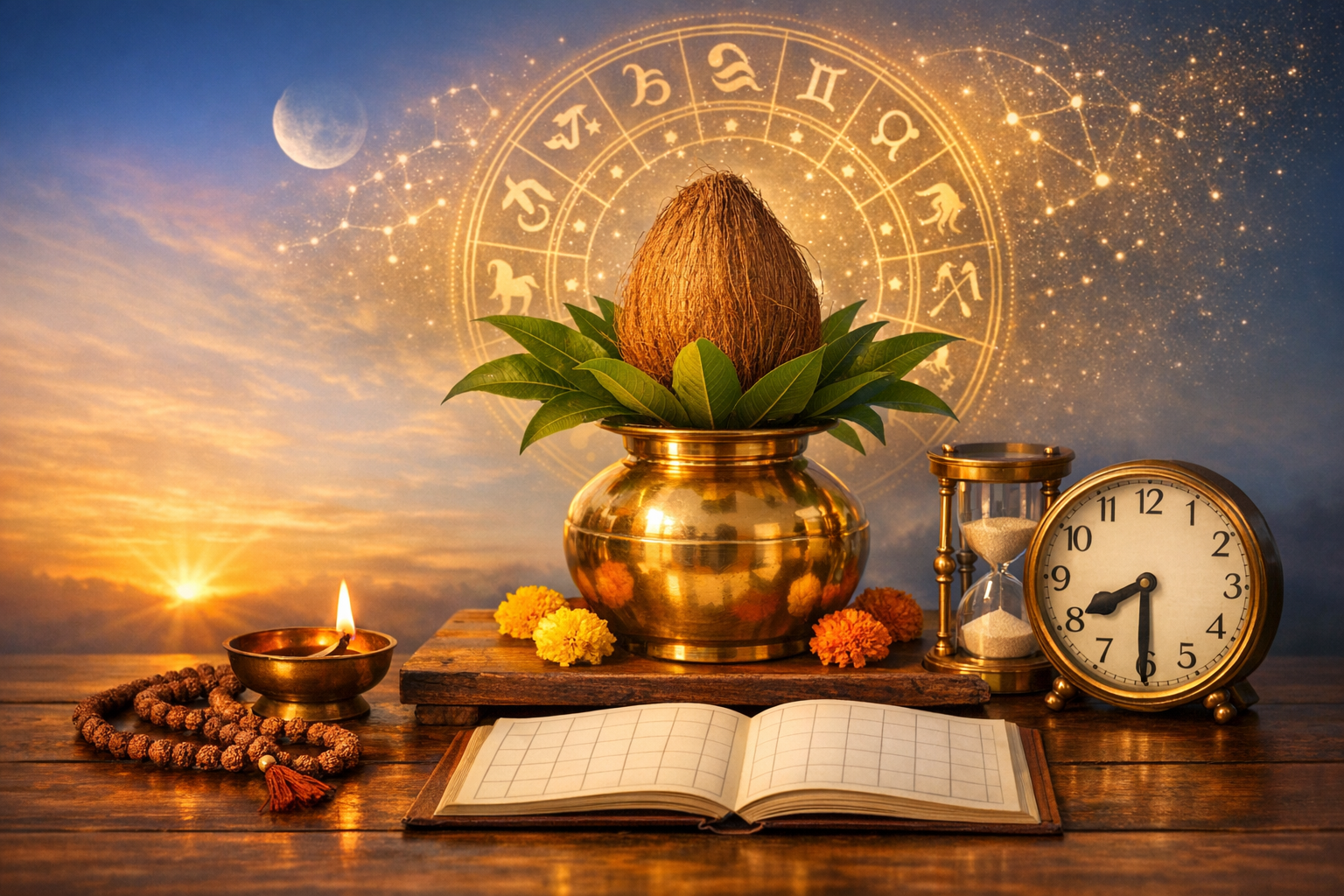
Panchang literally means “five limbs” (pancha-anga) that together describe the qualitative climate of time: (1) Tithi (lunar day), (2) Vara (weekday), (3) Nakshatra (lunar mansion), (4) Yoga (solar-lunar sum), and (5) Karana (half-tithi segment). This fivefold framework is both astronomical and ritual: it supports festival dating, vrata timing, family Samskaras, and everyday decision-making.
Nakshatra, the stellar backdrop traversed by the Moon, divides the ecliptic into 27 equal segments of 13°20′ each. The nakshatra occupied by the Moon at any given time nuances the day’s energies for sankalpa, japa, study, and travel. Astronomically, determining nakshatra entails computing the Moon’s sidereal longitude (relative to a chosen ayanamsha) and mapping it to the relevant 13°20′ division. Practically, a regional Panchang provides this information clearly for sunrise and for changing intervals throughout the day.
Rashi designates a 30° sign division of the zodiac, used in Vedic astrology to contextualize the Moon’s daily placement (Chandra Rashi), the Ascendant (Lagna), and planetary transits. For daily Panchang use, the Moon’s rashi and nakshatra at sunrise are frequently noted to gauge the day’s flow. Due to regional ayanamsha preferences and calculation conventions, a reputable, locality-specific Panchang remains the best reference to avoid discrepancies.
“Good Time” (muhurta) selection is an applied art within the Panchang tradition. A few time-tested anchors include: (a) Brahma Muhurtathe pre-dawn window often favored for meditation, mantra, and study due to its calm, sattvic quality; (b) Abhijit Muhurtaa midday segment traditionally used for time-sensitive actions when other options are constrained; and (c) Choghadiyaa practical day-and-night division framework especially prevalent in western India for quickly screening auspiciousness across the day.
When filtering for auspiciousness, devotees also account for Rahu Kaal, Yamaganda, and Gulika Kaal, which many traditions prefer to avoid for fresh undertakings. A reliable method is to determine local sunrise and sunset, divide daytime into eight equal parts, and then identify the segments assigned to these intervals based on the weekday. This proportional approach ensures that guidance adapts to seasonal day-length and location rather than relying on fixed clock times that may not suit every latitude.
Regional calendrical conventions can also shape how a day is framed. For instance, some regions follow amanta month reckoning (month ending at Amavasya) while others observe purnimanta (month ending at Purnima). Festival names, monthly labels, and even local muhurta preferences can vary accordingly. The present note“in most regions”acknowledges those well-known differences while preserving the shared core of Vedic timekeeping.
Practical planning for this Sunday benefits from the stated transition: with Shukla Paksha Ekadashi active until 8:31 AM and Shukla Paksha Dwadashi thereafter, observers of the Ekadashi vrata can orient the morning around japa, quiet contemplation, and seva, then plan parana during a Dwadashi window deemed appropriate by their sampradaya guidance and local Panchang. As always, care is taken to avoid breaking the fast during Hari Vasara and to honor sunrise-bound recommendations retained by specific traditions.
Meaningful observances for the day may include recitation of Vishnu Sahasranama, study of Bhagavad-Gita or Srimad-Bhagavatam passages relevant to Ekadashi, and acts of compassion such as dana and community support. Many find that a balanced approachmindful fasting, measured work, and unhurried sandhyacultivates steadiness that carries beyond the lunar day itself.
From a broader cultural lens, Panchang usage is not merely ritual scheduling; it is a civilizational dialogue with time. By aligning intention with precise astronomical markerstithi, nakshatra, yoga, and morecommunities participate in a living heritage in which science, ethics, and spirituality interweave. This shared reverence for cosmic rhythm fosters unity among Hindu, Buddhist, Jain, and Sikh communities, strengthening bonds of mutual respect while allowing each tradition to express its distinctive path.
In summary, March 29, 2026 presents a clear and purposeful arc: Shukla Paksha Ekadashi tithi continues until 8:31 AM, followed by Shukla Paksha Dwadashi tithi for the rest of the day. Within this framework, devotees can calibrate vrata observance, parana, study, and seva using established Panchang principles, regional customs, and locality-specific calculations. The day thus stands as both an astronomical fact and a spiritual opportunityan invitation to harmonize action with auspicious time.
Inspired by this post on Hindu Blog.