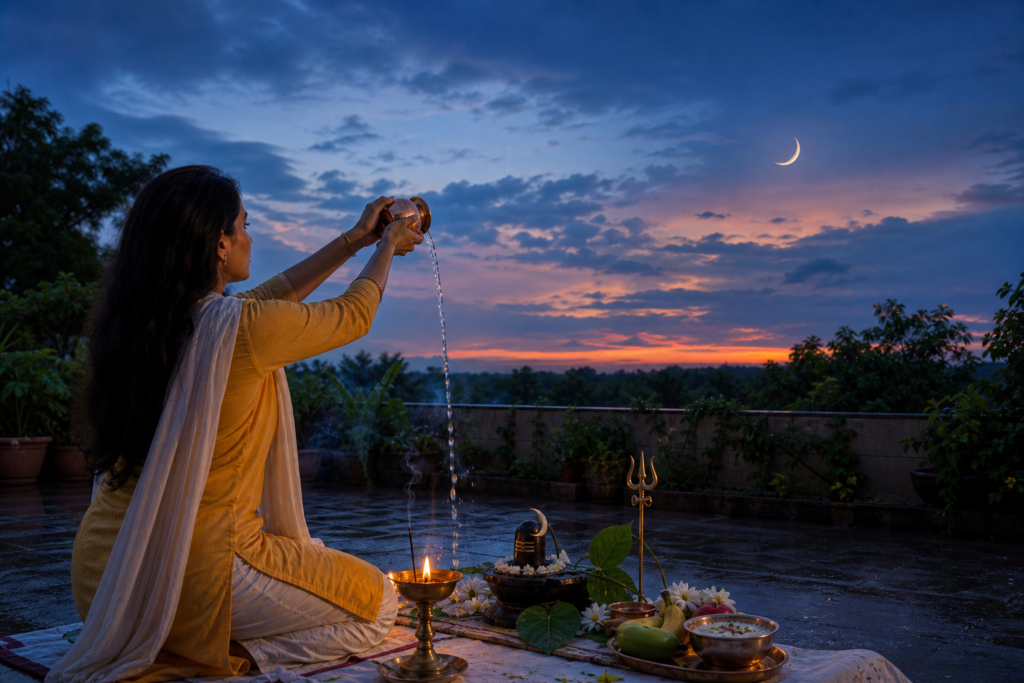
Parabhava Nama Year 2026–2027 begins on Thursday, 19 March 2026 (Chaitra Shukla Pratipada, as per Indian Standard Time), marking the transition from Vishwavasu Nama Samvatsara, which concludes on 18 March 2026. This lunar New Year anchors Ugadi for Telugu and Kannada communities and Gudi Padwa for Marathi households, setting the cultural and ritual cadence for the 2026–2027 period in regions that follow the traditional Hindu lunisolar calendar.
In the Hindu calendar’s 60-year Samvatsara cyclea system that blends observational astronomy and traditioneach year carries a distinct name used widely across the Deccan and other parts of India. The cycle relates conceptually to the 12-year orbit of Jupiter (Brihaspati) and the 30-year orbit of Saturn (Shani), whose lowest common multiple is 60, providing an elegant temporal framework. Within the contemporary South Indian convention, Parabhava is the 40th Samvatsara in this series.
Etymologically, “Parabhava” (from Sanskrit “para” = other, beyond; “bhava” = state, becoming) is often glossed as “humbling” or “defeat,” yet classical usage also invites a deeper, contemplative reading: humility before cosmic order and reality. In an academic sense, the name functions as a mnemonic within a repeating cycle; it does not predetermine individual or societal outcomes. Interpretations, when offered, are best approached as symbolic and reflective rather than deterministic.
Calendrically, the Samvatsara name changes on Chaitra Shukla Pratipada in systems that observe the lunar month’s bright fortnight as the New Year day. Panchangas (almanacs) differ modestly by schoolAmanta (month ending with Amavasya) versus Purnimanta (month ending with Purnima)and by local astronomical parameters. Accordingly, while 19 March 2026 (IST) is the commonly referenced date for the Parabhava transition, communities outside India or following different Panchanga schools may observe slight variations.
For practical planning, Parabhava Nama Samvatsara extends from 19 March 2026 until the next Chaitra Shukla Pratipada, anticipated around 8 March 2027 (IST), subject to regional almanac calculations. As with all lunisolar observances, location-specific sunrise, tithi transitions, and time zone adjustments can shift local observance dates.
Ugadi and Gudi Padwa embody the living heritage of the Hindu calendar. Families prepare seasonal foodsmost famously Ugadi Pachadi (a six-taste blend) and bevu-bella (neem and jaggery)to acknowledge life’s full spectrum of experiences. In Maharashtra, households install the gudi, a bright banner hoisted atop a kalash, symbolizing auspicious victory and renewal. These practices make the abstract precision of Panchanga mathematics tangible through shared ritual, memory, and community participation.
A hallmark of New Year observance is Panchanga Shravanam, the ceremonial recitation of the almanac for the year ahead. Among its traditional components is the Aaya–Vyaya (income–expenditure) forecast at a collective or regional level. As indicated by the tag Aaya Vyaya 2026–2027, such readings are interpretive and culture-rich, intended to guide reflection and preparedness rather than to function as fixed predictions. Individual outcomes are more responsibly understood through personal dharma, prudent action, and, where relevant, a qualified Vedic astrology consultation.
Beyond Ugadi and Gudi Padwa, cognate New Year moments occur across communities following the Chaitradi lunar reckoning, including Cheti Chand among Sindhis and Navreh among Kashmiri Pandits, often aligned with or near the same lunar phase. In mid-April, several regions observe solar New Yearssuch as Puthandu in Tamil traditions and Vaisakhi across North Indiademonstrating how shared calendrical science accommodates both lunar and solar turns of the year.
This calendrical pluralism is emblematic of broader dharmic unity. Hindu, Buddhist, Jain, and Sikh communities arrange many observances with reference to lunar tithis or solar transitionsMahavir Jayanti (Jain), Buddha Purnima (Buddhist), and Vaisakhi (Sikh) among themattesting to a civilizational coherence that honors multiple methods while recognizing a common cosmological grammar of time. Parabhava Nama Samvatsara thus becomes a connective span for festivals and practices across these traditions, even where liturgical details differ.
From a technical perspective, Samvatsara names are only one lens in the larger framework of Vedic and traditional astrology. Mundane (world) forecasts frequently prioritize the Mesha Sankranti chart (Sun’s ingress into Aries) and New Moon charts, along with local Panchanga elementsVara (weekday), Tithi, Nakshatra, Yoga, and Karana. Responsible use recognizes these methods as heuristic tools; ethical guidance, social responsibility, and interfaith harmony remain the bedrock of dharmic life regardless of year-name attributions.
Classical literature offers a contemplative anchor for Parabhava’s inner meaning. The Srimad-Bhagavatam (5.5.5) reflects: “parābhavas tāvad abodha-jāto yāvan na jijñāsata ātma-tattvam,” often read as a reminder that spiritual forgetfulness invites decline, while inquiry into ātma-tattva leads to enduring well-being. In the context of a New Year, the name Parabhava can encourage humility, study, and recommitment to compassionvalues shared across Hinduism, Buddhism, Jainism, and Sikhism.
Ritually, many households and temples encode the Samvatsara name in the sankalpa (vow of intent) recited before worship. For 2026–2027, the formulation includes “Parabhava-nāma-samvatsare,” followed by the appropriate details of ayana (uttarāyana or dakshināyana), ṛtu, māsa, pakṣa, tithi, nakṣatra, yoga, and karaṇa as per the day’s Panchanga. This precise verbal mapping of cosmic time to human intention is a signature of the Hindu calendar’s integrative science.
For families and institutions planning the year, three practical guidelines are helpful. First, anchor festival dates to a trusted local Panchanga, observing sunrise-based tithi transitions for one’s location. Second, when scheduling samskaras, weddings, or housewarmings, complement Samvatsara context with muhurta selection using Vara–Tithi–Nakshatra harmonies. Third, remember that the 60-year cycle is a cultural and cosmological inheritanceits greatest value lies in aligning communities with nature’s rhythms and with one another.
In summary, Parabhava Nama Samvatsara 2026–2027 begins on 19 March 2026, succeeding Vishwavasu and inaugurating Ugadi and Gudi Padwa for the cycle ahead. The year-name belongs to a rigorous, time-tested 60-year framework whose meanings are symbolic and whose observances knit together diverse regions and dharmic traditions. Approached with humility, study, and service, Parabhava becomes less a label and more a shared opportunity for renewal, unity, and compassionate action.
Inspired by this post on Hindu Pad.