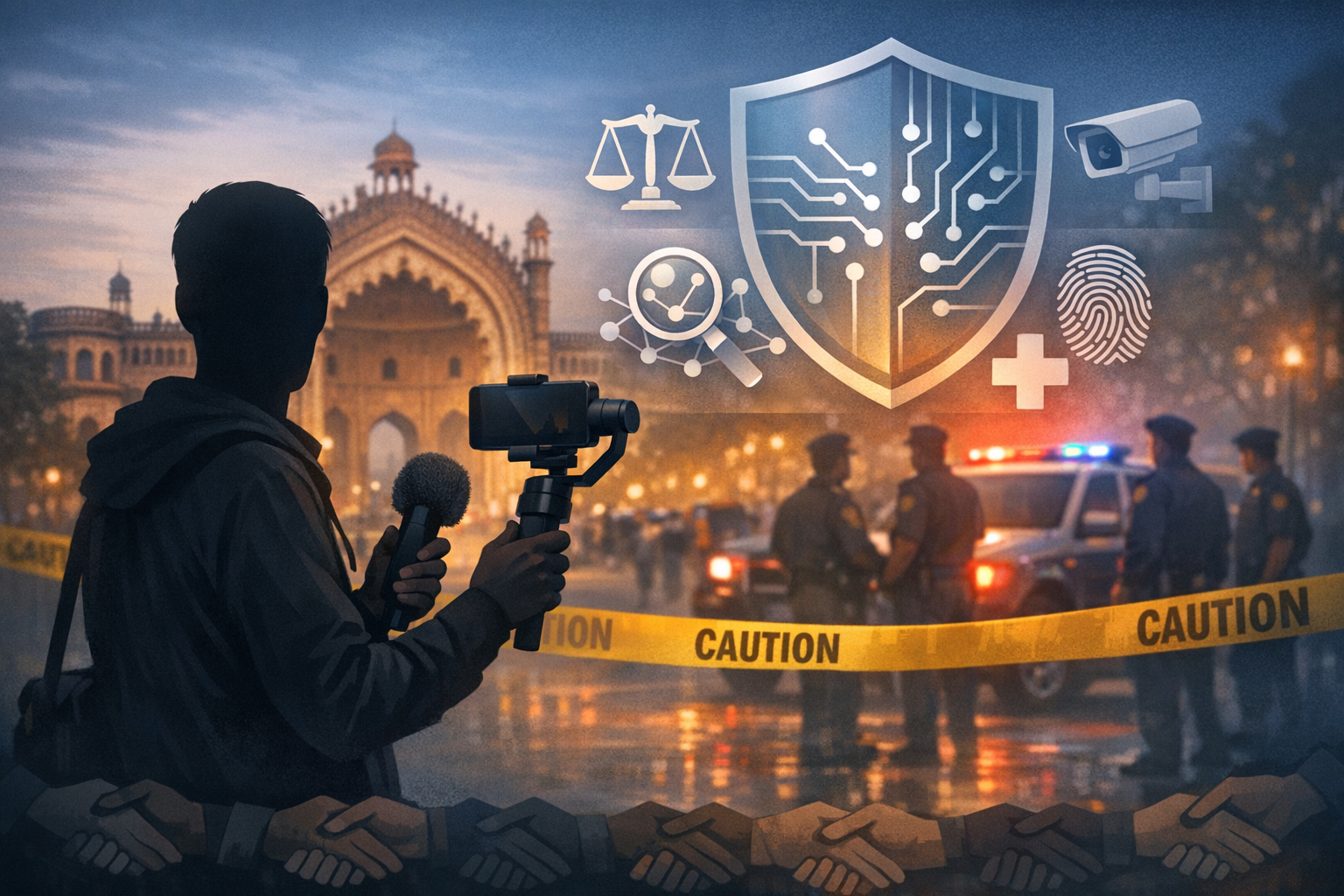
A violent stabbing targeting ex-Muslim YouTuber and activist Saleem Vastik (also reported as Salim Vastik) in Lucknow, Uttar Pradesh, has drawn urgent attention to the safety of dissident voices and the broader public interest in freedom of expression. Initial reports indicate that two alleged assailants, identified as Gulfam and Zeeshan, were subsequently killed in a police encounter. While the immediate threat appears to have been neutralized, the episode raises complex questions about targeted attacks, counterterrorism protocols, due process, and the safeguarding of civic harmony.
Available accounts suggest the attack was deliberate and personal in nature, consistent with patterns often seen in targeted violence against public-facing figures. Given the variations reported in the spelling of the victim’s name“Saleem” and “Salim”and the paucity of fully corroborated public documents at this time, a careful, evidence-led interpretation remains essential. What is not in dispute is the need to examine how online speech, offline intimidation, and the readiness of law enforcement intersect in preventing similar incidents across India.
In Uttar Pradesh, as elsewhere in India, such incidents are read against the backdrop of the constitutional commitment to free speech and the state’s duty to protect life and public order. Content creators who critique belief systems, institutions, or social norms often receive heightened attention and, in some cases, threats. This episode demands a sober, law-centered response that both shields at-risk individuals and upholds the integrity of the criminal justice process.
Reports further state that the attackers, Gulfam and Zeeshan, were killed in a police encounter shortly after the stabbing. In India, officer-involved shootingscommonly described as “encounters”are subject to strict judicially mandated safeguards. The Supreme Court’s guidelines in People’s Union for Civil Liberties (PUCL) v. State of Maharashtra (2014) require an independent, prompt, and transparent inquiry; mandatory registration of an FIR; forensic and post-mortem documentation; and notification of oversight bodies such as the National or State Human Rights Commissions as appropriate. These safeguards are designed to ensure public trust in policing while preserving the rights of both victims and suspects.
The legal matrix potentially implicated in a daylight stabbing includes provisions of the Indian Penal Code (IPC) related to attempt to murder, criminal conspiracy, unlawful assembly, and arms or dangerous weapons, subject to facts established by investigation. If elements of violent extremism or organized plotting emerge, additional frameworksranging from specialized state laws to central legislationmay be considered by investigators. That determination rests on material evidence, witness testimony, and digital forensics, all of which require time and rigor to assemble.
For law enforcement, the operational arc after a targeted attack typically includes scene containment, victim protection and medical support, suspect apprehension, forensics, and threat-surface reduction. In the digital era, this arc must also integrate open-source intelligence (OSINT), platform cooperation for data preservation, and protective intelligence workflows that proactively identify, triage, and mitigate threats to public figures. Uttar Pradesh Police and allied agencies have, in recent years, expanded such capabilities, yet this case underlines the continuing need for capacity-building and timely inter-agency coordination.
From a security-science perspective, targeted stabbings are often low-tech, high-intent crimes. They can emerge from a spectrum of motivationsideological, personal grievance, or a blend thereofamplified by online echo chambers. Effective prevention layers deterrence and detection through measures such as threat reporting channels, venue security audits, route variation, and community policing that builds trust and accelerates tip-offs. When threats intersect with public discourse, preventive strategies must be both rights-respecting and resolute.
The protective posture for high-risk individuals can be strengthened through structured risk assessments that inventory exposure points across home, transit, workplace, and digital presence. Practical measuresranging from controlled public appearances and hardened access points to emergency communications plansreduce the window of vulnerability. Equally important is training for teams and bystanders in immediate trauma response (e.g., bleeding-control techniques) to improve survivability should prevention fail.
In parallel, platform governance and civil society partnerships matter. Coordinated flagging of doxxing, threats, and targeted harassment; expedited preservation orders for relevant data; and clear escalation channels to law enforcement can shorten response times. Media literacy campaigns and counter-speech initiatives further help diffuse rumor cascades that can fuel panic or vigilante impulses after a high-profile incident.
Balanced with these security imperatives is the foundational requirement of due process. Independent and time-bound inquiries into any encounter death are crucial for accountability, both to safeguard citizens and to protect law enforcement from unfounded allegations. Transparencythrough public reporting of inquiry findings, where permissiblereinforces institutional legitimacy and deters cycles of retaliatory violence or misinformation.
Communal harmony is a paramount consideration whenever violence touches questions of belief, dissent, or identity. India’s civilizational ethosshaped by Dharmic traditions of Hinduism, Buddhism, Jainism, and Sikhismcenters pluralism, ahimsa, and compassionate engagement even under provocation. It is essential to avoid generalizations about entire communities and to focus instead on individual accountability under law. This approach affirms that diverse spiritual and philosophical paths can coexist when state institutions act impartially and citizens remain anchored in shared ethical values.
Historical experience also cautions that sensational framing can complicate policing and inflame public sentiment. Responsible journalism and public communicationanchored in verified facts, careful language, and contexthelp the public distinguish between isolated criminal intent and larger social fabric. In practical terms, that means prioritizing official statements, judicial records, and credible documentation over rumor or partisan narratives.
For many citizens, the immediate reaction to a public stabbing is a mix of shock, empathy for the victim, and concern about personal safety in everyday spaces. These emotions are valid; they also underscore why transparent investigations, visible protective measures, and social solidarity are indispensable. When communities rally around the principles of justice, nonviolence, and mutual respect, they help deny violent actors the broader social disruption they may seek.
A comprehensive after-action review in cases like this can yield practical lessons: What early-warning signals were missed? How can protective intelligence be embedded in routine policing? Are high-risk individuals receiving timely guidance from authorities on risk mitigation? Answers to these questions strengthen institutional learning and public confidence.
Policy options worth considering include enhanced liaison units for creators, activists, and journalists who face repeated threats; streamlined digital evidence workflows with platforms; and expanded training for local police in behavioral threat assessment. State support for witness protection and victim services also matters, not only to secure convictions but to humanize justice for survivors and their families.
The broader informational environment demands disciplined counter-disinformation practices. Clear, periodic briefings by authorities reduce rumor velocity. Civil society and faith leaders can reinforce messages of calm, cooperation, and legal redress, sustaining the social trust on which public safety ultimately rests.
At the heart of this incident is the right to speak and disagree without fear of violence. Upholding that right is not only a constitutional promise but a civilizational one, rooted in the Dharmic emphasis on debate, inquiry, and compassion. When investigative rigor is paired with communal responsibility, India’s social contract grows stronger, and those who resort to violence find fewer opportunities to fracture civic life.
As details continue to be verified through official channels, the immediate priorities remain clear: comprehensive investigation into the attack and the subsequent police encounter; assurance of medical, legal, and psychological support to the victim; and proactive, community-centered strategies that can deter copycat behavior. The long arc of prevention bends toward institutions that are both strong and just, and toward citizens who refuse to let violence define public discourse.
Ultimately, unity across Hindu, Buddhist, Jain, and Sikh communitiesas well as across all citizens regardless of beliefoffers the most durable answer to targeted violence. By recommitting to pluralism and lawful accountability, society both honors the dignity of the victim and sets a clear boundary against those who seek to intimidate through force. That is how safety, freedom, and harmony can advance together in Uttar Pradesh and across India.
Inspired by this post on Hindu Jagruti Samiti.