Shweta Kali (also spelled Shwetakali, Shwetkali, Shvetakali, or Shwet Kali) is revered in Tantric and Shakta traditions as the white, luminous manifestation of Kālī—an embodiment of creative emergence and transformative return. Celebrated particularly in Bengal and Nepal, this form synthesizes the serene clarity of śveta (white) with Kālī’s timeless power (kāla), articulating a vision of the Divine Mother who generates life, dissolves form into ash, and restores the cosmos to luminous balance.
Etymologically, śveta signifies brightness, purity, and revelation, while Kālī relates to time, limit, and the mysterious fecundity of darkness. Shweta Kali unites these polarities: white as the witness-light that reveals, and Kālī as the primal matrix that births and reabsorbs. The form thus stands for the full cycle—origin, maturation, dissolution—bridged by an unwaning radiance that persists when forms turn to ash.
Regional lineages in Bengal and the Kathmandu Valley attest to this theology through liturgy, iconography, and sādhana manuals (paddhatis). While large public temples in Kolkata and Nepal often center on Dakṣiṇā Kālī or Bhadrakālī, domestic shrines and initiatory traditions preserve the specific upāsanā of Śvetakālī. Tantric compendia and Shakta nibandhas associated with the Kālī-kula further enrich the interpretive field, even as descriptions vary across families, gurus, and manuscripts.
Iconographically, Shweta Kali is envisioned with a white or moonlike luster to the skin, three eyes, and four arms—typically bearing the khadga (sword) and kapāla (skull-cup), with the remaining hands in abhaya and varada mudrās, conferring fearlessness and grace. Some lineages clothe the deity in white or ash-gray garments, set against a cremation-ground backdrop to emphasize the alchemy from embodied life to consecrated ash. A garland of rudrākṣa or lotuses may replace the skull garland familiar in raudra forms, signaling a shift from overt ferocity to serene sovereignty.
Color inversions are sometimes employed to express complementarity: where Śyāma Kālī (black) stands upon the pale, still Śiva, Śvetakālī may appear upon a darker support or within a darkened mandala, dramatizing how white awareness rests in and illumines the mystery of the unmanifest. Ornaments may gleam silver rather than gold; the crescent moon appears more prominently; and the lotus seat, if shown, is often rendered white to evoke sattvic poise.
Philosophically, Shweta Kali can be read through the Shakta nondual lens as the union of prakāśa (luminosity) and vimarśa (self-reflexive awareness). In Kashmir Śaivism’s terms, the dazzling witness (prakāśa) is inseparable from its power to know and manifest (vimarśa). In Sāṃkhya-tinged vocabularies, white broadly indexes sattva—clarity and equilibrium—while the epithet Kālī points to that which eclipses categorical guṇas. The result is not a mere “peaceful variant” of Kālī but a metaphysical statement: ultimate light and ultimate depth are one.
This metaphysic resonates across Dharmic traditions. In Vajrayāna Buddhism, white deities (such as White Tārā) often signify pacification and healing, while dark-hued protectors embody uncompromising wisdom; Newar communities in Nepal maintain Śākta rites that sit alongside Vajrācārya lineages, and the visual grammar of white/black complementarity is shared and understood. Jain iconographies deploy white to connote purity and victorious ascetic awareness, and Sikh scriptural insight into Ik Oṅkār affirms a formless, timeless reality that births and gathers back all forms. Shweta Kali thus participates in a broader Dharmic discourse of unity-in-diversity: many images, one truth.
Texts important to Kālī worship—such as regional readings of the Kālika Purāṇa, the Mahānirvāṇa Tantra, and later Bengali paddhatis—situate Kālī within the cycle of creation, sustenance, and dissolution. While specific verses naming Śvetakālī are preserved in regional transmissions rather than a single pan-Indic canonical source, the white aspect is thematically consistent with Tantric hermeneutics: wrath and peace are modalities of one Śakti, deployed skillfully for the world’s welfare and the devotee’s transformation.
Devotional experience often confirms the theology. Practitioners describe that contemplation of Shweta Kali elicits a felt sense of inner coolness and mental luminosity, as if ashes gently settled upon agitations of thought. Whereas the fiery imagination stirs at the sight of a blood-red hibiscus for Kālī, the white bloom quiets and clears, inviting recognition that the very ground of awareness is already whole.
Mantrically, the bīja krīm (क्रीं) remains the sonic seed of Kālī’s presence. Many lineages frame Shweta Kali practice through the great śākta bīja hrīm (ह्रीं), with auxiliary mantras taught under dīkṣā. Publicly shared formulas for respectful, non-initiatory japa include “oṁ krīṁ kālikāyai namaḥ” or “oṁ hrīṁ śaktiyai namaḥ.” As with all Tantric recitation, guidance, ethical preparation, and adherence to lineage norms are emphasized to ensure that the mantra operates as a vehicle of clarity rather than compulsion.
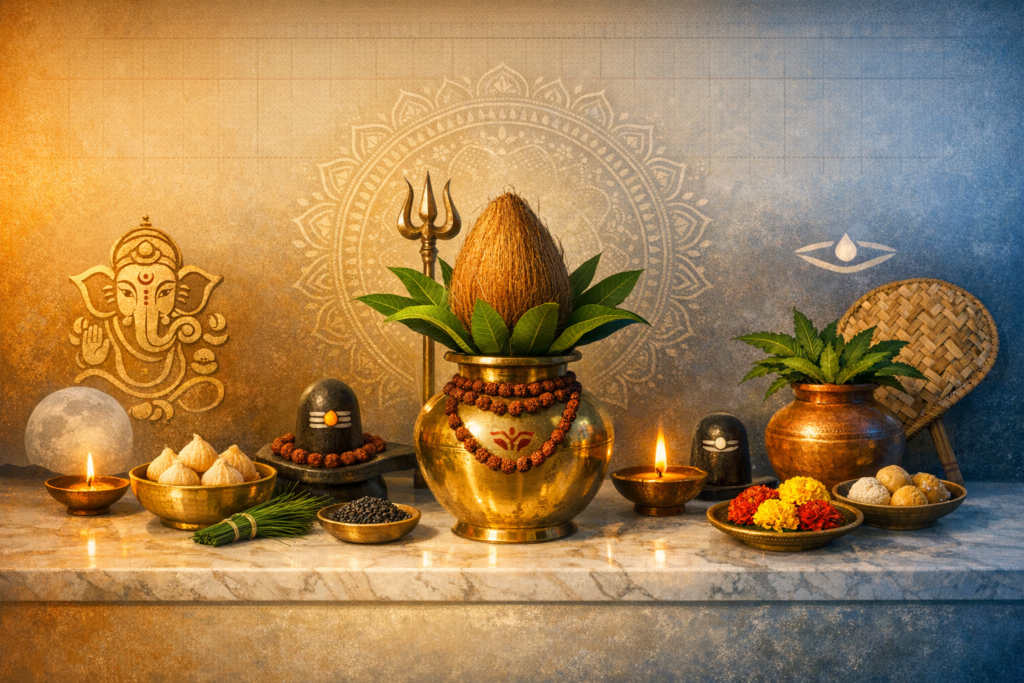
Ritual protocols tend toward sattvic offerings that befit the white form: jasmine, white lotus where available, white hibiscus when regionally found, sandalwood paste, milk, coconut, rice pudding (kheer), and ripe bananas. Lamps may be of clarified butter; incense is chosen for its gentle, steady fragrance. Practitioners observe Amāvasyā and Aṣṭamī as principal tithis, while some maintain morning pujā during the śukla pakṣa (waxing fortnight) to align with themes of growth and ascent.
Core elements of pūjā can follow pañcopacāra or daśopacāra sequences, with nyāsa performed upon the body to inscribe the awareness of Śakti at each limb. Abhiṣeka with water tinged by bilva leaves (traditionally beloved of Śiva) appears in mixed Śaiva-Śākta households, reflecting the unity of Śiva and Śakti. In certain homes, a white cloth covers the altar during Shweta Kali observances to heighten attention to purity, restraint, and interiority.
Contemplative frameworks map naturally onto yogic anatomy. Devotees align Shweta Kali visualization with sahasrāra’s effulgence at the crown, though traditional teachers caution against rigidly locating deities to chakras. Rather, the meditative image girds attention, allowing the prāṇa to steady; breath’s cadence (prāṇāyāma) gently refines sensation; and the mind flowers into the white openness that underlies changing thoughts. The transformation sought is ethical, emotional, and cognitive at once: from turbulence to trust, from grasping to gratitude.
In Bengal, the seasonal arc culminating in Kālī Pūjā around Kārtika Amāvasyā shapes household observances. Even where the public murti is Śyāma Kālī or Bhavatarinī, family altars sometimes shift to white iconography for a period devoted to śānta-bhāva, the peaceful mood. In Nepal, Śākta families and syncretic Newar settings situate Shweta Kali within a living ecosystem of Bhairava and Mātṛkā worship, preserving a subtle education in color, mood, and function that is passed down through practice more than polemic.
Ethically, Shweta Kali is linked to ahiṁsā, satya, and tapas in a thoroughly Dharmic key. The white aspect ennobles forbearance without diluting courage; it sustains social harmony without abetting passivity. In a world pulled between extremes, the image argues for luminous balance: do what is necessary, relinquish what is spent, and let what must return, return—gently, even gratefully—to ash.
From a comparative-philosophical view, the white-black dyad is pedagogical rather than adversarial. White instructs in clarity; black instructs in depth. White cautions against heedless intensity; black cautions against brittle purity. In Shweta Kali, these are one pedagogy. The devotee learns to recognize arising (white radiance) and dissolution (black profundity) as mutually completing gestures of one compassionate intelligence.
Practically, households and communities can integrate Shweta Kali practice with inclusive, pluralistic celebration. Shared kīrtan that honors Kālī alongside White Tārā’s compassionate gaze, scriptural readings from the Upaniṣads on the deathless Self, Jain reflections on renunciation, and Sikh śabads on the timeless One, all reinforce the Dharmic insight that many streams return to the same ocean. Such cross-pollination, undertaken respectfully, strengthens unity among Hinduism, Buddhism, Jainism, and Sikhism.
Scholarly study can proceed along complementary tracks. Text-historical research may trace references in regional Tantras and paddhatis; art-historical work can examine palette, medium, and temple mural conventions; ethnography can document living practice in Bengal and Nepal; and philosophy of religion can analyze how Śākta nonduality interfaces with cognate Dharmic models of ultimate reality. Across disciplines, the white form communicates an abiding thesis: illumination is not the denial of time but its meaning.
For those seeking a gentle, publicly appropriate observance, a simple daily practice can suffice: light a small lamp; offer a white flower; recite a brief mantra with care; sit quietly for several minutes attending to the breath; and dedicate merit to the well-being of all. Devotees frequently report that over weeks the practice softens reactivity, improves steadiness, and deepens gratitude—hallmarks of sattvic cultivation consistent with Shweta Kali’s iconography.
Theologically and experientially, Shweta Kali emphasizes that what is born belongs to light, and what returns to ash returns to light as well. The cremation ground ceases to be a place of dread and becomes a classroom in impermanence and liberation. In this way, the white form of Kālī is an invitation to see the world’s cycles without fear, to allow endings their dignity, and to trust that clarity is native to consciousness.
In sum, Shweta Kali brings together the Shakta devotion of Bengal, the tantric artistry of Nepal, and the wider Dharmic insight that multiplicity and unity are not opposed. As a theological symbol, a ritual focus, and a philosophical beacon, the white radiance of Kālī teaches the alchemy of creation and transformation: all arises in light, all abides in light, and all, finally, returns to light—no longer as possession, but as peace.
Inspired by this post on Hindu Blog.