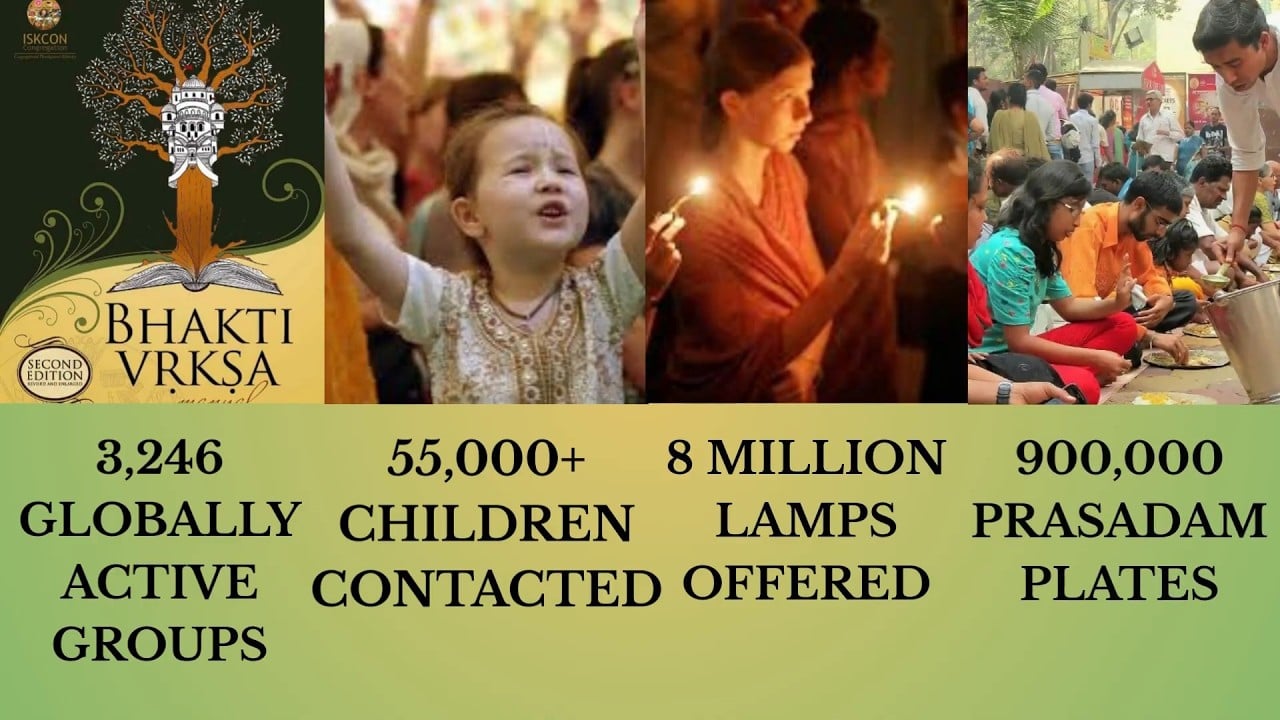
The Congregational Development Ministry (CDM) Annual Report for 2025 presents a comprehensive view of a global network supporting and expanding congregational programs across countries and continents. It documents how decentralized, household-centered, and volunteer-led structures—anchored in Bhakti-vriksha, Nama-hatta, Bhakti Steps, Bhakti Kids, Bhakti Homes, and Damodara Outreach—enable sustainable community engagement and spiritual formation at scale. The report’s throughline is clear: community-centered practice, data-informed management, and unity in spiritual diversity can coexist and reinforce one another.
Strategically, CDM integrates principles from community development, adult education, and organizational design with the lived wisdom of the Bhakti Tradition. The resulting architecture privileges small-group satsang-style circles, household worship, intergenerational learning, and service (seva) that is locally relevant yet globally connected. This academic synthesis yields a reproducible framework well-suited to the Hindu Community and the broader dharmic family, while ensuring cultural sensitivity, ethical governance, and measurable impact.
Bhakti-vriksha functions as the core small-group methodology, cultivating intimate peer circles for scripture study, kirtan, devotional practice, and micro-seva projects. Its iterative design supports gradual leadership development, with facilitators mentored through a structured training-of-trainers pipeline. The model emphasizes accessibility (local languages, flexible schedules), psychological safety (clear norms and facilitation skills), and continuity (succession planning), allowing communities to grow through trust, not mere event attendance.
Operationally, Bhakti-vriksha extends across urban, peri-urban, and diaspora contexts through hybrid gatherings, neighborhood clustering, and digital coordination. Volunteer care practices—burnout prevention, reflective supervision, and peer coaching—are prioritized to protect group health. The approach aligns with evidence-based community development by privileging relationships over infrastructure, steady cadence over sporadic intensives, and competency growth over one-time exposure.
Nama-hatta complements this cellular backbone as a network of locality-based micro-centers. Historically conceived as a “marketplace” of the holy name, its contemporary expression provides modular hubs for festivals, training, resource sharing, and inter-household solidarity. The hubs strengthen temple–community synergy without over-centralizing activity, enabling coordinated seva, responsive pastoral care, and rapid mobilization when communities face need—an approach that elevates CommunityEngagement across diverse neighborhoods.
Bhakti Steps offers a structured pathway for newcomers and returning participants alike. By mapping clear, incremental milestones—from orientation to scripture literacy, from personal practice to community service—the pathway reduces ambiguity and fosters intrinsic motivation. Adult learning principles (scaffolded content, micro-learning, reflective practice) underpin the design, while inclusive facilitation ensures that participants from multiple cultural backgrounds can progress at a comfortable, self-directed pace.
Bhakti Kids foregrounds age-appropriate pedagogy, character formation, and joyful immersion in dharmic stories, music, and arts. The program’s family-first posture equips guardians to lead value education at home, strengthening intergenerational bonds and aligning with research that shows parental modeling as the strongest predictor of durable practice. Safeguarding policies, child-friendly spaces, and digital-safety norms are integral, ensuring that formative experiences remain safe, respectful, and developmentally sound.
Bhakti Homes recognizes the home as a primary locus of spiritual life. Domestic worship, collective reading, kirtan, and shared prasada nurture intimate belonging and resilience—particularly for diaspora families who seek continuity with their cultural heritage. The initiative foregrounds accessible rituals, locally sourced materials, and eco-conscious practices, allowing households to embody Sanatana values through daily rhythm rather than episodic observance.
Damodara Outreach provides a once-a-year, high-touch bridge into households and neighborhoods during the Kartik season through lamp-offering and remembrance practices. The program’s gentle, home-centered hospitality naturally invites friends and neighbors into a sacred moment without coercion, strengthening social trust and shared care. Its resonance with parallel, home-centered observances across dharmic communities makes Damodara Outreach a powerful instrument for cultivating civic warmth and unity in spiritual diversity.
CDM’s digital backbone supports these programs with multilingual content repositories, volunteer management tools, privacy-conscious communication channels, and analytics that inform pastoral decisions. Emphasis on ethical data governance (consent, minimization, role-based access) and open-standards interoperability reduces technological lock-in and enables local innovation. Low-bandwidth design, asynchronous learning, and mobile-first content increase accessibility in resource-constrained environments.
Leadership development spans e-learning, mentorship, and supervised practice. Facilitators are trained in inclusive pedagogy, scripture facilitation, conflict resolution, and trauma-aware listening. Governance frameworks codify safeguarding, anti-harassment, and financial transparency, offering a clear code of conduct that protects participants and upholds the integrity of Seva. Volunteer recognition mechanisms—anchored in appreciation rather than competition—help sustain long-term engagement.
Monitoring and evaluation rest on a simple logic model: inputs and activities feed outputs (gatherings, training hours, service projects), which support outcomes (stable practice, community cohesion, inter-household support), leading to long-run impact (well-being, ethical action, and civic trust). CDM assesses program health through a balanced lens that blends quantitative indicators (participation continuity, facilitation capacity) with qualitative insights (stories of care, testimonies of transformation). This balanced approach resists vanity metrics and prioritizes meaningful change.
Global expansion relies on translation, cultural localization, and distributed leadership. Rather than exporting a fixed template, CDM collaborates with local teams to honor regional aesthetics, musical traditions, and family rhythms. This posture supports both rural and urban settings, allowing Nama-hatta hubs and Bhakti-vriksha circles to emerge organically while receiving methodological support, training, and safeguarding resources from the broader network.
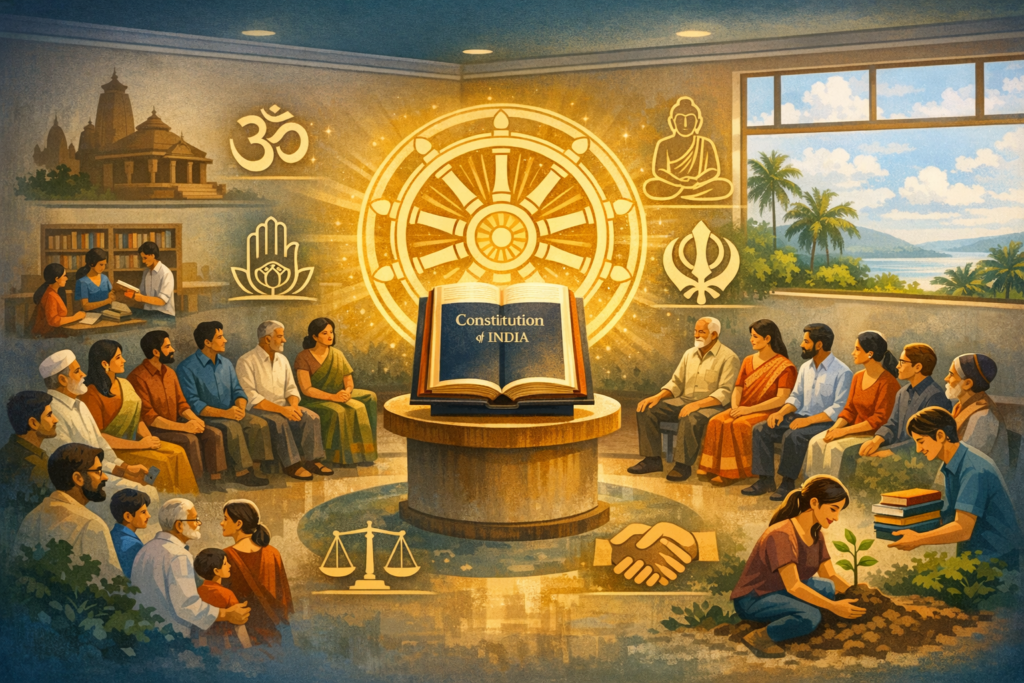
A central commitment of CDM’s 2025 outlook is dharmic unity—cultivating friendship and cooperation among Hindu, Buddhist, Jain, and Sikh communities through shared service, learning exchanges, and respectful celebration. The programs avoid exclusivist claims and proselytizing tones, instead foregrounding common ethical commitments such as ahimsa, satya, dana, and karuna. This orientation reflects a principled embrace of Unity in spiritual diversity and recognizes that strong communities are built through mutual respect and collaborative Seva.
Experientially, participants frequently report that small-group proximity reduces isolation and fosters practical care: meals shared during life transitions, study companionship during difficult seasons, and neighborly assistance during emergencies. Families often describe Bhakti Homes as a daily anchor, while children in Bhakti Kids display growing confidence in storytelling, music, and collaborative play rooted in dharmic values. Facilitators note that inclusive facilitation—listening first, teaching second—consistently increases trust and long-term continuity.
Risk management remains a serious undertaking. CDM emphasizes cultural humility to mitigate mismatch between content and local norms; proactive volunteer care to reduce burnout; privacy-by-design to secure personal data; and clear grievance pathways to uphold participant safety. Regular audits, scenario planning, and tabletop exercises strengthen readiness, while transparent communication reinforces accountability to communities and stakeholders.
The 2026 roadmap builds on 2025 momentum by deepening facilitator mentoring, strengthening teen and campus pathways, and expanding multilingual content for Bhakti Steps. Planned enhancements include women’s leadership development, collaboration with temples and community trusts on inclusive festivals, and seva initiatives that integrate ecological stewardship with social care. Continuous-improvement cycles—learn, adapt, share—remain the engine of responsible growth.
In sum, CDM’s 2025 report portrays a maturing ecosystem: Bhakti-vriksha and Nama-hatta provide relational infrastructure; Bhakti Steps and Bhakti Kids shape durable learning; Bhakti Homes and Damodara Outreach keep the heart of practice within households and neighborhoods. Anchored in ethical governance and measurement, the approach demonstrates how a compassionate, plural, and globally networked community can scale without losing intimacy—nurturing the Hindu Community while advancing a broader dharmic harmony.
Inspired by this post on Dandavats.