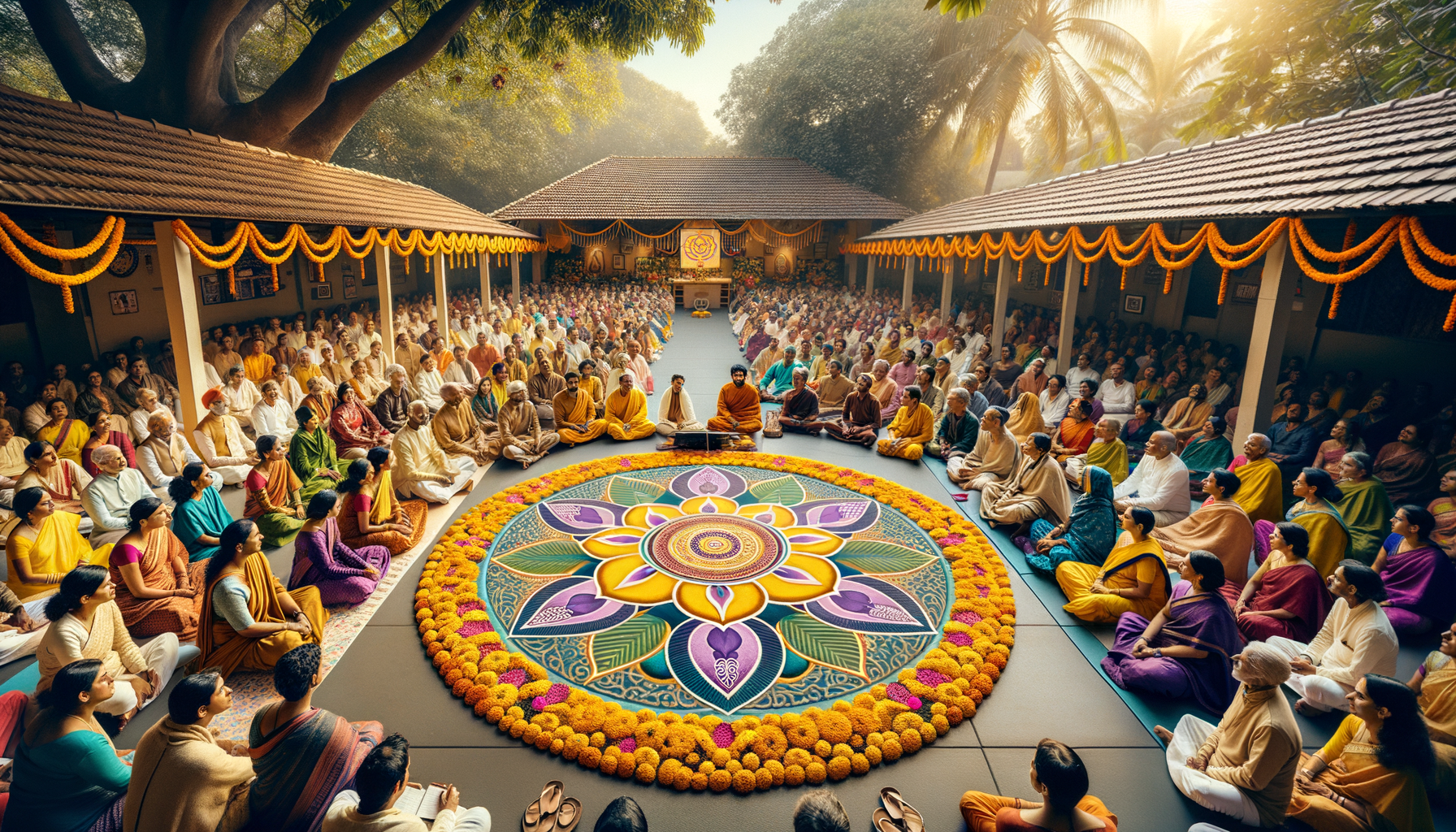
More than 150 Hindus gathered for the Hindu Rashtra-Jagruti Sabha organised by the Hindu Rashtra Samanvay Samiti at Mahadevwadi in Hadapsar, Pune. The strong turnout signalled meaningful community engagement in Maharashtra and affirmed steady interest in forums that strengthen social cohesion and civic awareness.
Attendance reflected a cross-section of the local community, with families, youth, and elders participating in an atmosphere of respectful dialogue. The scale and diversity of participation indicated a shared commitment to cultural continuity, ethical citizenship, and collaborative problem-solving within the broader social fabric of Pune.
While the event’s roots are in Hindu cultural traditions, the values resonated across the dharmic spectrumaligning with principles cherished in Buddhism, Jainism, and Sikhism. Emphasis on compassion, non-violence, truthfulness, self-discipline, and seva underscored an inclusive ethos of dharmic unity, reinforcing inter-community trust and harmony.
Participants described a renewed sense of belonging and purpose, noting how courteous exchanges and informal conversations helped build bridges across neighborhoods. Such experiences often catalyze sustained volunteerism, deepen cultural literacy, and encourage youth mentorshippractical outcomes that reinforce social resilience.
From a community development perspective, sabhas of this nature serve as platforms for strengthening local networks, nurturing cultural heritage, and encouraging shared stewardship of public life. By offering a structured yet welcoming space for discussion, they advance constructive engagement and help translate core values into everyday action.
The Hadapsar setting in Punean urban hub with a rich cultural heritageprovided convenient access for surrounding localities, enabling participation that extended beyond core organisers. The venue at Mahadevwadi anchored the gathering within a familiar community landscape, encouraging continuity of attendance and dialogue.
Overall, the Hindu Rashtra-Jagruti Sabha in Hadapsar stands as a clear case of effective community engagement. It highlighted how initiatives grounded in dharmic principles can foster unity, inspire civic responsibility, and strengthen social harmony in Maharashtra, offering a replicable model for similar community events across India.
Inspired by this post on Hindu Jagruti Samiti.