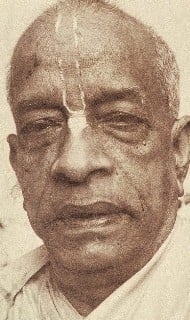
Srila Prabhupada’s transcontinental journey at the age of seventy remains an unparalleled case study in spiritual leadership, intercultural transmission, and institution building. Without financial backing, contacts, or prior familiarity with Western society, A. C. Bhaktivedanta Swami Prabhupada introduced Krishna Consciousness and established ISKCON (International Society For Krishna Consciousness) as a global movement. The narrative, frequently cited in histories of religion, captures how clarity of purpose, disciplined practice, and service-centered values can mobilize communities far beyond cultural and linguistic boundaries.
“It’s an astonishing story. If someone told you a story like this, you wouldn’t believe it. Here’s this person, he’s seventy years old, he’s going to a country where he’s never been before, he doesn’t know anybody there, he has no money, has no contacts. He has none of the things, you would say, that make for success. He’s going to recruit people not on any systematic basis, but just picking up whomever he comes across and he’s going to give them responsibility for organizing a worldwide movement. You’d say, ‘What kind of program is that?’ There are precedents perhaps. Jesus of Nazareth went around saying, ‘Come follow me. Drop your nets, or leave your tax collecting, and come with me and be my disciple.’ But in his case, he wasn’t an old man in a strange society dealing with people whose backgrounds were totally different from his own. He was dealing with his own community. Bhaktivedanta Swami’s achievement, then, must be seen as unique.” – History of religion professor Thomas Hopkins in Hare Krishna, Hare Krishna: Five Distinguished Scholars on the Krishna Movement in the West.
Historical analysis affirms the uniqueness noted by Thomas Hopkins: Srila Prabhupada operationalized Gaudiya Vaishnavism in a modern, urban, and highly plural social context, translating its core practiceskirtan, prasadam, and scriptural studyinto approachable, public-facing forms. Within a few years, the Hare Krishna movement established temples, farm communities, and publishing initiatives, supported by a cadre of empowered disciples entrusted with real responsibility. This decentralized-yet-principled approach, anchored in Bhagavad-gita and Srimad-Bhagavatam, balanced theological fidelity with organizational agility.
Observers often note the movement’s accessibility: public kirtans foster shared joy, prasadam distribution embodies compassion and hospitality, and study circles invite rigorous inquiry. Such experiences cultivate an immediate sense of belonging while preserving the intellectual depth of Vedantic dialogue. In this way, Krishna Consciousness became a lived practice of devotion (bhakti), ethics, and communitya spiritual pathway that resonated with seekers navigating modernity’s fragmentation.
Importantly, the values emphasizeddevotion grounded in compassion, disciplined practice, and service to allalign with the wider dharmic tapestry uniting Hinduism, Buddhism, Jainism, and Sikhism. Each tradition esteems integrity, self-cultivation, non-harm, and seva. Srila Prabhupada’s work advanced these shared principles in an inclusive spirit, fostering interfaith respect and civic harmony. Rather than coercion, the movement prioritized dialogue, example, and freely chosen commitmentan approach consistent with the pluralistic ethos of the dharmic traditions.
The enduring legacy is visible across continents: temples serving as cultural and educational hubs, festivals drawing diverse audiences, and a rich literary corpus that includes translations and commentaries elucidating sacred texts for contemporary readers. For many, the first encounterwhether hearing the maha-mantra, sharing a meal of prasadam, or engaging a thoughtful volunteeroffers a relatable entry point to a deeper ethical and spiritual life. As a model of cross-cultural leadership, Srila Prabhupada’s example illustrates how clear purpose, steady practice, and compassionate outreach can build resilient communities and strengthen unity across the dharmic spectrum.
Inspired by this post on Dandavats.