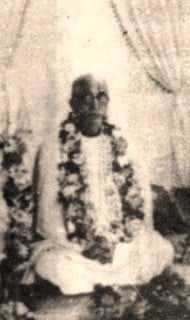
In Puri, the birthplace of Srila Bhaktisiddhanta Sarasvati Thakura has been carefully preserved and developed under the stewardship of the Gaudiya Matha. The site now includes a beautifully maintained temple and dedicated devotee quarters, offering a dignified setting that honors the historic and spiritual legacy of this eminent 20th-century Gaudiya Vaishnava ācārya. At the precise spot of his appearance, Srila Bhaktisiddhanta Sarasvati Thakura’s murti is worshipped daily, allowing pilgrims to connect with a living tradition that continues to shape devotional practice and Hindu cultural heritage.
During the foundational work for the temple, devotees reported a striking phenomenon: a gentle fragrance of candana emanated from the very place of his birth. This manifestation, cherished in the community’s memory, is regarded as a subtle affirmation of sanctity and a reminder of the profound devotional ambience associated with the site.
Six months after Bimala Prasada’s appearance, Lord Jagannatha’s Rathayatra procession moved toward the Gundica temple and, by divine arrangement, the chariots halted before the residence of Srila Bhaktivinoda Thakura. At that sacred moment, Srimati Bhagavati Devi placed the child at the lotus feet of Lord Jagannatha. Immediately, a flower garland descended from the Lord’s neck and gently encircled the child, a blessing that, in Gaudiya Vaishnava remembrance, foretold Bimala Prasada’s future spiritual leadership as Srila Bhaktisiddhanta Sarasvati Thakura.
This episode is celebrated as a luminous intersection of Jagannatha culture and the Gaudiya tradition, illustrating how temple-centered devotion and household piety harmonize within the broader tapestry of Hindu Dharma. The reverence expressed here resonates across dharmic traditionsHinduism, Buddhism, Jainism, and Sikhismthrough shared values of humility, service, and devotion, reinforcing a spirit of unity and mutual respect.
For pilgrims, scholars, and heritage enthusiasts, the temple complex offers an instructive and contemplative experience: darśana of the murti at the exact birthplace, the living continuity of Gaudiya Vaishnavism, and close proximity to the wider sacred geography of Puri Srimandir and the route of Jagannatha Rathayatra. Visitors often describe a palpable sense of serenity within the precincts, where ritual worship, historical memory, and cultural continuity converge.
As a conserved heritage site, the birthplace underscores the importance of responsible stewardship, community-led preservation, and the transmission of spiritual knowledge. In celebrating this sanctified history, the temple invites all seekers to reflect on shared dharmic idealscompassion, truthfulness, and devotionthus nurturing harmony across traditions and strengthening bonds within India’s diverse spiritual heritage.
Inspired by this post on Dandavats.