Why Manthara opposed Rama remains one of the most debated questions in the Ramayana tradition. Classical texts situate her as the catalyst who nudges Queen Kaikeyi toward demanding her boons, yet the reasons for such urgency and apparent hostility vary across sources. The Valmiki Ramayana does not specify a prior personal grievance, prompting later folk Ramayanas and regional oral narratives to supply etiological stories that deepen the character’s motivations. Examining these variations reveals a spectrum of possibilitiesfrom personal hurt to political foresighteach reframing Manthara’s role in the ethics and statecraft of Ayodhya.
In Valmiki’s account, Manthara is introduced as a perceptive and forceful attendant whose counsel appeals to Kaikeyi’s maternal anxiety and the fragile calculus of succession. The text underscores her rhetorical skill and her understanding of royal promises, rather than a record of a specific past injury from Rama. This portrayal invites a reading grounded in court politics: a palace attendant alert to shifting power, advocating for Kaikeyi and Bharata in a moment of high stakes. It is a narrative of persuasion and policy, not necessarily of private vendetta.
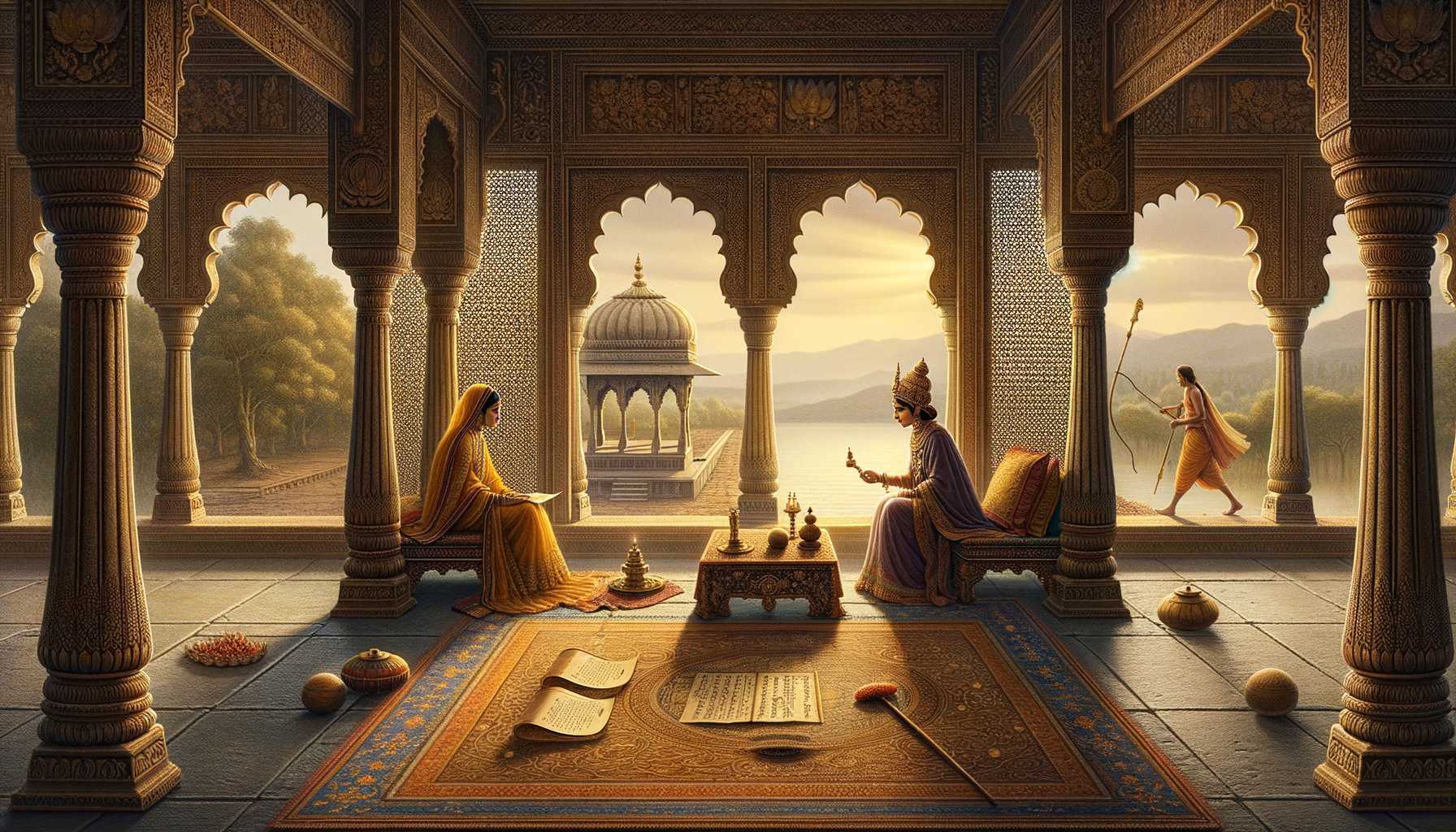
Folk Ramayana tellings often add a poignant backstory, commonly known as the “innocent play turned bitter” motif. In these versions, a childhood gamea flying ball, a misthrown gilli-danda, or a careless shoveinjures Manthara, sometimes breaking her leg or aggravating a physical deformity. The incident lingers as a personal humiliation, transforming minor pain into lasting resentment. Such oral traditions, preserved in regional kathas and performances across North India, offer an emotionally immediate explanation for Manthara’s later insistence that Kaikeyi claim the long-promised boons.
Other vernacular and folk variants emphasize social slights rather than bodily harm. In these retellings, Manthara’s physical difference becomes a source of ridicule in the palace, deepening her sense of vulnerability. The grudge emerges not solely from one event but from accumulated indignities. Within this frame, her counsel to Kaikeyi appears as an attempthowever ethically fraughtto secure dignity and influence in a hierarchy where attendants had few formal protections.
When viewed through the lens of royal statecraft, Manthara’s intervention also reads as strategic. She reminds Kaikeyi of Dasaratha’s two boons, urging their use at a decisive moment: Bharata’s coronation and Rama’s vanvas. The rationale is politicalpreserving Kaikeyi’s lineage and status in a court that might otherwise pivot decisively toward Kausalya. Here the “grudge” becomes less a purely personal emotion and more a calculated response to the realities of succession, loyalty, and power.
Psychologically, these traditions illustrate how dvesha (aversion) can grow from small seeds. A minor slight, when repeated or left unaddressed, can accumulate into a worldview. The folk stories highlighting injury or mockery dramatize a universal pattern: private wounds converting into public choices. This perspective complicates moral judgment, inviting empathy even while affirming the ethical costs of resentment-driven action.
Across Dharmic traditions, the ethical remedy to such bitterness is shared. Hindu teachings warn against the corrosive force of krodha and dvesha; Buddhist frameworks caution against dosa; Jaina thought analyzes kashaya (anger, pride, deceit, greed) as sources of bondage; Sikh wisdom critiques haumai (ego) as a root of division. Together, these perspectives converge on a practical philosophy of compassion, restraint, and inner clarityprinciples that illuminate Manthara’s arc without denying accountability.
Rama’s response to exile remains exemplary in this light. He accepts vanvas without rancor, preserving harmony within the royal household and the realm. His conduct recasts Manthara’s provocation as a stage for dharma: equanimity, filial respect, and social stability. The narrative thus turns a crisis of resentment into an opportunity for ethical leadership.
The plurality of Ramayana tellingsSanskrit, Tamil, Awadhi, and numerous regional oral traditionsenriches understanding rather than diluting it. Whether Manthara is seen as aggrieved, ambitious, protective, or politically astute, each portrayal opens inquiry into duty, power, and human fallibility. Engaging these narratives side by side fosters a constructive dialogue across Hindu, Buddhist, Jaina, and Sikh reflections on anger, forgiveness, and social responsibility.
Ultimately, the question “Why did Manthara hold a grudge against Rama?” invites a disciplined compassion: careful reading of sources, sensitivity to folk memory, and a commitment to unity in spiritual diversity. By seeing beyond caricature, communities can recover the shared Dharmic insight that transformationof persons and politiesis possible when resentment yields to wisdom.
Inspired by this post on Hindu Blog.