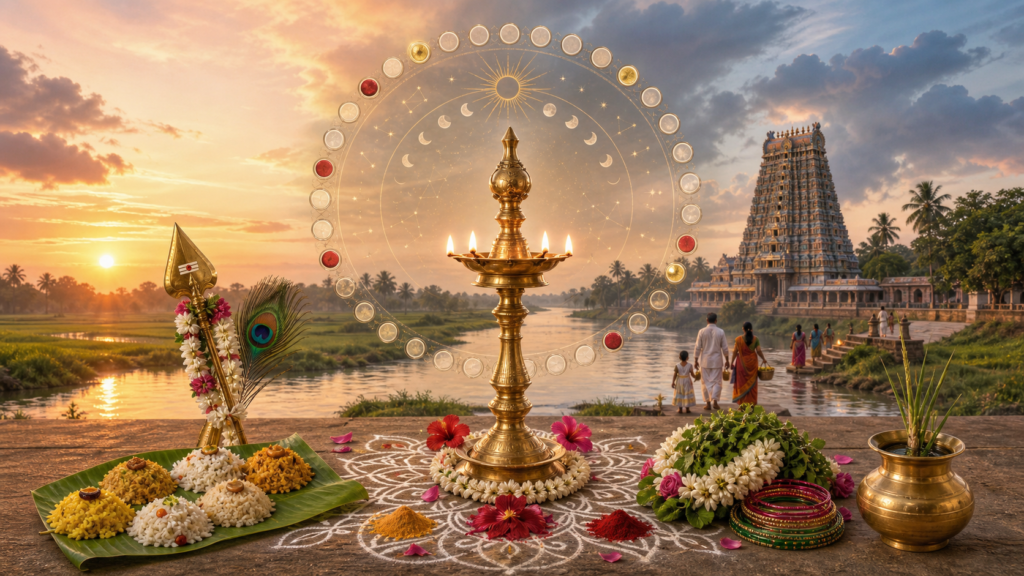
Monday, January 26, 2026 in the Hindu calendar marks a meaningful transition in the lunar cycle. In most regions, the day begins with Shukla Paksha Ashtamithe eighth lunar day during the waxing phase of the moonand shifts to Shukla Paksha Navami in the evening. Such calendrical markers in the Panchang offer rhythm and structure to observances across communities, supporting shared reflection and practice.
Tithi indicates the angular relationship between the sun and the moon, and Shukla Paksha Ashtami is traditionally associated with steady growth, learning, and disciplined effort. As the tithi changes to Shukla Paksha Navami later in the day, the energy is often interpreted as conducive to perseverance and continued progress on chosen vows or practices. These interpretations vary by lineage and region, yet they consistently encourage mindful intent and constructive action.
For January 26, 2026, Shukla Paksha Ashtami prevails until 6:37 PM, after which Shukla Paksha Navami begins. These timings are observed in most regions; minor variations can occur based on location and the almanac used. Practitioners often plan specific observances to align with the tithi under which a vow is taken or a ritual is begun, completing Ashtami-related practices before the evening transition when Navami commences.
Auspicious time (often referred to as “Good Time” or Shubh Muhurat) is typically chosen by considering the prevailing tithi alongside other Panchang elements such as Nakshatra, weekday, and local sunrise. On a day with a tithi transition, many prefer to schedule Ashtami-oriented worship in the morning or early afternoon and Navami-oriented observances after the change. As always, consulting a reliable regional Panchang or a trusted temple tradition helps ensure precision for the locality.
Nakshatra and Chandra Rashi on any given date are determined by the moon’s position in the zodiac and can vary with time and place. While this overview focuses on the tithi transition from Shukla Paksha Ashtami to Shukla Paksha Navami, readers seeking exact Nakshatra and Rashi details for January 26, 2026 should refer to a regional Panchang or a reputable astronomical almanac that accounts for local coordinates and time zone.
Across dharmic traditionsHinduism, Buddhism, Jainism, and Sikhismlunar calendars and seasonal rhythms have long supported communal coherence and personal discipline. Many Buddhist and Jain communities reference lunar phases for observances, and Sikh commemorations have historically aligned with the Bikrami calendar in numerous settings. Recognizing these convergences fosters a spirit of unity, respect, and shared sacred time, even as particular practices remain distinct.
Viewed in this light, January 26, 2026 becomes more than a date; it is a moment to synchronize intention with the waxing moon’s steady ascent. Families and communities often find that aligning everyday actionsstudy, service, or quiet prayerwith the tithi’s cadence brings structure and meaning. Whether honoring Shukla Paksha Ashtami’s focus on growth before 6:37 PM or embracing Shukla Paksha Navami’s momentum thereafter, the Panchang offers a balanced framework for reflective living.
Inspired by this post on Hindu Blog.