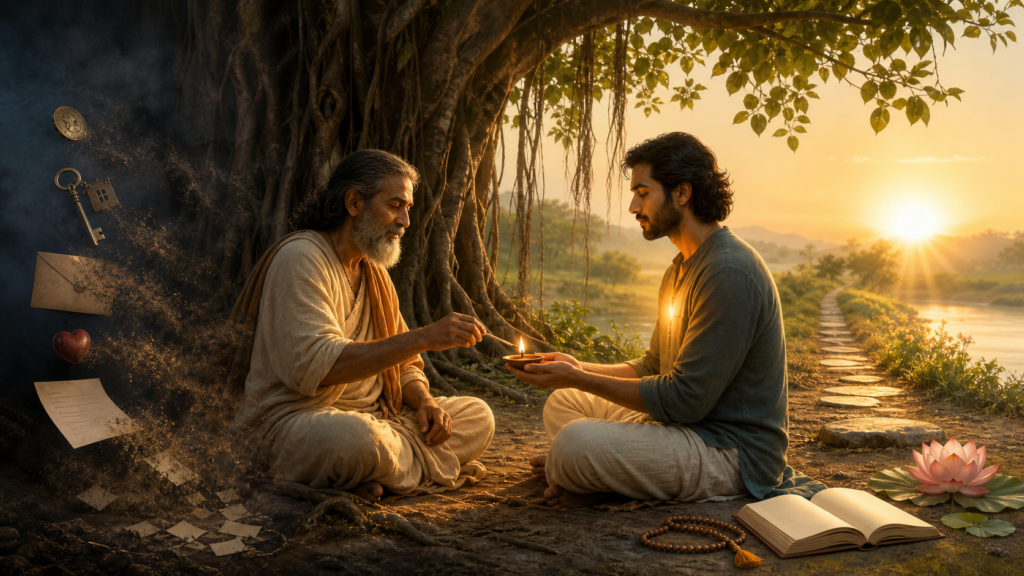
Delivered at the Sunday Feast on January 11, 2026, the lecture by Prabhupada Priya Devi Dasi examines a central Bhagavad Gita insight: spiritual activity yields enduring benefits, whereas material pursuits, however dazzling, remain temporary and conclude at death. Framed in an academic yet accessible manner, the discussion contrasts short-lived achievements with the profound continuity of spiritual progress.
Drawing on the Bhagavad Gita’s teaching on Karma Yoga, the talk emphasizes that even a small step in genuine spiritual practice is never lost and can protect one from the greatest fears (Bhagavad Gita 2.40). This assurance stands in clear contrast to material results, which are inherently perishable and vulnerable to time, circumstance, and mortality. The lecture underscores that spiritual cultivation builds durable inner resourcesclarity, steadiness, and compassionthat persist beyond transient success.
The reflection resonates with everyday experience: many chase recognition, accumulation, and status, only to meet anxiety, fatigue, or a sense of incompleteness. By reorienting effort toward sadhana, bhakti, seva, and mindful self-discipline, the lecture suggests that aspiration can be transformed into lasting fulfillment. These themes align with shared values across dharmic traditionsHinduism, Buddhism, Jainism, and Sikhismwhere ethical action (dharma), non-harm (ahimsa), disciplined practice (simran, bhavana), and service (seva, dana) cultivate inner freedom and reduce fear.
Practically, the talk proposes that “eternal benefit” manifests in daily life as a resilient character, ethical coherence, and a purpose anchored beyond outcomes. Regular practicessuch as japa or meditation, study of scriptures, and acts of selfless serviceintegrate intention and action. Over time, this integration lessens the hold of fear, aligns ambitions with dharma, and nurtures equanimity amid change.
In closing, the lecture affirms a simple but transformative contrast: material success ends at death, while spiritual advancement endures and safeguards the heart against life’s deepest anxieties. By embracing Unity in spiritual diversity across dharmic paths, communities can encourage one another to invest in what lastscharacter, wisdom, and compassionate actionwhile engaging the world with steadiness and hope.
Inspired by this post on Dandavats.