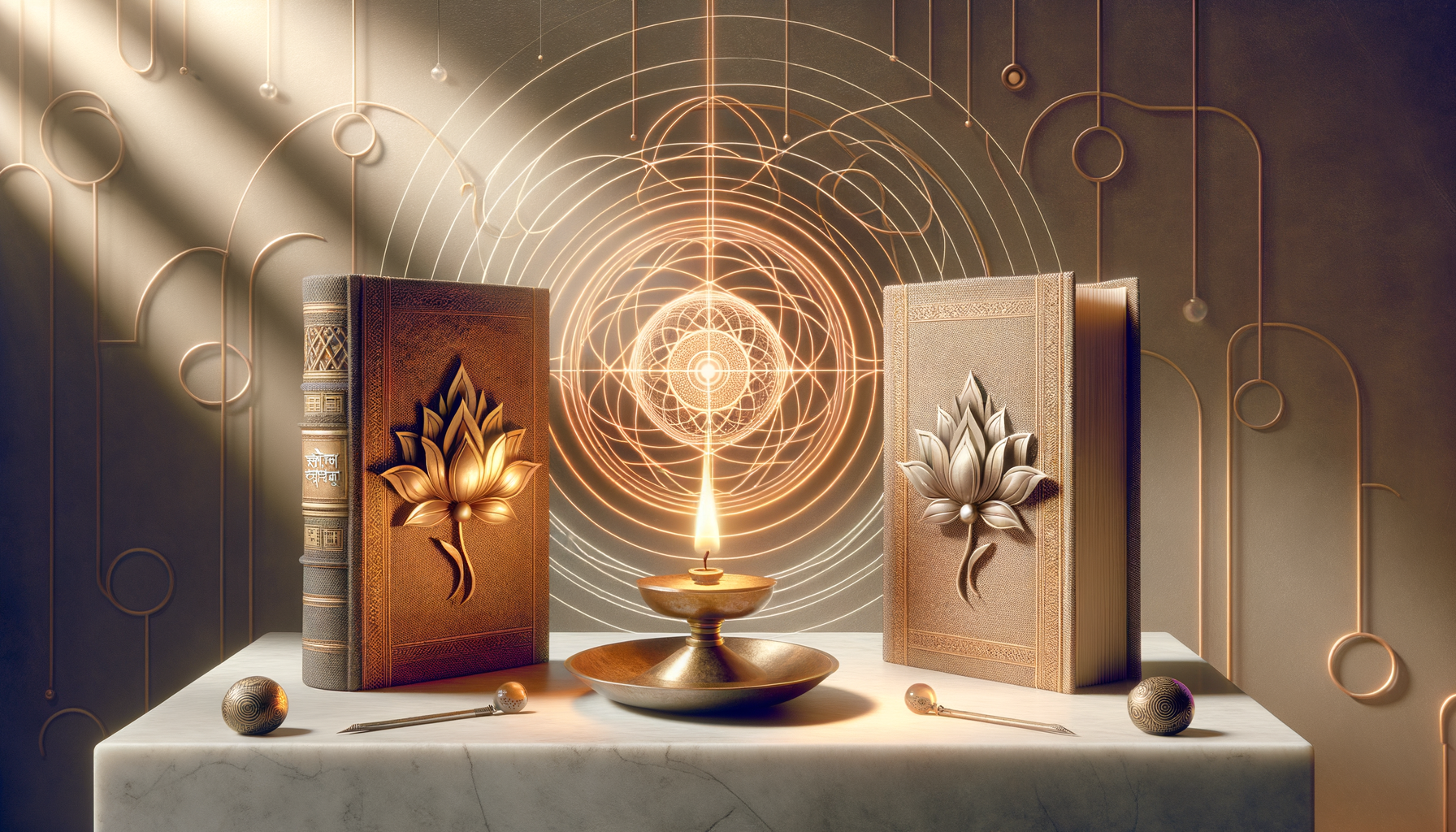
Advaita Siddhi, composed by Madhusudana Saraswati in the 16th century CE, is a landmark of Advaita Vedanta that engages rigorously with Vyasa Tirtha’s Nyayamrita. Rather than simply rebutting a polemical text, it turns critique into an occasion for clearer articulation of Advaita metaphysics and method, enriching Hindu philosophy as a whole.
Viewed through a dharmic lens, this exchange exemplifies the tradition’s commitment to disciplined inquiry and respectful dialogue. The intellectual encounter between Advaita Siddhi and Nyayamrita can be appreciated as a shared search for wisdom that resonates with the broader values of Hinduism, Buddhism, Jainism, and Sikhism—reasoned reflection, compassion, and a commitment to unity in spiritual diversity.
At the center of the debate lies a fundamental question: what counts as true (satya), and how is truth known and communicated? The conversation traverses appearance and reality, the correction of error, and the role of valid means of knowledge (pramana). In engaging these questions, Advaita Siddhi refines core Advaita Vedanta insights without dismissing the philosophical seriousness of Nyayamrita.
For contemporary readers, sustained engagement with Advaita Siddhi often feels like moving from noise to clarity: dense arguments progressively reveal precise distinctions about consciousness, world-experience, and liberation. The work demonstrates how careful reasoning and contemplative orientation can coexist, encouraging patient study rather than hasty judgment.
Methodologically, Advaita Siddhi combines logical rigor with experiential attentiveness. Where Nyayamrita poses demanding challenges, the response proceeds through structured analysis, careful definitions, and an openness to lived understanding. The result is less a defeat of an opponent and more a sharpening of understanding for all students of Vedanta.
Approached in this spirit, the debate becomes a bridge across schools—Advaita, Dvaita, and others—modeling how philosophical difference can deepen shared pursuit of truth. This intra-dharmic dialogue supports harmony by showing that strong reasoning and mutual respect can coexist, nurturing unity across diverse paths and practices.
Readers frequently discover practical benefits: habits of patience, attentive listening, and conceptual precision that extend beyond textual study into community life. These capacities help cultivate empathy, reduce sectarian friction, and sustain an inclusive ethos aligned with the Upanishadic and Vedantic commitment to wisdom and liberation.
Advaita Siddhi thus stands as a witness to the living strength of Vedanta—rigorous, compassionate, and oriented toward the highest good. Read alongside Nyayamrita, it invites collective reflection on satya, pramana, and the nature of reality, while affirming unity in spiritual diversity within the wider family of dharmic traditions.
Inspired by this post on Hindu Blog.