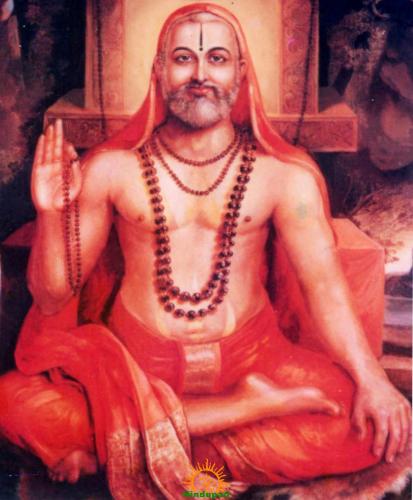
The Mahanubhav Sampradaya (meaning “The Great Experience” sect), also known as Mahanubhava, emerged in 13th-century Maharashtra during the wider Bhakti movement in Hinduism. It was formally established by Shri Chakradhar Swami around 1260–1280 CE. Its lineage venerates five great gurusShri Krishna, Dattatreya, Chakrapani Maharaj, Govind Prabhu, and Chakradhar Swamiwho are upheld as the core focus of devotion and ethical guidance.
Set within the devotional efflorescence of medieval India, the tradition advanced accessible spiritual insight through Marathi, contributing significantly to early regional literature. The movement’s biographical and doctrinal memory is preserved in hagiographic and instructional texts, which placed Bhakti, ethical discipline, and community practice at the center of religious life. By foregrounding direct devotion and moral rigor over elaborate ritualism, the Mahanubhav Sampradaya aligned with the Bhakti movement’s broader emphasis on immediacy of experience and interior transformation.
Important teachings of the Sampradaya include unwavering Bhakti to the five gurus, a strict ethical code, and a call to simplicity, humility, and Ahimsa. The tradition urges equality beyond caste and social status, encouraging a shared spiritual identity grounded in devotion rather than birth. Practices such as remembrance of the Divine through nama, recitation, discourse (katha), and the Guru–Shishya parampara cultivate steady inner focus and moral clarityhallmarks of Hindu spirituality across regions.
Key differences, when compared with other Bhakti traditions, are expressed in the movement’s concentrated reverence for the five gurus, its pronounced ascetic leanings, and its consistent use of vernacular Marathi to communicate doctrine. The Sampradaya places relatively less emphasis on elaborate temple ritualism and image-centric worship, highlighting lived ethics and daily remembrance as primary means of spiritual ascent. These features distinguish the Mahanubhav Sampradaya within the landscape of Hindu sects in India, while still harmonizing with the broader ethos of Bhakti, Dharma, and compassionate conduct.
Community life has historically revolved around itinerant teaching, collective singing and discourse, and pilgrimage to places associated with the five gurus. Social service (seva), mutual support, and an inclusive ethos foster a cohesive community identity. Devotees often describe how the Sampradaya’s straightforward disciplinedaily remembrance, ethical restraint, and reverence for the Guruoffers practical guidance for inner steadiness amidst modern pressures.
Contemporary relevance lies in the tradition’s capacity to inspire unity in diversity. Its stress on Ahimsa, humility, and service complements parallel virtues in allied Dharmic traditionsJainism’s emphasis on non-violence, Buddhism’s focus on ethical mindfulness, and Sikhism’s spirit of seva and devotion. Framed in this way, the Mahanubhav Sampradaya stands as a bridge across Dharmic paths, advancing interfaith harmony within the Indic family while affirming a shared commitment to compassionate living and spiritual integrity.
In summary, the Mahanubhav Sampradaya offers a concise yet profound path: devotion to Shri Krishna, Dattatreya, Chakrapani Maharaj, Govind Prabhu, and Chakradhar Swami; a disciplined ethical life; and accessible practices that deepen spiritual awareness. Its historical roots in Maharashtra, engagement with the Bhakti movement, and distinct profile among Hindu sects together provide a meaningful lens for understanding Hindu beliefs, lived practice, and the enduring power of Bhakti-led transformation.
Inspired by this post on Hindu Blog.