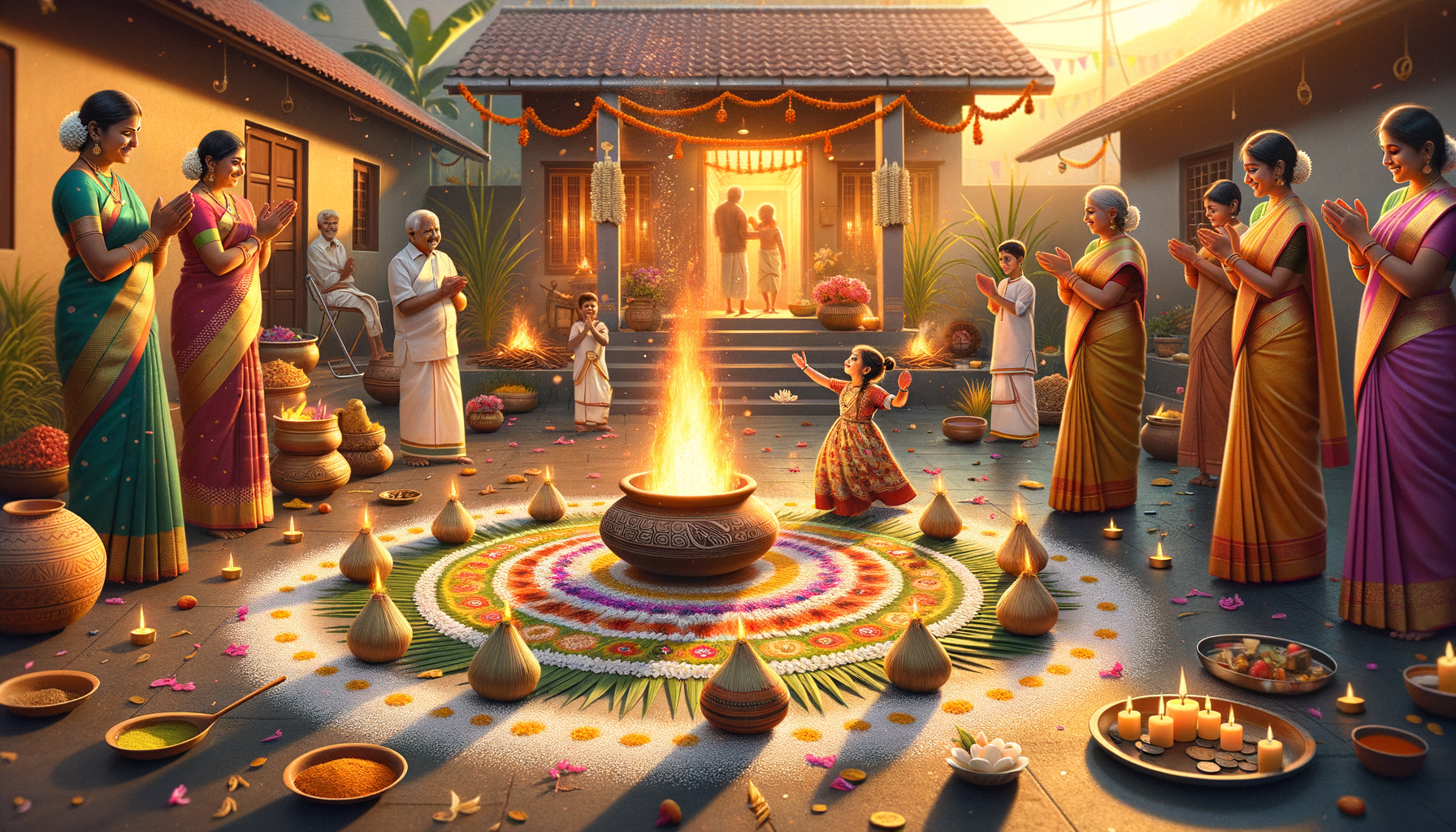
Bhogi marks the first day of the four-day Sankranthi season in Andhra Pradesh, Tamil Nadu, and Karnataka, and is observed as Bhogi Pongal in Tamil Nadu. Rooted in agrarian rhythms and community life, Bhogi emphasizes renewal, gratitude, and social cohesion. Its practiceshousehold purification, decorative artistry, collective bonfires, and Bhogi Pujasignal the transition from the old to the auspicious new.
Preparations begin with the thorough cleaning and washing of homes, followed by adornment with “Rangoli / Kolam / Muggu.” Drawn with rice flour, these designs not only beautify thresholds but also symbolize prosperity and ecological harmony, as they feed small creatures and honor nature’s cycles. Doorways are often festooned with mango-leaf toranas, turmeric, and flowers to welcome auspicious energies.
A distinctive dawn custom is Bhogi Mantaluthe sacred bonfire that gathers neighbors and kin. Traditionally, people discard worn-out, non-usable household items, a symbolic letting go of stagnation and negativity. Increasingly, communities choose eco-conscious practices, avoiding plastics and synthetic materials. The warmth of the fire, devotional songs, and simple offerings to Agni evoke a collective resolve: to enter Sankranthi with clarity, gratitude, and goodwill.
Region-specific traditions deepen the experience. In parts of Andhra Pradesh and Telangana, young girls place gobbemmalu (sacred cow-dung cones) on patterned Muggu, circling them while singing for well-being and prosperity. The Bhogi pallu customshowering children with seasonal berries (regi pandu), coins, and flowerssignifies blessings for health, growth, and protection. Participants often recall the gentle tapping of drums, the rustle of sugarcane, and the laughter of children as hallmarks of Bhogi’s emotional resonance.
Bhogi Puja centers on purity, gratitude, and invocation. After cleaning the puja space, a lamp is lit and the altar is arranged with turmeric, kumkum, sugarcane, sesame (til), rice, and fresh flowers. Offerings may be placed before a kalasha or family deities, with mantras such as “Om Agnaye Namah” and “Om Indraya Namah” recited to honor elemental forces and pray for timely rains and abundance. Simple naivedyamseasonal fruits, til-based sweets, or freshly cooked rice preparationsis offered, followed by arati and shared prasadam. The atmosphere is contemplative yet communal, blending devotion with the hope of a prosperous harvest.
Foodways reflect seasonal sensibilities: til sweets that warm the body, fresh cane, and regionally distinct rice dishes. In many households, these offerings complement the Bhogi Mantalu and Puja, reinforcing the theme of nourishmentof body, family bonds, and community ties.
Bhogi’s ethos resonates with a broader dharmic outlook across Hinduism, Buddhism, Jainism, and Sikhismemphasizing inner cleansing, gratitude for nature’s bounty, ethical living, and seva (community-minded service). By foregrounding renewal and compassion, Bhogi fosters unity in diversity and underscores shared values that sustain social harmony.
Across Andhra Pradesh, Tamil Nadu, and Karnataka, families consistently describe Bhogi as a day when neighborhoods feel more connected and time-honored customs come alive. The blend of household order, artistic expression, sacred fire, and Puja creates a texture of meaning that is both intimate and communalan academic illustration of how festival traditions shape collective memory and cultivate well-being.
Inspired by this post on Hindu Pad.