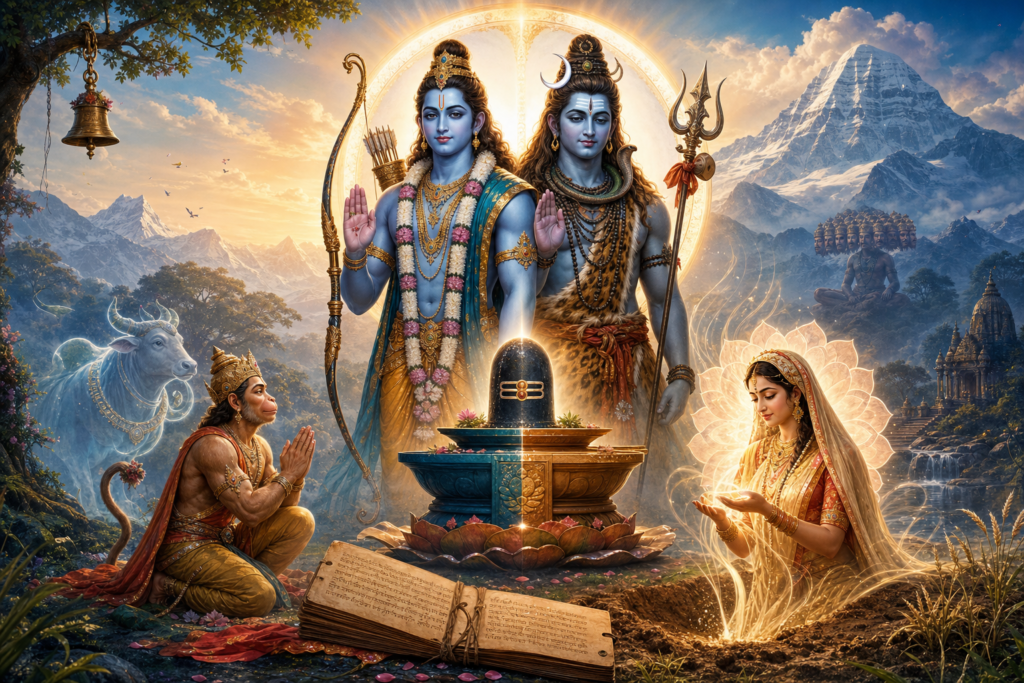
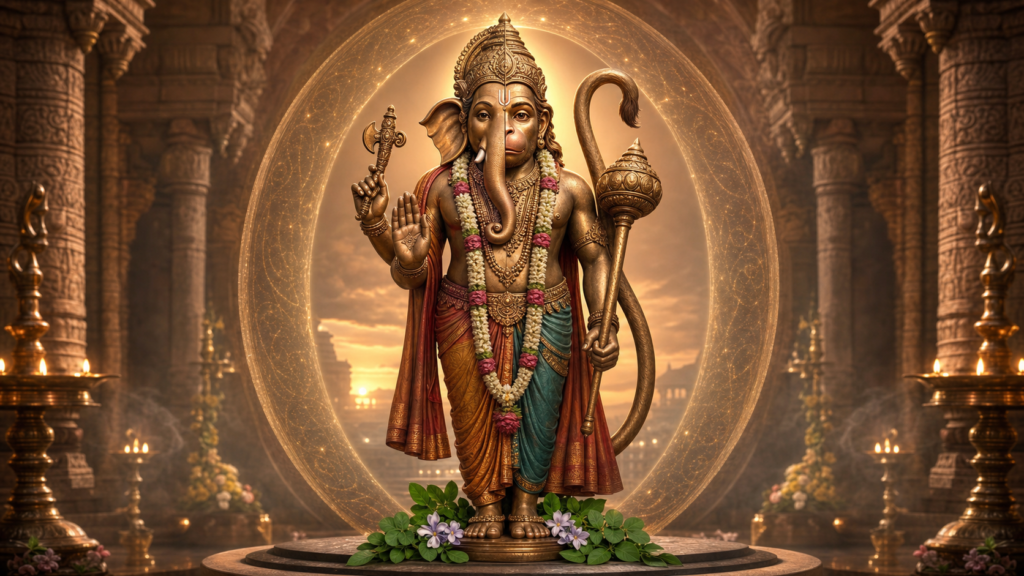
Hanuman’s vow of naishthika brahmacharyalifelong celibacystands as a defining ideal within Hindu sacred narratives, illuminating the inseparable bond between devotion (bhakti), disciplined strength (bala), and service (seva). Across the Ramayana tradition and later devotional literature, Hanuman is portrayed as the paragon of single-pointed dedication to Lord Rama and Sita, a portrayal that explains why the question “why Hanuman is celibate” recurs in temple discourse, scriptural study, and living practice. This exploration situates Hanuman’s brahmacharya in its textual, philosophical, and lived contexts, drawing out its relevance for contemporary seekers across dharmic traditions.
Classical sources offer converging yet nuanced views. The Valmiki Ramayana emphasizes Hanuman’s unwavering focus, tact, and service throughout the Sundara Kanda; while it does not announce a formal vow, the narrative consistently depicts a mind and life wholly oriented to Rama’s mission. Later retellings and regional traditions, as well as popular stotras, amplify this image, describing Hanuman as a naishthika brahmachari. This composite memorytextual, liturgical, and oralhelps explain how the ideal of Hanuman’s celibacy became central to Hindu devotion.
Philosophically, brahmacharya in the broader dharmic lexicon extends beyond abstinence to mean mastery over the senses, clarity of intention, and conservation of vital energy (ojas) in service of dharma. In Yoga philosophy, brahmacharya appears among the yamas, where disciplined restraint supports sustained meditative focus and moral steadiness. Read through this lens, Hanuman’s lifelong celibacy embodies the harnessing of prāṇafitting for Vāyuputra, the son of Vayuso that strength does not dissipate but crystallizes into fearless service and lucid discernment (buddhi).
Across narrative strands, several complementary motives are emphasized. First, brahmacharya preserves undivided loyalty to Rama and Sita, ensuring that no competing attachment distracts from the Lord’s work. Second, it renders extraordinary physical power ethically reliable; strength under vows serves, rather than rules. Third, it models a pedagogy of inner freedom for devotees: when desire is refined into devotion, energy becomes available for courage, compassion, and wise actionqualities Hanuman exemplifies at every decisive moment in the Ramayana.
Regional traditions also record the Suvarchala narrative, wherein Hanuman is ritually united with Suvarchala, the daughter of Surya, in certain South Indian tellings and temple practices. Devotees interpret this not as a departure from naishthika brahmacharya but as a symbolic yogic consummationthe integration of solar wisdom (Surya-vidyā) with disciplined prāṇathereby reaffirming restraint rather than relaxing it. Such variations illustrate how local theologies preserve the primacy of Hanuman’s self-mastery while honoring diverse ritual memories within the broader Hindu tradition.
This ideal resonates across dharmic communities. In Buddhism, brahmacarya denotes the monastic path of celibate practice directed toward awakening; in Jainism, brahmacharya is a central vow of self-restraint, integral to the purification of karma; in Sikh thought, the emphasis falls on self-control, fidelity, and integrity in household life. Read together, these perspectives advance a shared ethic: self-mastery that deepens compassion, clarifies purpose, and strengthens service to the common good. Hanuman’s brahmacharya thus becomes a unifying emblem of disciplined love across Hindu, Buddhist, Jain, and Sikh horizons.
In lived devotion, this ethic is felt as much as it is understood. Temple-going communities often describe the stillness around Hanuman’s murtis on Tuesdays and Saturdays: the scent of sindoor, the lilting cadence of Hanuman Chalisa, and the palpable sense that inner restlessness can be quieted and redirected. Many practitioners report that contemplating Hanuman’s restraint fosters resilience in the face of distraction, courage during moral trials, and a steadier commitment to family, work, and community dutiesall while nurturing reverence for Rama’s name and story.
Psychologically, naishthika brahmacharya channels attention and energy toward long-term aims, reducing impulsivity and improving clarity under pressureprecisely the capacities Hanuman deploys when entering Lanka, consoling Sita with humility and tact, or returning with evidence that advances Rama’s mission. Ethically, it anchors power to responsibility. Spiritually, it refines bhakti so that love becomes service without condition or fatigue.
Symbolically, as Vāyuputra and Anjaneya, Hanuman personifies prāṇa refined by dharma: immense force governed by vow. His celibacy is less a negation than a consecrationan offering that renders his intelligence keen, his strength tireless, and his loyalty incorruptible. In this synthesis, the question “why Hanuman is celibate” finds its most compelling answer: brahmacharya safeguarded undivided devotion to Lord Rama, transforming raw power into trustworthy service for the welfare of all.
Taken as a whole, the tradition presents Hanuman’s brahmacharya as an enduring invitation. For students of scripture (śruti, smṛti), practitioners of yoga, and devotees in diverse dharmic lineages, the vow signals a pathway to unity: self-mastery that deepens love, love that matures into service, and service that binds communities in shared purpose. In every era, the example remains timelystrength becomes luminous when disciplined by devotion and guided by dharma.
Inspired by this post on Hindu Blog.