The vision of the human body as Sri Chakra presents an integrated map of consciousness in which Shakti and Shiva are understood as a single, inseparable reality. In this symbolic readingwidely appreciated across Hinduism and resonant with other dharmic traditionsthe body becomes a living yantra through which awareness, energy, and ethics converge into a disciplined path of realization. The approach is academic in clarity yet experiential in scope: it seeks to explain how inner practice, symbolic geometry, and lived virtue reinforce one another.
In Hindu thought, the manifested universe unfolds through the pancha bhutasearth, water, fire, air, and etherunderstood as the dynamic play of the Divine Mother, Shakti. From this subtle activity arise the constituents of embodiment: the sense capacities, the vital forces (prana), and even the material tissues recognized in Ayurveda, including skin and the eight classical dhatus (rasa, rakta, mamsa, meda, asthi, majja, shukra, and in some readings, ojas). In this model, Shakti’s creativity is not separate from matter; it is the very intelligence by which life organizes itself.
The Sri Chakraalso known as Sri Yantraembodies Shakti–Shiva unity through nine interlocking triangles (five downward for Shakti, four upward for Shiva) radiating from the bindu, the still point of all consciousness. These generate forty-three smaller triangles, encircled by lotus petals and bounded by the bhupura (the square enclosure). As a whole, the yantra is both cosmogram and psychogram: it depicts the layered emergence of the cosmos while mapping interior states of awareness, devotion, and discernment.
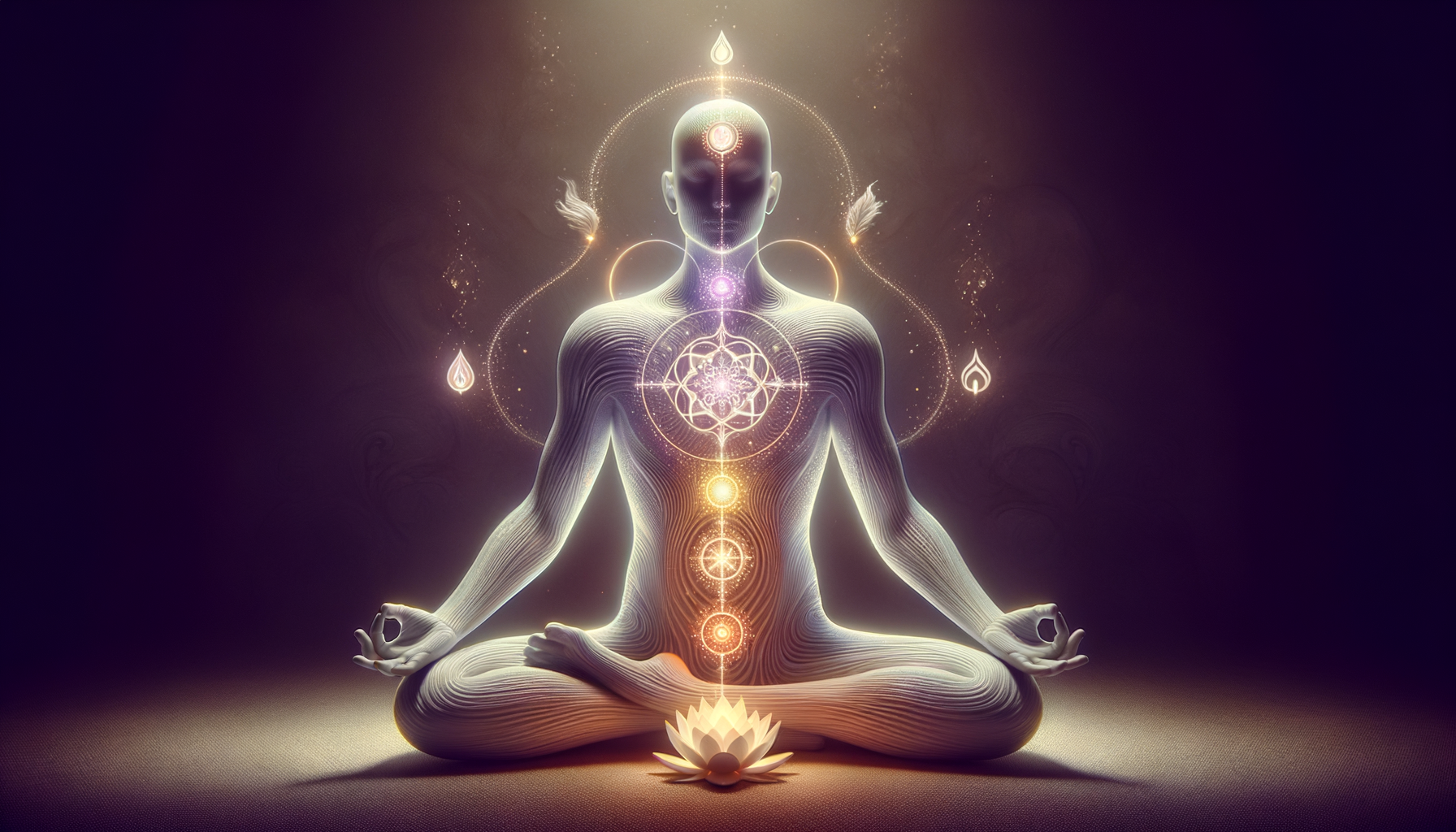
Read as yogic anatomy, the Sri Chakra can be correlated with the spine as Meru, the nadis (ida, pingala, sushumna) as subtle energetic channels, and the chakras (muladhara, swadishtana, manipura, anahata, visudha, and beyond) as focal points of experience. The ascent of Kundalini through sushumna nadi is understood as Shakti’s recognition of her own identity with the bindu of pure awareness. Practices such as asana, pranayama, pratyahara, dhyana, and mantra align the five elements with steadiness, clarity, and compassion, allowing symbolic insight to translate into embodied balance.
For many practitioners, contemplating the body as Sri Chakra offers a relatable and emotionally steadying experience. Visualization of the lotus petals as layers of attention, the triangles as complementary polarities, and the bindu as the witness transforms daily life: eating becomes an offering, speech becomes mantra-aware, and ordinary interactions become opportunities for ahimsa, gratitude, and presence. Reported benefits include a felt sense of grounding (earth), fluid adaptability (water), purposeful vitality (fire), calm spaciousness (air), and integrative silence (ether).
This symbolism also illuminates shared ground across dharmic traditions. In Buddhism, the mahabhuta framework and mandalic practice similarly integrate elements, body, and mind; in Jainism, reflections on inner purity, restraint, and the layered nature of reality echo the move from gross to subtle; in Sikhism, the reverential insight “pavan guru pani pita mata dharat mahat” underscores elemental interdependence as a foundation for ethical life. Such resonances encourage unity among Hinduism, Buddhism, Jainism, and Sikhism without erasing their distinctive practices.
Approached responsibly, the Sri Chakra does not promote sectarian claims but invites disciplined self-inquiry and shared ethical commitments. Its academic study can coexist with contemplative practice: the geometry informs meditation; the meditation refines understanding; and both deepen service, humility, and interfaith respect within the broader dharmic family. Read this way, the human body as Sri Chakra becomes not only a sophisticated symbol but also a practical compass for inner poise and compassionate action in the world.
Inspired by this post on Hindu Blog.