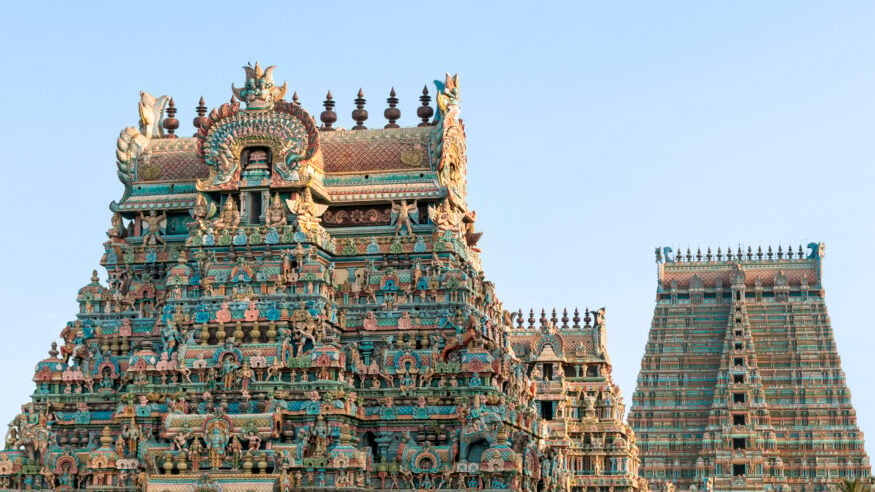
Kukke Subramanya Swamy temple complex stands at the foothills of Kumara Parvatha and along the banks of the sacred Kumara Dhara, within the rainforested spine of the Western Ghats in Karnataka. As a major pilgrimage center in Tulu Nadu, the site is venerated for its synthesis of Subramanya worship and naga reverence, binding mythic memory, ritual practice, and ecological guardianship into a single living tradition.
According to the sthala purana (local temple chronicle) aligned with strands of the Skanda Purana, the Divine assumes the form of Kumara Swamy (also known as Skanda, Kartikeya, or Subramanya) and arrives with Lord Ganapathi to the banks of the Kumara Dhara to subdue the asura Tarakasura. In this tradition, the site also commemorates the celestial marriage to Devasena, thereby establishing the valley as a kalyana kshetra and consolidating its sanctity for subsequent ages.
Equally central to the temple’s identity is the naga narrative. Vasukilord of serpentstogether with Shesha (Ananta), is believed to have sought refuge beneath Subramanya at this very location, seeking protection from Garuda. The sanctum symbolism thus presents Subramanya in intimate association with Vasuki, often evoked through anthill (valmika) imagery. The toponym “Kukke” in regional Tulu–Kannada usage is associated with a “basket,” recalling early protective coverings that safeguarded the anthill and signified the deity’s subterranean seat.
These narrative strands converge in scriptural memory. Devotional motifs at Kukke Subramanya are congruent with the Skanda Purana (Sahyadri-khanda; Subramanya-mahatmya), while thematic allusions appear in the Kalika Purana and passages of the Mahabharata. As with many sthala puranas, regional tellings may vary on episodic details (including the locale of Devasena’s marriage), yet the core motif remains stable: Subramanya as warrior-sage, restorer of dharma, and compassionate guardian of the nagas.
The temple’s physical vocabulary reflects both climate and theology. Sloping tiled roofs, timber colonnades, and a compact garbhagriha enclosed by prakara walls respond to heavy monsoon patterns, while a prominent dhvaja-stambha and deepa-stambha mark the ritual axis. The Adi Subramanya shrine and the nearby Bila-dvara cave reinforce the subterranean symbolism of the site. Many pilgrims follow the time-honored practice of bathing at the Kumara Dhara tirtha before darshana, ritually integrating riverine purification with temple worship.
Daily worship follows the regional liturgical cadence: suprabhata and usha-puja, abhisheka with panchamrita, alankara for Subramanya with prominent naga motifs, naivedya, and evening deeparadhana. The iconography foregrounds the synergy of Subramanya with Vasuki and Shesha, while the peacock vahana signifies the sublimation of lower impulses and the triumph of disciplined knowledgean ethical grammar that infuses the site’s devotional aesthetics.
Among the best-known parihara rites here are Sarpa Samskara and Ashlesha Bali, performed for expiation from sarpa-dosha and for the resolution of obstacles traditionally associated with family well-being, progeny, and stability. Typically aligned with Ashlesha Nakshatra and temple schedules, these rites involve prayaschitta-sankalpa, homa with naga-mantras, bali, and purnahuti, culminating in darshana at both Subramanya and Adi Subramanya. Observance of vrata and dietary niyamas, prior registration, and adherence to temple protocols are integral; timings and procedures are periodically updated by the temple administration.
Festival cycles confer narrative depth to the calendar. Subramanya Shashti (Skanda Shashti), Ratha Utsava, Naga Panchami, and Makara Sankramana draw pilgrims from across India, while Kartika deepotsava illuminates the precincts with ritual light. Together, these observances reenact the triumph over Tarakasura and Surapadma, the bestowal of boons upon the devas, and the cosmic marriage motifs, binding myth and community through Vedic recitation, naga-seva, and annadana.
The pilgrimage experience is framed by reverence and restraint. Traditional etiquette emphasizes modest attire, mindful silence in the sanctum, and ecological care along riverbanks and forest edges. Seva schedules accommodate both individual sankalpas and collective homas, enabling personal vows to be woven into the wider rhythm of community worship.
Sacred ecology is encoded in the temple’s naga-veneration. Protecting serpents implies safeguarding riparian habitats, anthill micro-ecosystems, and evergreen canopies of the Western Ghats. Resonances of this ethic appear across dharmic traditions: Mucalinda sheltering the Buddha in Buddhist lore, Dharanendra protecting Parshvanatha in Jain narratives, and the Sikh ideal of Sarbat da bhala. Read together, these motifs affirm an inter-dharmic ethic of compassionate guardianshipuniting Hindu, Buddhist, Jain, and Sikh sensibilities around the protection of life and landscape.
Comparative theology underscores Subramanya’s pan-Indic presence: Murugan in Tamil regions, Kartikeya in northern traditions, and Subramanya in the Deccan. Symbols such as the vel (spear), the peacock vahana, and the rooster emblem (seval kodi) carry convergent meaningsknowledge, ethical discipline, and the transmutation of egothat Kukke Subramanya integrates with naga-protection to yield a distinctive theological synthesis.
Practical access complements the sacred itinerary. The temple town is reachable by road from Mangaluru and by rail via Subrahmanya Road station, and it serves as a trailhead for treks toward Kumara Parvatha (Pushpagiri). Responsible travel guidelinesmonsoon-aware planning, no-plastic practices, and deference to sanctum protocolsenable pilgrims and trekkers to share the landscape without compromising its sanctity.
Viewed through the lens of its sthala purana, Kukke Subramanya Swamy Temple emerges as a confluence of legend, living ritual, sacred geography, and inter-dharmic harmony. At the meeting of Kumara Parvatha and the Kumara Dhara, devotees encounter Subramanya as warrior-sage and protector of the nagas, and they inherit a civilizational ethos that transforms reverence into a vow to protect life, land, and community.
Inspired by this post on Hindu Pad.