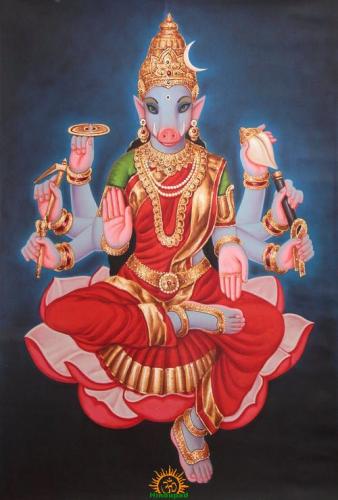
Nava Veeras are revered across Tamil and pan-Indic traditions as the nine valiant divine attendants of Lord Murugaalso known as Skanda, Kartikeya, and Subrahmanya. In many South Indian oral and temple traditions, they are described as emanations born from the Nava Shakthis, themselves manifestations of the powers of Mata Parvati. Accordingly, the Nava Veeras are often understood as the sons of Navashakthis and, by extension, as extensions of Mata Parvati’s protective and martial energy directed toward the upholding of dharma.
Classical and medieval sources provide the broader theological and narrative frame within which the Nava Veeras are situated. The Skanda Purana (Sanskrit) establishes Muruga’s role as Deva Senapati (Commander of the celestial hosts), while the Kanda Puranam (medieval Tamil recension, traditionally attributed to Kacciyappa Sivachariar) elaborates richly on Muruga’s campaigns and his divine retinue. Temple liturgy, folk drama, and festival enactments in regions such as Tamil Nadu and Sri Lanka subsequently crystallized the memory of these nine guardians as paragons of disciplined courage in service of the Divine.
Theologically, the Nava Veeras represent a Shaiva–Shakta synthesis. Muruga’s leadership and wisdom (Shaiva) operate in concert with the fierce, compassionate, and protective energies of the Goddess (Shakta), here expressed through the Nava Shakthis. In this perspective, the Nava Veeras embody localized personifications of Parvati’s Shakti, channelled as steadfast guardianship. This embracing of multiplicity within unity aligns with the wider dharmic ethos shared across Hinduism, Buddhism, Jainism, and Sikhism, in which diverse forms serve a single, unifying commitment to righteousness, compassion, and societal well-being.
Within the martial narratives surrounding Muruga’s defeat of formidable asuras such as Surapadman (with episodes including the famed Soorasamharam), the Nava Veeras are cast as elite commanders, scouts, and standard-bearers who secure flanks, gather intelligence, and advance supply lines. The most widely attested among them is Veerabahu, often presented as the chief lieutenant and envoy who seeks parley before battle and exemplifies the code of righteous warfare. The remaining eight are variously identified across regional recensions and temple traditions, underscoring the living, plural character of Muruga devotion.
Although enumerations differ, the functional typology is consistent: a commander-in-chief (Veerabahu), vanguard and rearguard specialists, protectors of processional standards and emblems (notably the peacock standard and the vel), reconnaissance leaders, and guardians of the camp and routes. Collectively, these roles articulate the principle that valour is inseparable from discipline, justice, and servicequalities at the heart of kshatra dharma.
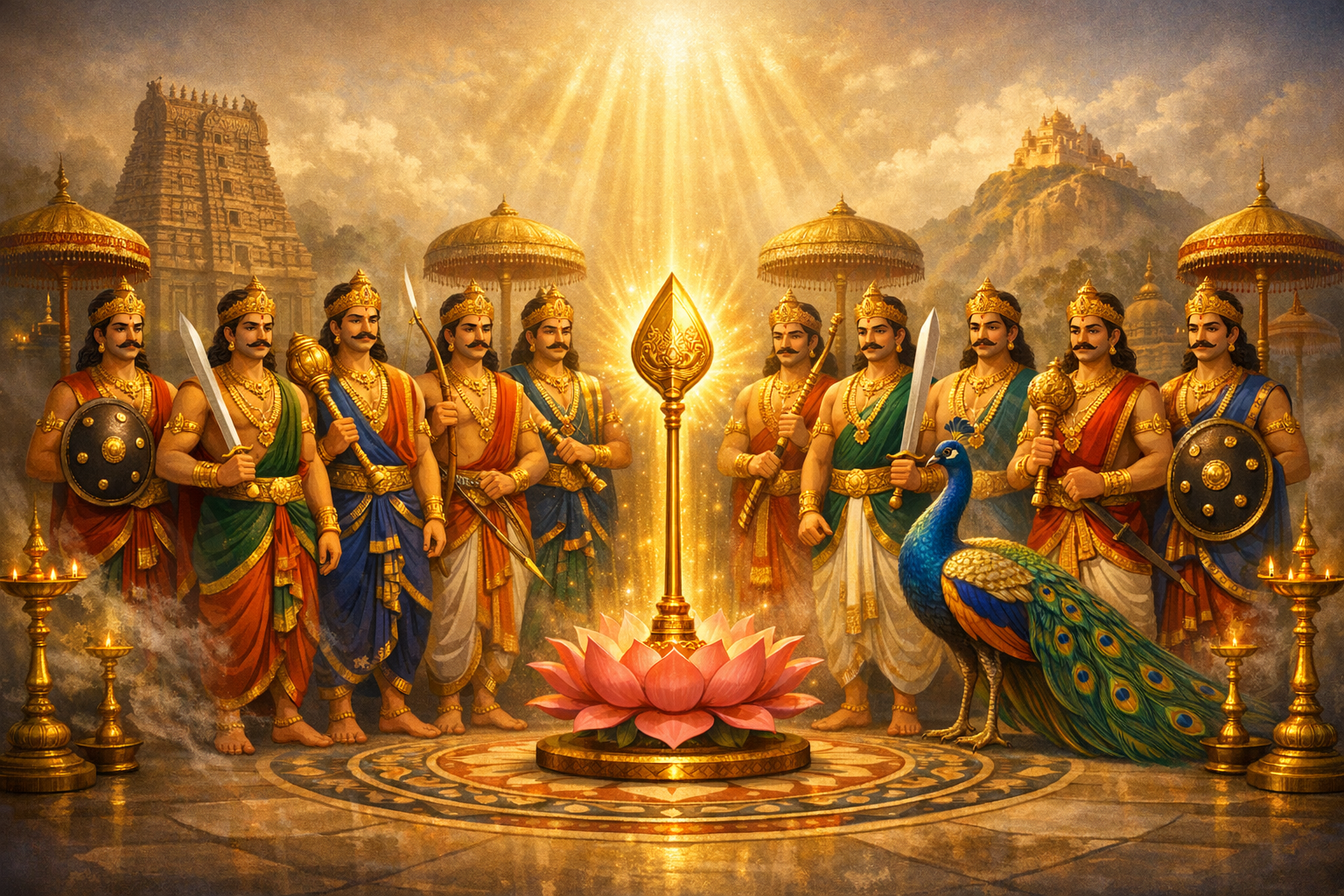
Iconographically, the Nava Veeras are depicted as youthful yet formidable heroes, often moustached and crowned, bearing weapons such as the sword, spear (vel), mace, bow, and shield. They may be shown in dynamic postures that suggest vigilance and readiness, and are sometimes associated with Muruga’s emblems and vahana (the peacock). In agamic practice, they function as parivara devatasattendant deitiessituated in prakaras (circumambulatory precincts) or housed in dedicated mandapams where their martial virtues are honored during processions and festival rites.
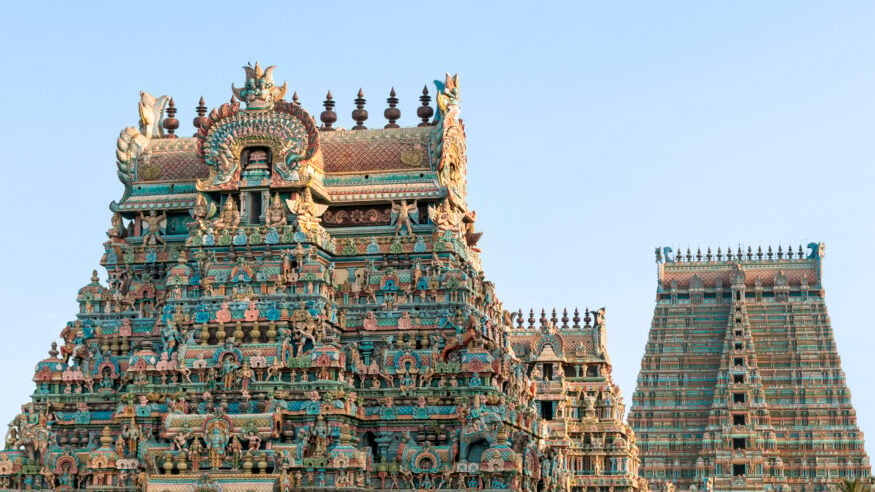
Temples across Muruga’s six abodes (Arupadai Veedu)Thirupparankundram, Tiruchendur, Palani, Swamimalai, Tiruttani, and Pazhamudircholaiuphold the broader memory of Muruga’s divine army, and many shrines feature independent sanctums or icons for the Nava Veeras, especially where festival dramaturgy is prominent. Beyond Tamil Nadu, shrines such as the Kukke Subramanya temple and other South Indian temples incorporate processional and ritual motifs that highlight Muruga’s guardians and their protective presence over devotees and pilgrim communities.
Festival life makes the Nava Veeras especially visible. During Skanda Sashti, the multi-day observance culminating in the dramatic Soorasamharam, the nine heroes are invoked as the disciplined backbone of Muruga’s campaign, their virtues extolled in public recitations and staged episodes. Thaipoosam (Thaipusam) further weaves these themes into acts of vow-taking, penance, and thanksgiving, with devotees carrying Kavadi and chanting hymns that celebrate Muruga’s grace and the steadfastness of his attendants. In the Karthika masam/Karthikai Month cycle, temple lamps, processional music, and devotional theater frequently reference the guardians who uphold the Divine Order.
Literary traditions reinforce these liturgical currents. Devotional works like the Tiruppugazh (of Arunagirinathar) praise Muruga’s valor and compassion alongside evocations of his divine retinue. The Kanda Shasti Kavasam (of Devaraya Swamigal) intensifies the sense of protective grace (kavacham), and while centered on Muruga, it is often performed in ritual contexts that also honor his attendants, especially Veerabahu. In some locales, poetic cycles and oral repertoires celebrate the Nava Veeras as exemplars of courage, humility, and unwavering loyalty.
From a comparative dharmic perspective, the Nava Veeras resonate with a shared civilizational idea: that spiritual life and social protection are not opposites but mutually reinforcing duties. Buddhism venerates Dharmapalas as protectors of the path; Jainism recognizes yaksha–yakshini attendants who safeguard Tirthankaras and pilgrims; Sikh tradition elevates the Sant–Sipahi ideal of the saint-soldier. Read together, these traditions affirm that courage, restraint, and compassionate service form an ethical triad essential to sustaining communal harmony.
The number nine itself carries layered meanings within Indic thought. It suggests completeness and cyclical fulfillment (nava = new/renewal), relates symbolically to the Navagrahas, and maps intuitively onto space as the eight directions with a sacred center. Interpreted this way, the Nava Veeras can be seen as guardians who align spiritual aspiration, moral action, and cosmic order across every direction of life.
For practitioners, honoring the Nava Veeras complements devotion to Lord Muruga by cultivating the inner disciplines their archetypes signify: courage guided by wisdom, vigilance tempered by compassion, and strength expressed as service (seva). Simple practiceslighting a lamp before Muruga’s vel, reciting verses from the Kanda Shasti Kavasam with mindful intent, or reflecting on Veerabahu’s righteous diplomacy before conflictcan be woven into daily worship. During festivals, one may offer fruits, flowers, and a sincere vow to protect and support one’s community, thereby embodying the guardians’ ethos.
Scholarly and field perspectives converge on an important methodological note: the identities, names, and ordering of the Nava Veeras vary by region, lineage, and textual recension. This fluidity is not a deficiency but a hallmark of a living tradition in which temple liturgy, oral performance, and localized history interact dynamically to shape devotional memory. Inscriptions, regional puranas, and contemporary festival scripts together provide the best composite lens on how communities continually renew their understanding of Muruga’s guardians.
Considered as a whole, the Nava Veeras present a profound ideal of spiritually grounded valor. They anchor the devotee’s imagination in a vision where divine wisdom (Muruga) and divine energy (Shakti) collaborate to protect the vulnerable, guide the strong, and harmonize society. Their legacyalive in processions, poetry, sculpture, and songencourages all who venerate Lord Muruga to join courage with compassion, and discipline with devotion, in service of a just and inclusive dharmic world.
Inspired by this post on Hindu Pad.