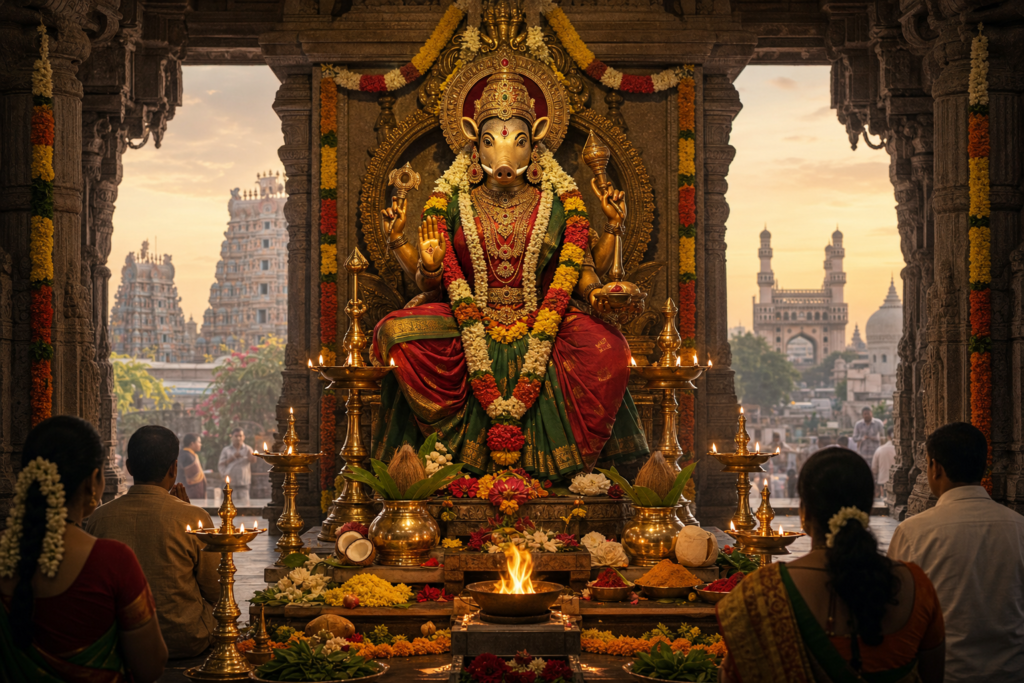
In a significant affirmation of religious trust and donor intent, the Madras High Court has quashed the DMK-led Tamil Nadu government’s proposal to utilise the accumulated and surplus funds of the Kallazhagar Temple for commercial facilities. The judgment reiterates a clear principle: temple funds are to be deployed exclusively for religious purposes, not diverted for unrelated commercial projects.
This ruling matters beyond a single institution. When courts uphold that offerings and endowments must support worship, maintenance of sacred spaces, traditional services, and legally sanctioned religious activities, it strengthens confidence in temple governance. The clarity provided by the Madras High Court safeguards the integrity of Hindu temple administration and reinforces accountability under the framework governing religious endowments.
Devotees often contribute with an expectation that their support will nurture spiritual lifefunding puja, festivals, heritage conservation, annadanam, and community service tied to the temple’s dharmic mission. Redirecting such contributions to commercial ventures can erode trust. By correcting course, the Court’s intervention restores alignment between donor intention and institutional responsibility.
The implications are wider for dharmic traditions in India. Hindu, Buddhist, Jain, and Sikh institutions rely on the sanctity of offerings and the transparent stewardship of religious endowments. A precedent that prioritises religious purposes over commercial expansion helps preserve autonomy, ensures lawful use of funds, and fosters unity among communities that share a commitment to sacred service and ethical governance.
Across Tamil Nadu and beyond, families visit temples like Kallazhagar with a sense of devotion that spans generations. They seek continuityof rituals, architecture, festivals, and cultural memory. Ensuring that temple funds remain within the ambit of religious functions protects this living heritage and affirms the community’s emotional bond with sacred institutions.
From a governance perspective, the judgment encourages best practices: transparent budgeting, statutory compliance, participatory consultation with stakeholders, and periodic audits. Such measures help institutions meet devotional, cultural, and social expectations while adhering to the legal boundaries that distinguish religious purposes from commercial ventures.
Ultimately, the Madras High Court’s decision signals that development goals must not eclipse the core mission of religious endowments. By reinforcing the rightful use of temple funds, the ruling protects devotee faith, strengthens institutional legitimacy, and upholds a constitutional ethos that respects religious freedom and the integrity of sacred trusts across India.
Inspired by this post on Hindu Jagruti Samiti.