Shankara Jayanthi or Shankaracharya Jayanti commemorates the birth anniversary of Jagadguru Shankaracharya, regarded as one of the greatest philosophers in Hinduism and an enduring luminary for the broader family of dharmic traditions. In 2026, Shankara Jayanti falls on April 21. The observance is tied to Vaisakha Shukla Panchami, the fifth lunar day (tithi) in the bright half of Vaisakha masam (Vaisakh month).
The date arises from precise lunisolar calculations used in the Hindu calendar. A tithi corresponds to every 12-degree increment of longitudinal separation between the Sun and the Moon. Panchami begins when this separation crosses 48 degrees and ends at 60 degrees. For festival observances that are tithi-based, the day is determined by the tithi prevailing at local sunrise, which is why the civil date may shift slightly by region and time zone. In both the amanta and purnimanta month-reckoning traditions, Shankara Jayanthi remains anchored to Vaisakha Shukla Panchami, aligning communities across India in practice even when nomenclature varies.
For 2026, widely consulted panchangas indicate that Panchami prevails at sunrise across most of India on Tuesday, April 21 (IST), establishing this as the primary date for the observance. In regions west of India (for example, Europe and the Americas), Panchami may begin earlier in civil time; in some eastern regions it may begin later. Devotees outside India are therefore advised to refer to a local panchang to confirm the tithi at sunrise. This method preserves the pan-Indian integrity of the vrata while accommodating geographic diversity.
Jagadguru Shankaracharya (Adi Shankaracharya) is traditionally associated with Kalady in Kerala. While Indic scholastic traditions preserve multiple chronological strands for his life, a wide body of modern scholarship places him in the late eighth to early ninth century CE, and several traditional lineages uphold earlier dates. Across these viewpoints, there is unanimity about his transformative role in consolidating the non-dual (Advaita) understanding of the Vedas and Upanishads and in renewing the study of the Prasthāna-trayī (Upanishads, Bhagavad Gītā, and Brahma Sūtras).
Philosophically, Advaita Vedānta articulates the identity of ātman and Brahman, a non-dual truth realized through sravana (systematic study), manana (critical reflection), and nididhyāsana (deep contemplation). Shankaracharya’s commentaries display rigorous hermeneutics, precise logic, and a consistent method for resolving apparent scriptural contradictions. The approach is not merely speculative; it is soteriological, oriented toward liberation (moksha) through self-knowledge.
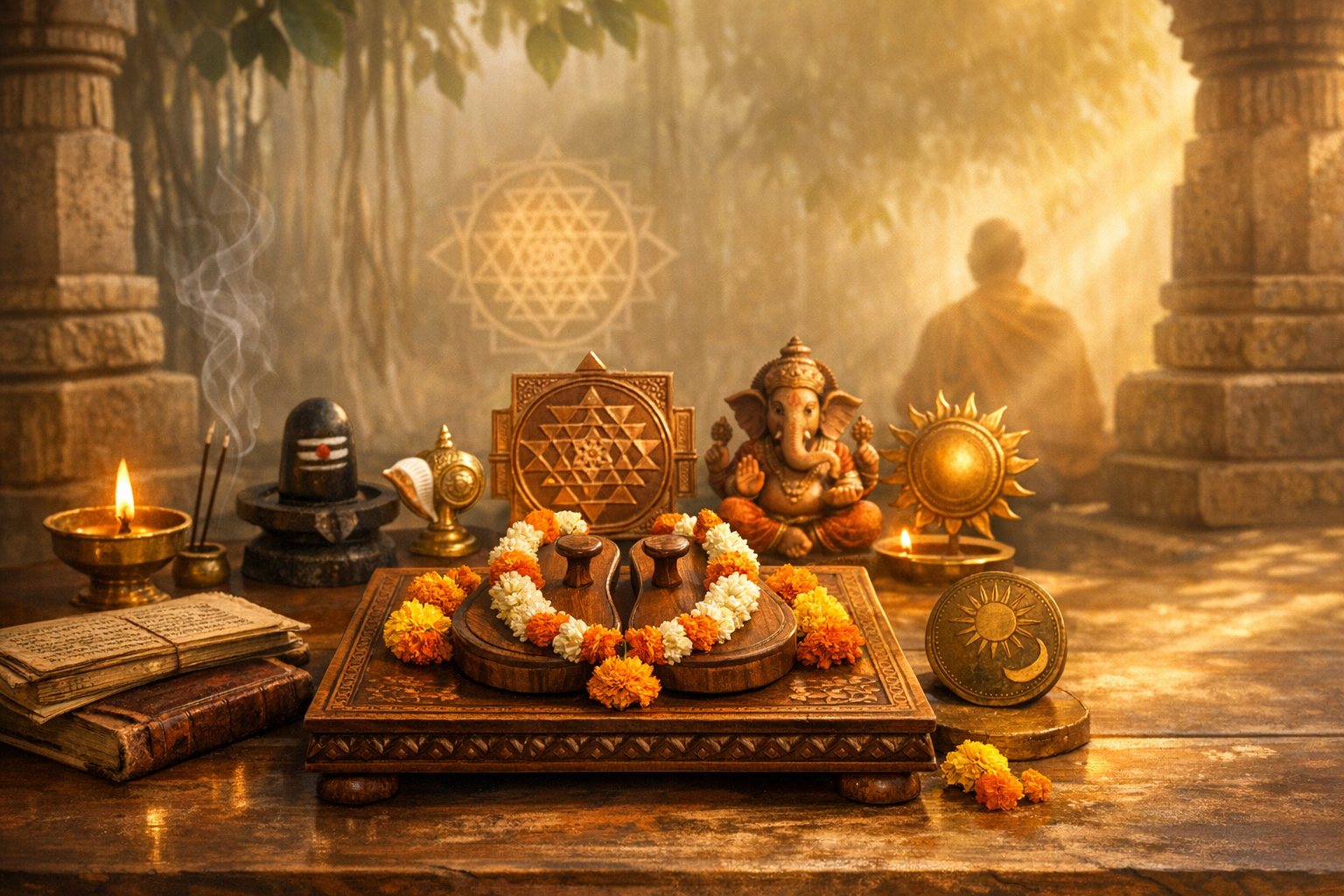
Institutionally, Adi Shankaracharya is credited with organizing the four āmnāya maṭhasSringeri (Dakshināmnāya), Dwaraka (Pascimāmnāya), Puri (Purvāmnāya), and Jyotirmath (Uttaramnāya). These centers sustained the Shankaracharya Parampara and stewarded Vedic learning, dharmic ethics, and public instruction. Complementing this scholastic architecture, he is also associated with Panchayatana Puja, a harmonizing temple-and-household practice that venerates Shiva, Vishnu, Devi, Surya, and Ganesha without sectarian rivalry, thereby strengthening unity within Hindu traditions.
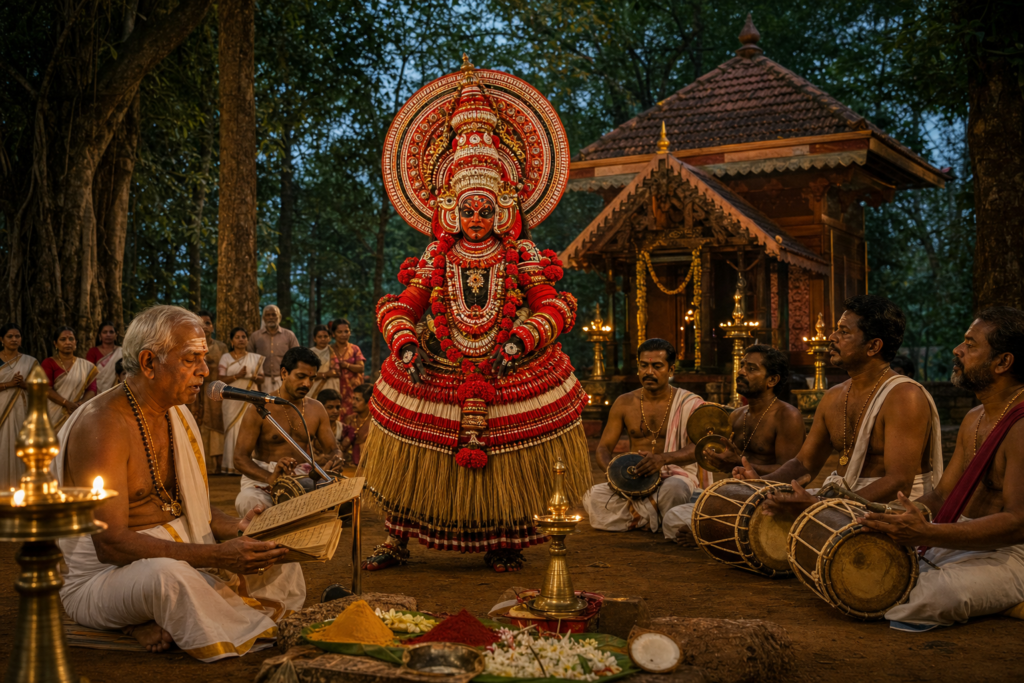
In public memory and lived practice, Shankara Jayanthi emphasizes both learning and devotion. Monasteries and community centers typically host Veda parayanam, Acharya-padavandana (pāda-pūjā to the Guru’s sandals), scriptural pravachanas, and annadānam. Households narrate how this day often becomes an annual touchstone for intergenerational conversations about dharma and study. Many devotees describe a distinctive contemplative calm when reciting stotras traditionally linked to him, such as Bhaja Govindam, Kanakadhara Stotram, Totakāṣṭakam, Soundarya Lahari, and Śivanandalahari.
At home, the observance on Vaisakha Shukla Panchami is traditionally simple yet profound. After a morning bath and a brief sankalpa (stating the place, date as Vaisakha Shukla Panchami, and intent), devotees perform Guru-puja, offer flowers and a lamp, and recite Guru-stotram along with selections from Shankaracharya’s works. Some read a passage from the Upanishads or Bhagavad Gita with his bhashya to connect devotion to disciplined inquiry. Concluding with quiet meditation (dhyana) aligns the practice with the Advaita emphasis on direct realization.
For those planning a structured schedule on April 21, 2026, sunrise to late morning is customarily preferred for Guru-puja, reflecting the tithi-at-sunrise principle. In many locales, the mid-day Abhijit Muhurta is also regarded as auspicious for succinct worship and study, though exact clock times vary by geography and should be confirmed locally. The broader intent is to unite practice (sādhana) and knowledge (jñāna) in a manner befitting Shankaracharya’s synthesis.
The educational dimension of Shankara Jayanthi is equally significant. Study circles often take up accessible sections of the Prasthāna-trayī with Shankara’s commentarial insights, encouraging participants to distinguish between the literal and the intended meaning of scriptural passages. Introductory readings on Advaita epistemology (pramāṇa theory), the role of adhyāropa–apavāda (pedagogic superimposition and subsequent negation), and the centrality of nidhidhyāsana help practitioners bridge philosophical clarity and contemplative depth.
The day also invites reflection on unity across India’s dharmic traditionsHinduism, Buddhism, Jainism, and Sikhism. Classical debates in Shankara’s milieu were rooted in rigorous logic and mutual respect, demonstrating disagreement without demeaning the seeker on a different path. Contemporary observance can honor that spirit by fostering learning exchanges, sanghas, and inter-tradition forums that celebrate common ethical commitmentsnon-violence, truthfulness, compassion, and the pursuit of ultimate reality through disciplined practice.
From a cultural perspective, Shankara Jayanthi strengthens the sacred geography associated with the Acharya. Kalady (Kerala) serves as a focal point for pilgrim remembrance of his early life and formative experiences. The four āmnāya maṭhasSringeri, Dwaraka, Puri, and Jyotirmathanchor pan-Indian circuits of learning and devotion, and many pilgrims use this occasion to plan future visits or to connect virtually with discourses conducted at these institutions.
For families and students, integrating age-appropriate learning on April 21, 2026 can make the observance memorable. Younger learners often engage with concise stories from the Acharya’s life that highlight intellectual honesty, fearlessness in debate, and compassion in action (as remembered in traditions surrounding the Kanakadhara episode). Older students may focus on a core teachingsuch as the distinction between the transient (anitya) and the eternal (nitya)and reflect on how this insight informs ethical choices and mental resilience in daily life.
Shankara Jayanthi is also a day to renew commitments that go beyond ritual: careful speech, non-injury, contentment, and disciplined inquiry. These shared virtues enable diverse practitionershouseholders and renunciants, students and scholarsto participate meaningfully in a living tradition. In many communities, simple acts such as offering food, sharing books, or organizing a group recitation become conduits for collective merit and mutual care.
In sum, April 21, 2026 is the widely observed civil date for Shankara Jayanthi in India, corresponding to Vaisakha Shukla Panchami. The day blends reverent worship with rigorous study, honoring a legacy that clarified Advaita Vedānta, strengthened monastic and educational institutions, and modeled respectful dialogue across philosophical schools. Observed in that spirit, the Jayanti becomes an instrument of unity within Hinduism and a bridge of goodwill across the wider dharmic family.
Inspired by this post on Hindu Pad.