
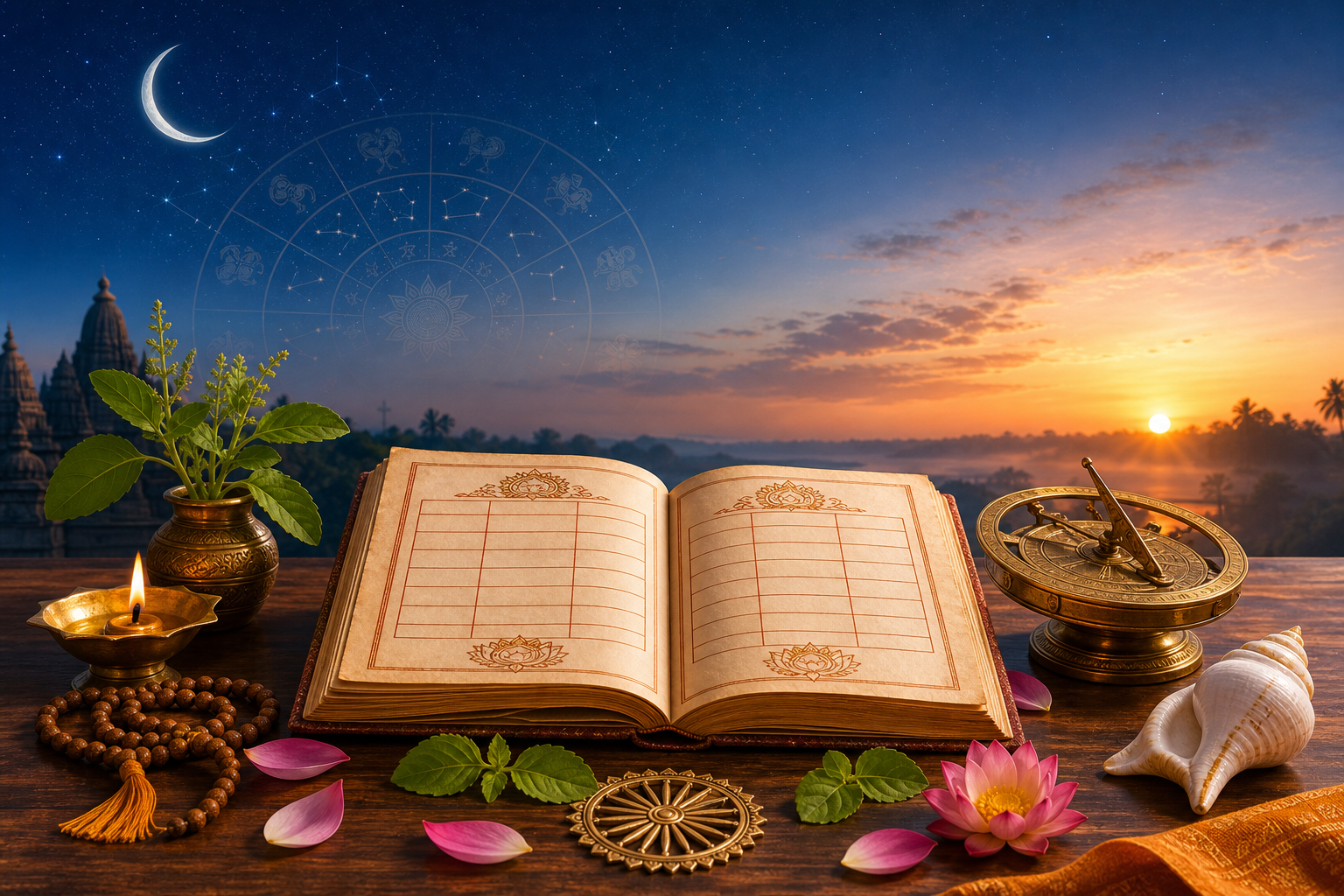
July 10, 2026 Panchang overview: Friday, July 10, 2026, is primarily marked in the Hindu calendar as Krishna Paksha Ekadashi tithi in most regions. The day begins after the close of Krishna Paksha Dashami, the tenth lunar day of the waning phase, which continues until 3:39 AM on July 10. From that point onward, Krishna Paksha Ekadashi, the eleventh lunar day of the waning or dark phase of the Moon, becomes the governing tithi for the day.
This detail is important because the Panchang does not treat a civil date as merely a midnight-to-midnight block. A Hindu calendar day is interpreted through sunrise, tithi, nakshatra, yoga, karana, vara, and the local movement of the Sun and Moon. Therefore, July 10, 2026 is best understood as a day shaped by the transition from Dashami to Ekadashi before dawn, giving the date a distinctly Ekadashi-oriented spiritual character for many observers.
In technical terms, a tithi is a lunar day calculated from the angular distance between the Sun and the Moon. Each tithi corresponds to a 12-degree separation in their apparent geocentric longitudes. Because the Moon does not move at a perfectly uniform civil-day pace, a tithi may begin or end at any time of the day or night. This is why the Panchang for July 10, 2026 records Krishna Paksha Dashami only until 3:39 AM and then identifies the rest of the day with Krishna Paksha Ekadashi.
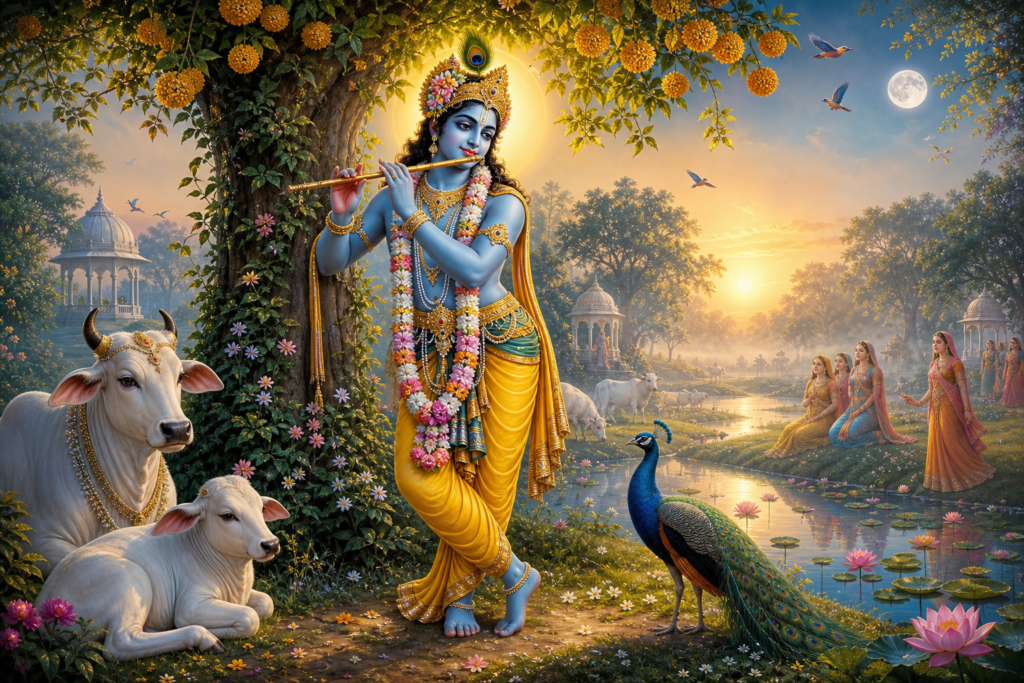
Krishna Paksha refers to the waning half of the lunar month, when the visible Moon gradually decreases after Purnima and moves toward Amavasya. This phase is traditionally associated with inwardness, reflection, restraint, and simplification. Ekadashi, the eleventh tithi, carries an especially strong place in Hindu religious practice, particularly in Vaishnava traditions where it is linked with devotion to Lord Vishnu, Sri Krishna, discipline of the senses, and purification of intention.
The Krishna Paksha Ekadashi falling in the Ashadha period is commonly associated in many Vaishnava and regional Panchangs with Yogini Ekadashi. Local observance may vary according to sunrise rules, regional calendar traditions, and the exact location used for calculation. For this reason, households that observe Ekadashi vrata should verify the final fasting and parana timings through a local Panchang prepared for their city, especially if the vrata is being performed with strict ritual discipline.
The practical significance of this Panchang entry lies in the way it guides daily conduct. Ekadashi is often treated as a day for sattvic food choices, fasting according to capacity, japa, prayer, scriptural reading, temple worship, charity, and reduced indulgence. The purpose is not merely external austerity. Its deeper value lies in training attention, reducing unnecessary consumption, and turning the mind toward dharma, compassion, and self-mastery.
Within a broader dharmic lens, the discipline of Ekadashi also resonates with shared values found across Hindu, Buddhist, Jain, and Sikh traditions: mindfulness, self-restraint, ethical living, remembrance of the Divine, and care for the community. The outer forms may differ, but the inner movement is familiar across these traditions. A date such as July 10, 2026 can therefore be read not only as a calendar notation, but also as an invitation to live with greater awareness and harmony.
For many families, the emotional power of the Panchang is practical and intimate. It enters the home through small decisions: when to begin a puja, when to avoid unnecessary conflict, when to fast lightly, when to give food, when to sit quietly with a mantra, and when to remember ancestors, teachers, and deities with gratitude. A precise tithi such as Krishna Paksha Ekadashi becomes meaningful because it connects the cosmic rhythm of the Moon with ordinary acts of devotion and discipline.
The title of this date also mentions good time, nakshatra, and rashi. These elements require careful handling. Nakshatra refers to the lunar mansion occupied by the Moon, while rashi refers to the zodiacal sign through which the Moon is transiting. Both are calculated astronomically and can change within the same civil date. Since the supplied source excerpt gives the tithi transition but does not provide a verified nakshatra or Moon rashi for a specific city, those details should be confirmed through a location-specific Panchang before being used for muhurat decisions.
Similarly, good time or shubh muhurat cannot be responsibly reduced to one universal clock time for every reader. Muhurat depends on sunrise, sunset, lunar factors, weekday, nakshatra, yoga, karana, lagna, and local longitude. Rahu Kaal, Yamaganda, Gulika, Abhijit Muhurat, and Choghadiya are also location-sensitive. A person in Delhi, Mumbai, Chennai, Toronto, London, or New York will not share the exact same daylight divisions, even when the civil date is the same.
For Friday specifically, Rahu Kaal is traditionally calculated from the daylight period after sunrise, divided into eight equal segments, with the weekday determining which segment is avoided for major new undertakings. This means that the correct Rahu Kaal for July 10, 2026 must be derived from the local sunrise and sunset of the chosen place. The principle remains constant, but the clock time changes from city to city.
As a spiritual observance, Ekadashi is generally considered favorable for worship, vrata, mantra japa, reading the Bhagavad Gita or Srimad Bhagavatam, visiting a Vishnu or Krishna temple, and practicing restraint in speech and diet. It is usually not treated as an ordinary day for heavy indulgence or careless activity. Yet the Panchang should not be approached with fear. Its purpose is guidance, not fatalism; it helps align intention, timing, and conduct.
Those observing Ekadashi vrata often begin preparation on Dashami, simplify food before the fast, observe restraint on Ekadashi, and break the fast on Dwadashi during the proper parana window. Since the provided source does not include Dwadashi or parana details, the exact fast-breaking time should be checked separately in a reliable local Panchang. This is especially important because parana rules depend on the presence of Dwadashi after sunrise and on avoiding improper timing.
From an academic perspective, the July 10, 2026 Panchang entry illustrates the sophistication of Hindu timekeeping. It combines astronomical observation, ritual culture, regional practice, and lived spirituality. Tithi provides the lunar framework; nakshatra refines the day through the Moon’s stellar position; rashi gives the sign-based lunar context; and muhurat translates these factors into practical timing for human action.
For broader reference, public summaries of Ekadashi describe it as the eleventh lunar day of both the waxing and waning fortnights, while recent 2026 Ekadashi calendar discussions also emphasize fasting, prayer, parana timing, and devotion to Lord Vishnu. These general references support the traditional understanding that Ekadashi is both a calendrical marker and a spiritual discipline.
Thus, the essential Panchang reading for Friday, July 10, 2026 is clear: Krishna Paksha Dashami remains until 3:39 AM, after which Krishna Paksha Ekadashi prevails. The day is therefore especially suitable for disciplined worship, mindful living, sattvic choices, and devotion-centered practice. For nakshatra, rashi, Rahu Kaal, Choghadiya, and precise good time, a city-specific Panchang should be consulted before making formal muhurat decisions.
Inspired by this post on Hindu Blog.



Leave a Reply
You must be logged in to post a comment.