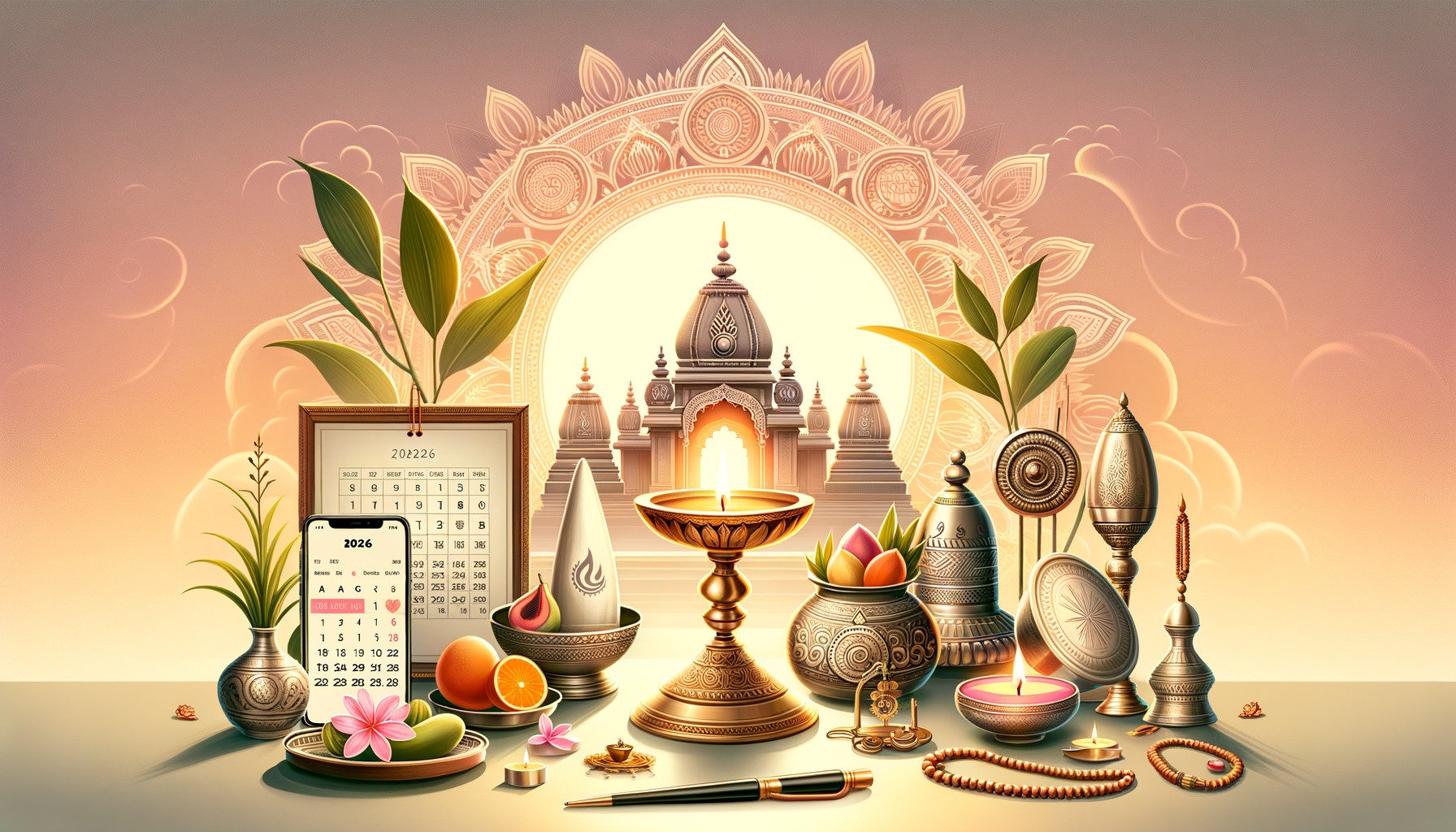
Ekadashi is revered as an especially auspicious observance for Lord Vishnu Puja, occurring on the eleventh tithi of every fortnight in both Shukla Paksha and Krishna Paksha. For devotees planning Ekadashi Vrat in 2026, attention to precise dates and local sunrise timings is essential, as the Hindu calendar (Panchang) is calculated regionally. Ekadashi 2026 dates may vary by location and tradition, and careful consultation of a trusted, local Panchang ensures accuracy.
Observers across Hindu traditions acknowledge subtle differences in how Ekadashi is kept, particularly among Smartha, Vaishnava, and Gauna practices. These variations reflect a rich tapestry of dharmic diversity: Smartha households typically follow rules anchored to sunrise considerations, while Vaishnava traditions often emphasize avoiding Dashami-viddha and may align observance and Parana with specific tithi conditions. Gauna usage in some regions further adapts the calendar to local norms. These distinctions, far from being divisive, demonstrate the harmonious plurality within the broader Hindu way of life.
To follow Ekadashi 2026 dates accurately, devotees are best served by checking a region-specific Panchang, temple calendars, or authoritative community schedules that account for time zone differences and tithi transitions. This is especially important for Paranathe proper breaking of the fast on Dwadashiwhere exact timing safeguards the vrata’s sanctity. Travelers should verify dates and Parana windows at their destination, as sunrise and tithi cutoffs can shift across geographies.
Ekadashi Vrat in 2026 can be observed through a spectrum of practices rooted in spiritual discipline and compassion. Common observances include upavasa (fasting) ranging from phalahar to nirjala according to capacity and guidance, japa of Vishnu mantras, recitation of the Bhagavad Gita or Vishnu Sahasranama, evening Deepa and naivedya, and acts of dana (charity). A focused Lord Vishnu Puja, coupled with satvik conduct and mindful speech, deepens the vrata’s transformative intent.
Many practitioners describe Ekadashi as a quiet reseta rhythm of restraint, clarity, and devotion that brings families and communities together. Shared experiences such as preparing simple satvik meals, reading sacred texts, or visiting temples cultivate gratitude and inner steadiness. The vrata’s ethical coreself-regulation, compassion, and remembrance of the Divinenurtures well-being and strengthens bonds within households.
Ekadashi’s spirit also resonates across dharmic traditions, encouraging unity in spiritual diversity. Fasting and mindful living find parallels in Buddhist uposatha reflections, Jain upavasa with ahimsa-centered ethics, and Sikh simran and seva in daily discipline. Recognizing these convergences fosters mutual respect and underscores a shared quest for inner purification, truth, and harmony.
In preparing for Ekadashi Vrat 2026, the guiding principle is to honor one’s sampradaya while approaching other paths with reverence. By relying on a reliable Panchang for the exact Ekadashi and Parana timings, practicing within one’s means, and embracing the inclusive ethos of the Hindu calendar, devotees uphold both accuracy and unityrooted in devotion to Vishnu and open-hearted respect for dharmic plurality.
Inspired by this post on Hindu Pad.