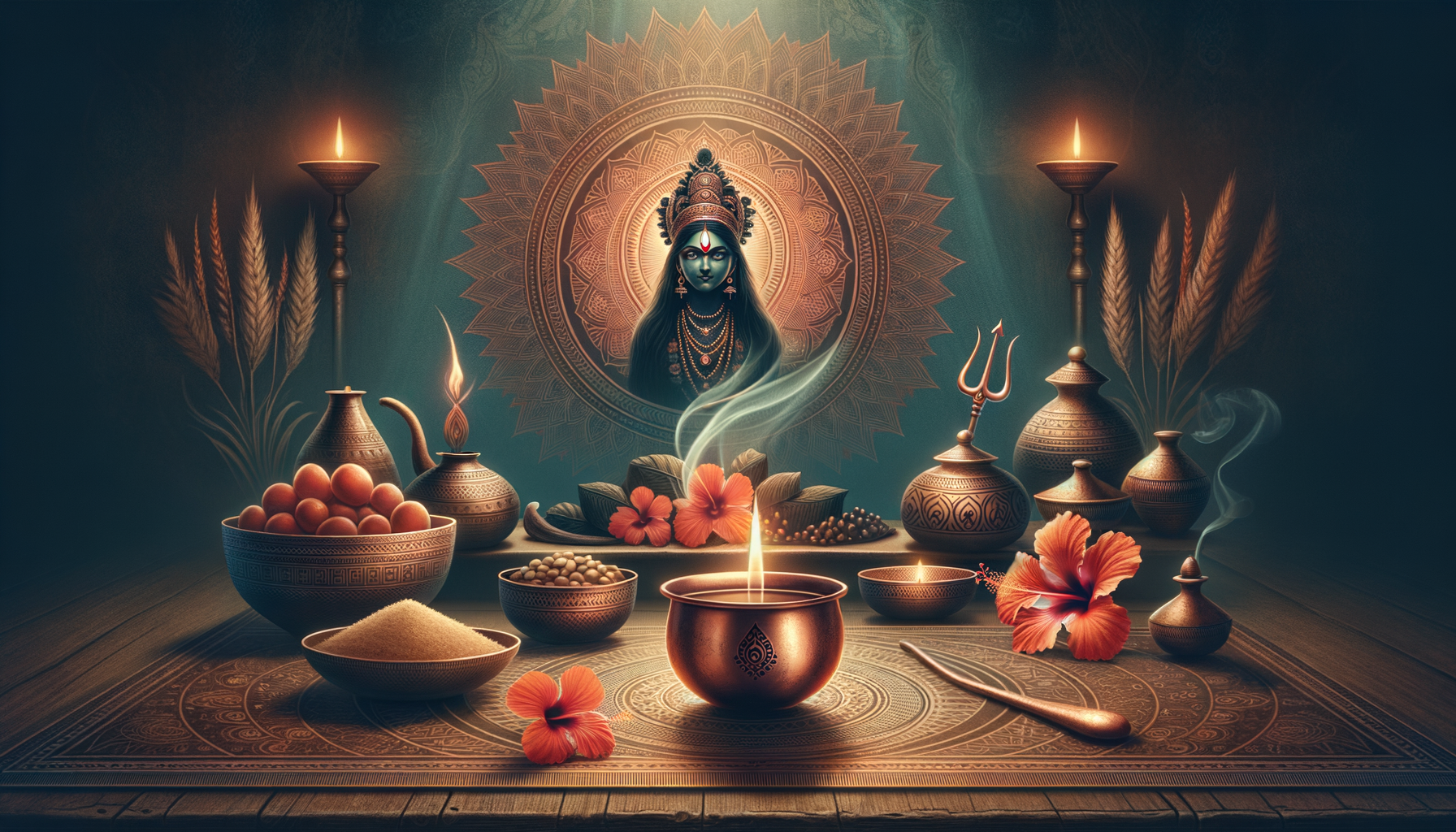
In the worship of Goddess Kali, karanbari or liquor occupies a notable ritual place. From household worship to the cremation ground, historical practice records the offering of liquor during propitiation of the Goddess across varied settings. This presence is not incidental; it is rooted in a Tantric understanding of Shakti that embraces all facets of existence, including elements many traditions ordinarily classify as taboo.
According to the Tantras, certain esoteric modes of Shakti worship revolve around the pañcamakāramadya (wine), mamsa (meat), matsya (fish), mudra (gesture or grain), and maithuna (union)regarded as indispensable within their ritual framework. These elements serve as deliberate instruments of transformation: by confronting aversion and attachment directly, the practitioner is trained to perceive the Divine as immanent even in what is socially or psychologically unsettling. Within Kali sadhana, such engagement signals fearlessness, non-duality, and the dissolution of limiting boundaries.
In this context, madya symbolizes more than a physical substance. It signifies a liquefaction of ego, a surrender of rigid control, and an offering of the restless mind into the vastness of Shakti. When placed before Kaliespecially in settings such as the cremation groundit recalls impermanence, confronts fear, and affirms the Goddess’s role as the One who liberates from clinging. The intention is not indulgence; it is sacral transformation, guided by mantra, mudra, and disciplined observance.
Historical sources from Shakta traditions in regions such as Bengal describe both household forms of worship and intense rites associated with smashana (cremation ground) spaces. Over centuries, communities adapted the pañcamakāra to context. In some lineages, literal offerings of madya are used in strictly regulated rites; in others, symbolic or substitutional forms (e.g., coconut water, fruit juice) are adopted to preserve the intent of the ritual without employing intoxicants. Both approaches anchor themselves in fidelity to Shakti’s presence and the ethical demands of dharma.
Such diversity reflects the broader spectrum of Hindu practice, where Vama and Dakshina orientations coexistone engaging inversions to dissolve fear and aversion, the other sublimating them through sattvic, symbolic means. Many household pujas emphasize purity, restraint, and ahiṁsa while retaining the deeper Tantric insight: that the Absolute encompasses both auspicious and fearsome forms. This plurality preserves continuity with ancient scriptural motifs while responding sensitively to time, place, and community norms.
The inclusive ethos seen in Kali worship also resonates across the dharmic family. In Buddhist Vajrayana, ritual substances are interpreted through the lens of non-dual wisdom and skillful means; Jain traditions uphold a rigorous ethic of non-harm and abstention while emphasizing inner transformation; Sikh teachings stress sobriety, devotion, and ethical clarity. While their ritual vocabularies differ, all affirm that spiritual maturity lies in conquering inner bondage and serving truth with compassion. This convergence underscores unity in spiritual diversity, not contradiction.
Importantly, Tantric lineages insist that practices associated with the pañcamakāra require guidance, discipline, and moral grounding (yama, niyama). The ritual logic centers on transmutation, not recreation of worldly craving. Where communities choose symbolic substitutes, the spiritual objective remains intact: to offer the mind’s turbulence to the Goddess, cultivate fearlessness, and stabilize awareness in the presence of Kali.
Read historically and symbolically, the offering of karanbari to Goddess Kali becomes a teaching on wholeness. It invites practitionerswhether through literal observance under strict guidance or through substitutional, sattvic formsto recognize Shakti in all conditions and to transcend dualistic judgments. As a result, Kali worship contributes to a shared dharmic message: transformation of the self, devotion anchored in ethical intent, and reverence for multiple paths that lead to the same truth.
Inspired by this post on Hindu Blog.