Vaikuntha Kamalaja presents a profound composite of Lord Vishnu and Ma Lakshmi—revered in many traditions as Lakshmi-Narayana—embodying a seamless union of preservation and prosperity. Often described as Vishnu’s Ardhanarishvara-like form, it mirrors the well-known synthesis of Lord Shiva and Ma Parvati while articulating a Vaishnava vision of complementary energies held in perfect equilibrium.
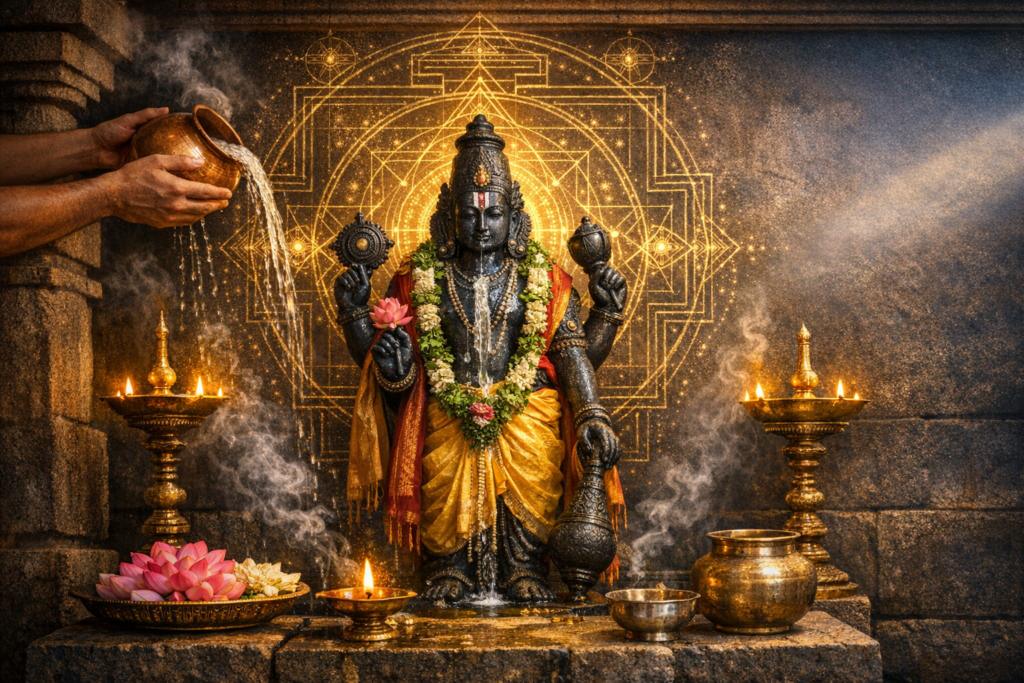
In classical iconography, Vaikuntha Kamalaja is typically depicted with Vishnu’s attributes on one side—such as the shankha and chakra—and Ma Lakshmi’s symbols, including the lotus, on the other. Whether shown with Vishnu on the right and Lakshmi on the left or in alternate orientations, the image emphasizes balanced, interdependent forces rather than opposition: dharma with daya, order with abundance, and protection with grace.
Theologically, the form affirms the inseparability of Sri and Narayana, a core insight in Sri-Vaishnava thought and broader Hindu philosophy. As Lakshmi-Narayana, divinity is experienced as both compassionate and sustaining, inviting devotees to understand that well-being (Lakshmi) and righteous preservation (Vishnu) arise together. This fusion refines the understanding of divine masculinity and femininity as mutually completing, not competing, principles.
Comparatively, Vaikuntha Kamalaja resonates with the philosophical depth of Ardhanarishvara, where dual aspects are revealed as one reality. This interpretive lens, familiar across South Asian artistic and devotional traditions, invites a contemplative reading of divine non-duality that honors diversity in expression while recognizing unity in essence.
In lived devotion, the Lakshmi-Narayana form is associated with aspirations for household harmony, ethical prosperity, and steadfastness on the path of dharma. Many practitioners reflect on Vaikuntha Kamalaja during daily puja and festival observances, seeing in the image a guide for integrating compassion with responsibility—an inner equilibrium that supports family, community, and society.
Across dharmic traditions—Hinduism, Buddhism, Jainism, and Sikhism—the values symbolized by Vaikuntha Kamalaja align with shared ideals of balance, oneness, and compassionate action. By foregrounding complementarity over conflict, the form offers a unifying spiritual metaphor: wisdom with compassion, discipline with generosity, and personal sadhana harmonized with collective well-being.
Ultimately, Vaikuntha Kamalaja stands as a visual and philosophical invitation to contemplate wholeness. As a half Vishnu–half Lakshmi form with the power to integrate dualities, it strengthens a culture of unity in diversity, guiding seekers to perceive one reality expressed through many paths, practices, and symbols.
Inspired by this post on Hindu Pad.