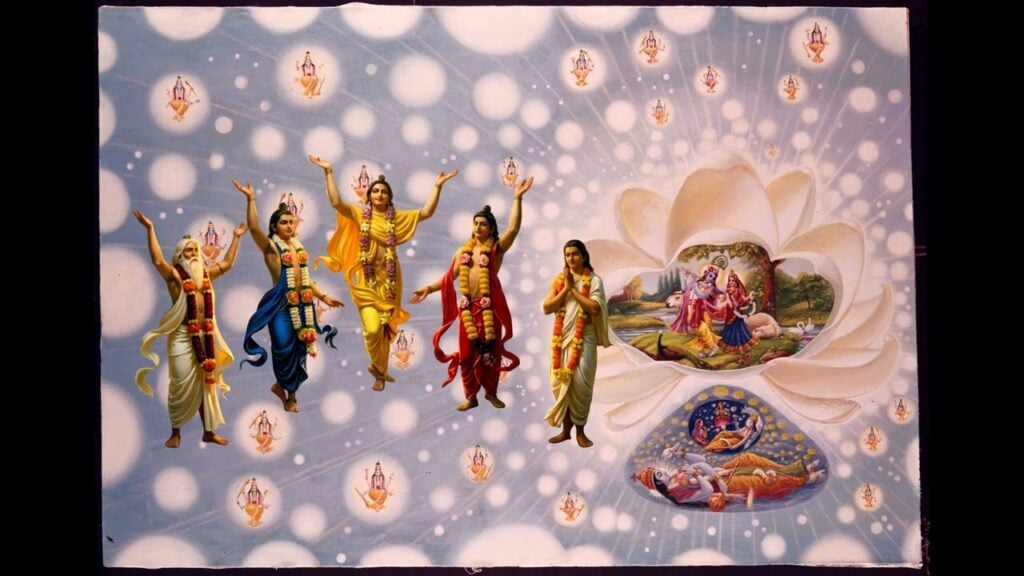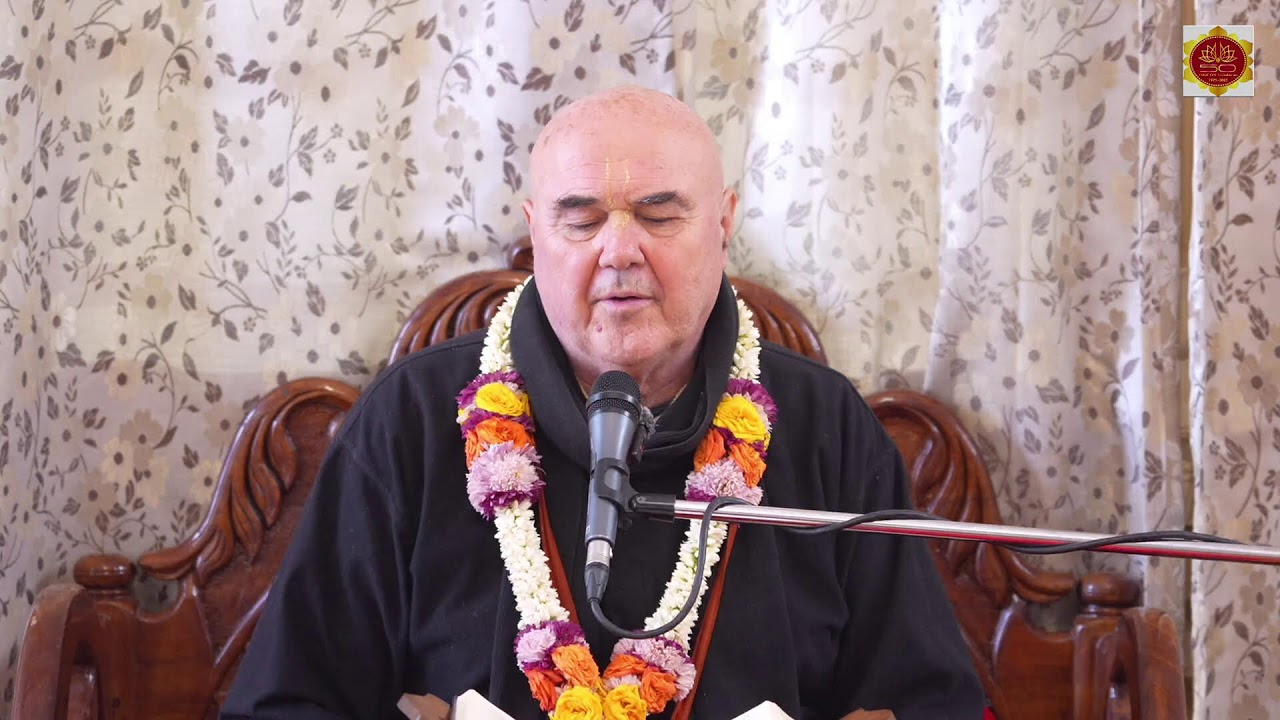
At ISKCON Vrindavan on 01.01.2025, teachings associated with HG Pancha Gauda Prabhu underscored a time-honored insight: the mind resembles an impetuous horsepowerful, swift, and difficult to master even for those who have disciplined the senses and practiced breath regulation. A classical Vaishnava translation evokes this image to show that technical control alone rarely suffices when inner agitation surges.
The verse further cautions that attempts to subdue the unbridled mind without reverent reliance on qualified guidance invite “hundreds of obstacles,” often manifesting as austere yet distressing practices that yield little stability. In academic terms, skill-based methods (such as pranayama) require a sound pedagogical framework and ethical orientation; otherwise, the practitioner risks intensifying effort without resolving root causes of restlessness.
This counsel aligns closely with the shared ethos of dharmic traditions. In Hinduism, the guru; in Buddhism, the kalyāṇa-mitta; in Jainism, the ācārya; and in Sikhism, the Satgurueach denotes trustworthy guidance that refines method and protects intention. Rather than advancing sectarian claims, the teaching affirms a unifying principle: disciplined practice flourishes when anchored in wise companionship and lineage-based knowledge.
Many practitioners recognize the pattern described. Periods of strong willpower and breath control may still give way to sudden mental turbulence. When undertaken in isolation, strenuous regimens can feel like pushing a chariot with an untamed horse. Yet in the presence of an authentic guide and supportive community, the same obstacles often become opportunitiesredirected energy, clearer focus, and sustainable progress.
Across the dharmic spectrum, ethical foundations steady the “reins” of the mind. Yama–niyama, śīla, vrata, and the Sikh discipline of truthful living cultivate non-harm, truthfulness, restraint, and clarity. These commitments are not peripheral. They are the stabilizing architecture that transforms technique into character and momentary calm into resilient equanimity.
Practical convergence is equally notable: breath awareness (pranayama), attentive presence and mindfulness, japa or nām-simran, contemplative study, seva, and life within satsanga, sangha, or sangat. Together these cultivate mind control not as suppression, but as integrationaligning thought, feeling, and action with purpose, compassion, and wisdom.
The invocation “O unborn Lord” in the traditional rendering can be appreciated as reverence for the formless origin honored in varied ways across Hinduism, Buddhism, Jainism, and Sikhism. Read inclusively, it gestures toward a shared metaphysical horizon in which grace, emptiness, truth, and oneness convergean uplift that steadies the practitioner as skill matures into insight.
In the Vrindavan setting, reflections linked with HG Pancha Gauda Prabhu emphasize a simple synthesis: disciplined method, ethical living, and guidance held with humility. As the new year begins, a meaningful resolve is evidentseek trustworthy guidance, deepen community, and apply time-tested practices with compassion. In this way, the unruly horse becomes a noble ally, and mind control becomes a path of unity within the Dharmic family.
Inspired by this post on Dandavats.