

Self-realization in Hinduism is not merely an abstract philosophical idea; it is a lived transformation in which the person begins to understand the true self beyond the shifting identities of body, emotion, memory, social role and mental habit. In the Hindu spiritual vocabulary, this discovery is often expressed through the language of atman, Brahman, moksha, ananda, dhyana, bhakti and yoga. The realized person does not simply acquire a new belief. A deeper clarity appears in conduct, perception, relationship and inner temperament.
Among the most beautiful signs traditionally associated with self-realization are enthusiasm, a natural smile and quiet bliss. These signs may appear simple, but they carry great spiritual depth. They suggest that the individual is no longer driven primarily by fear, resentment, comparison or restlessness. Instead, life begins to flow from an inner center that is steady, luminous and inwardly free.
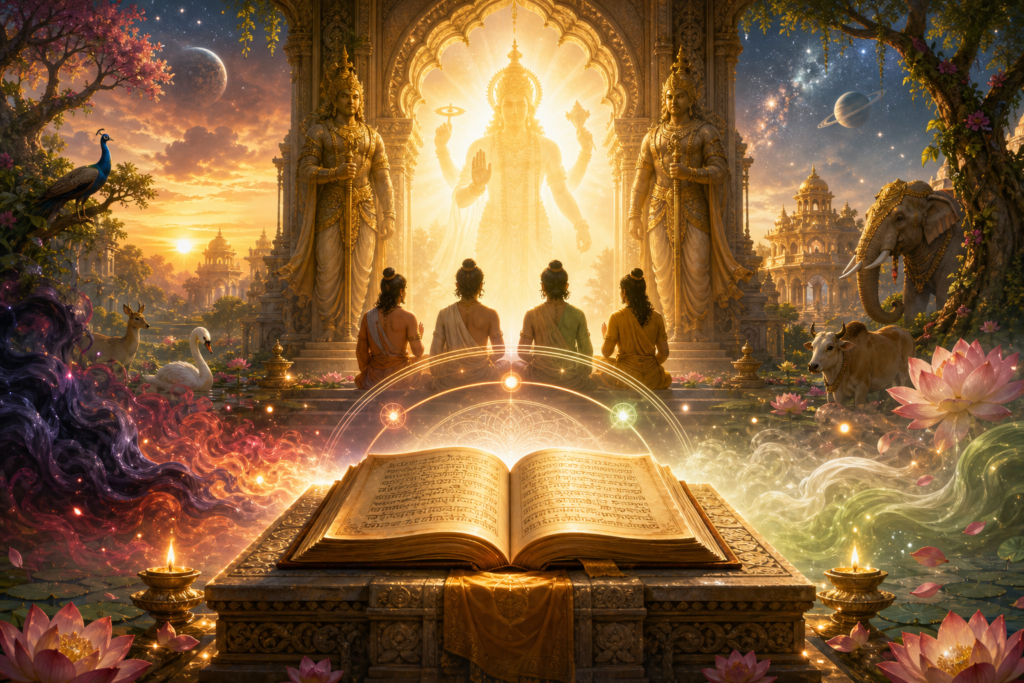
In Hindu philosophy, self-realization means recognizing that the deepest identity is not the limited ego but the witnessing consciousness that illumines all experience. The Upanishadic insight points toward a reality that is subtler than thought and more intimate than personality. The body changes, the mind fluctuates, emotions rise and fall, but the witnessing awareness remains present. Realization is the direct recognition of this inner principle.
This understanding is expressed in different ways across Hindu traditions. Advaita Vedanta emphasizes the identity of atman and Brahman. Yoga philosophy speaks of discernment between purusha and prakriti. Bhakti traditions describe the awakening of loving relationship with the Divine. Shaiva, Shakta, Vaishnava and other sampradayas use distinct metaphysical languages, yet they commonly agree that genuine spiritual maturity produces humility, steadiness, compassion, joy and freedom from narrow ego-centered living.
Enthusiasm is one of the clearest signs of inner awakening because it reveals a purified relationship with action. Ordinary enthusiasm often depends on success, praise, novelty or external reward. Spiritual enthusiasm is different. It is not agitation, ambition or emotional excitement. It is a deep willingness to participate in life with energy, attention and reverence. Such enthusiasm arises when action is no longer dominated by anxiety about personal gain.
The Bhagavad Gita gives a practical framework for understanding this quality. Karma Yoga teaches that one may act with full dedication while releasing possessiveness over the fruits of action. When this principle becomes internalized, work no longer feels like a burden imposed by the world. Service, study, family duty, worship and ethical responsibility become expressions of dharma. Enthusiasm then becomes the natural fragrance of inner alignment.
This form of enthusiasm is not loud or theatrical. It may be visible in the quiet discipline of sadhana, the patient care given to family, the sincerity of daily puja, the steadiness of japa, the attention offered in study or the generosity shown in ordinary social life. A realized or spiritually maturing person does not need constant stimulation to feel alive. Life itself becomes meaningful because it is seen as a field of dharma and spiritual growth.
A smile is another subtle sign of self-realization, but it must be understood carefully. The smile of inner realization is not forced politeness, social performance or denial of suffering. It is closer to prasada, a state of inward grace and acceptance. It reflects the softening of egoic tension. When the mind is no longer constantly defending itself, comparing itself or demanding that reality obey its preferences, the face naturally becomes more peaceful.
In many Hindu accounts of saints, sages and gurus, the smile is not presented as decoration. It is a spiritual indicator. It suggests that the person has seen through the exaggerated seriousness of the ego while remaining deeply compassionate toward the suffering of others. Such a smile can comfort without argument. It can communicate trust in dharma without dismissing pain. It shows that wisdom need not become cold, severe or distant.
The smile associated with self-realization also reflects a transformed relationship with duality. Pleasure and pain, gain and loss, honor and insult continue to arise in life. Hindu scripture does not promise that realization removes every external challenge. Rather, realization changes the inner standpoint from which these experiences are received. The mind becomes less easily possessed by extremes. The smile emerges from this depth of equanimity.
Bliss, or ananda, is perhaps the most profound of the three signs. In Hindu thought, bliss is not the same as sensory pleasure. Pleasure depends on contact between the senses and desirable objects. It is temporary, conditional and often followed by craving or fear of loss. Ananda is deeper. It is the joy of being rooted in the true self. It is not produced by external possession, and therefore it is not destroyed by ordinary change.
The expression Sat-Chit-Ananda is central to many Vedantic discussions of ultimate reality. Sat refers to being or truth, Chit to consciousness, and Ananda to bliss. This does not mean that bliss is an emotional high. It means that the ground of reality is not alien, hostile or empty of meaning. When consciousness recognizes its own deepest nature, there is a release from existential contraction. Bliss appears as natural fullness rather than excitement.
Such bliss may be quiet. It may coexist with responsibility, illness, aging, social difficulty or grief. A spiritually mature person may still experience human emotion, but those emotions do not fully obscure the deeper ground of awareness. This is why Hindu traditions often distinguish between passing moods and abiding realization. The realized person is not necessarily always visibly ecstatic, but there is an underlying serenity that cannot be reduced to circumstance.
Self-realization also brings a shift in identity. Before realization, the person tends to live through the narrow lens of “I” and “mine.” After deep spiritual insight, this narrowness begins to dissolve. Other beings are not seen merely as competitors, strangers or instruments of personal desire. The same sacred reality is perceived as present in all. This perception naturally gives rise to compassion, restraint, forgiveness and service.
This is where enthusiasm, smile and bliss become ethical signs rather than merely emotional signs. If enthusiasm becomes egoistic ambition, it is not spiritual enthusiasm. If a smile conceals indifference to suffering, it is not the smile of realization. If bliss becomes self-absorption, it is not ananda in the dharmic sense. Genuine realization expands the heart. It makes a person more available to truth, responsibility and the welfare of others.
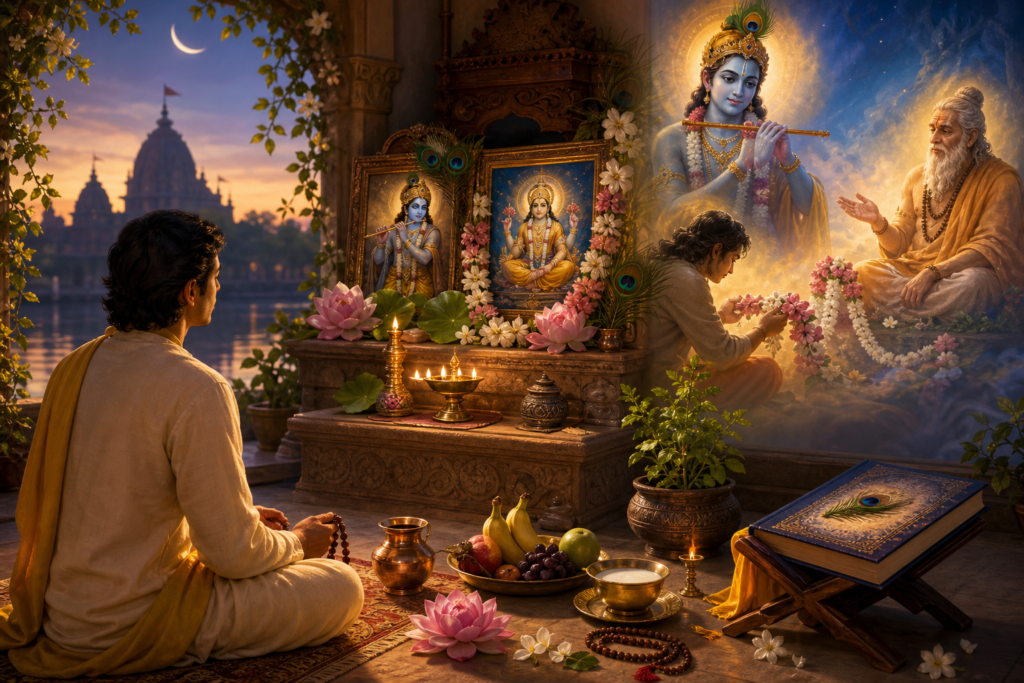
Hinduism also recognizes that self-realization may unfold through different temperaments and paths. The contemplative may approach it through meditation and inquiry. The devotee may approach it through surrender and love for Bhagavan. The disciplined worker may approach it through Karma Yoga. The seeker of knowledge may approach it through Vedanta and scriptural reflection. The practitioner of mantra, tantra, yoga or temple worship may experience transformation through sacred form, sound, ritual and embodied devotion.
This diversity is essential to Hindu spirituality. Self-realization is not confined to one cultural expression, one method of worship or one philosophical vocabulary. The dharmic vision allows for many valid approaches because human beings differ in temperament, capacity and spiritual need. The same truth may call one person through silence, another through kirtan, another through seva, another through study, and another through disciplined meditation.
A broader dharmic perspective also encourages respect for Hinduism, Buddhism, Jainism and Sikhism as traditions that have developed profound disciplines of self-mastery, ethical refinement and liberation. Their metaphysical explanations are not identical. Hindu thought often speaks of atman; Buddhist traditions analyze anatma; Jain dharma emphasizes jiva and liberation from karmic bondage; Sikh wisdom centers devotion to the One and truthful living. Yet all these traditions value inner purification, compassion, discipline, humility and freedom from egoic bondage.
For this reason, enthusiasm, smile and bliss may be understood as shared signs of spiritual refinement across dharmic life, even when doctrinal frameworks differ. A person moving toward liberation becomes less trapped by compulsive anger, greed and fear. There is greater steadiness in conduct, greater tenderness in speech and greater sincerity in action. The outward signs are meaningful because they reveal inward integration.
At the same time, Hindu tradition warns against judging realization by external appearance alone. A smile can be imitated. Enthusiasm can be performed. Bliss can be claimed without being embodied. Therefore, the more reliable measure is long-term transformation. Does the person become less selfish? Is there greater truthfulness? Is there compassion under pressure? Is there steadiness in adversity? Is there humility even when honored? These questions are more spiritually serious than dramatic claims of mystical experience.
Self-realization is also not escapism. A common misunderstanding is that spiritual awakening makes a person indifferent to the world. Hindu philosophy presents a more nuanced view. The realized person may withdraw from unnecessary attachment, but this does not mean withdrawal from dharma. In the Bhagavad Gita, spiritual wisdom is taught in the middle of crisis, responsibility and moral decision. Realization clarifies action; it does not abolish responsibility.
In practical life, the signs of self-realization may appear in very ordinary moments. A person may respond to criticism without immediate defensiveness. There may be patience where irritation once dominated. Daily work may be performed with steadiness rather than resentment. Worship may become less transactional and more loving. Meditation may become less about achievement and more about presence. Relationships may carry less control and more respect.
This transformation is deeply relatable because most human beings know the fatigue of living through constant mental noise. Anxiety, comparison, regret and expectation can make even successful life feel incomplete. The Hindu path of self-realization addresses this condition at its root. It does not merely ask the person to think positively. It invites inquiry into the one who is anxious, the one who desires, the one who suffers and the consciousness in which all these states appear.
When that inquiry matures, enthusiasm returns because life is no longer experienced as a battlefield of egoic insecurity. A smile returns because the heart is no longer hardened by constant resistance. Bliss returns because the self is no longer mistaken for the restless surface of the mind. These signs are not artificial goals to be displayed; they are natural consequences of inner clarity.
Spiritual practice remains important because realization is rarely stable without discipline. Dhyana, japa, svadhyaya, satsanga, seva, pranayama, ethical restraint and devotion all help refine the mind. The mind must become sufficiently clear to recognize the truth that was always present. In this sense, sadhana does not manufacture the self; it removes the obscurations that hide it.
The language of enthusiasm, smile and bliss should therefore be read as an invitation to examine the quality of one’s inner life. It asks whether spirituality is making the person more awake, more generous, more disciplined and more peaceful. It asks whether knowledge is softening the ego or strengthening it. It asks whether devotion is widening the heart or narrowing it. These questions keep the pursuit of self-realization honest.
In Hinduism, the sign of self-realization is not merely the ability to quote scripture, perform ritual or discuss philosophy. These may be valuable, but they must ripen into lived wisdom. The deeper sign is the transformation of being. Enthusiasm shows that life is being met with sacred energy. The smile shows that the heart has discovered inward ease. Bliss shows that consciousness has begun to rest in its own fullness.
Self-realization ultimately reveals that the spiritual journey is not a movement toward something foreign, but a return to the deepest truth of existence. The seeker discovers that the Divine is not distant from the core of being. When this recognition becomes steady, life carries a different fragrance. Action becomes worship, knowledge becomes humility, relationship becomes service, and silence becomes full. Enthusiasm, smile and bliss are signs of that sacred ripening.
Inspired by this post on Hindu Blog.



Leave a Reply
You must be logged in to post a comment.