
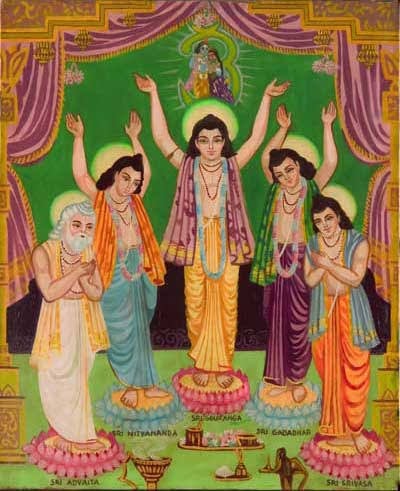
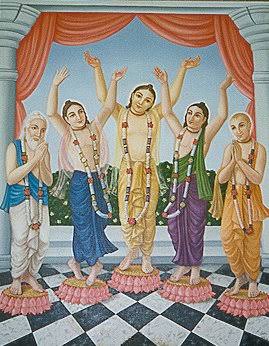
Srivasa Pandit occupies a deeply respected place in Gaudiya Vaishnavism as one of the five members of the Panca-tattva: Shri Krishna Chaitanya, Prabhu Nityananda, Shri Advaita, Gadadhara, and Shrivasa. In this theological grouping, Shrivasa represents the devoted jiva, the living being whose highest fulfillment is found in service, remembrance, and participation in divine love. His disappearance is therefore not treated merely as the passing of a saintly personality, but as a sacred occasion for contemplating the nature of devotion, community, humility, and the living current of sankirtana.
The life of Shrivasa Pandit is inseparable from Navadvipa, the sacred land associated with Lord Chaitanya’s early pastimes. Before the public flowering of Shri Chaitanya Mahaprabhu’s sankirtana movement, Shrivasa lived there as a householder devotee whose home became one of the most important devotional centers in the history of bhakti. His residence, remembered as Shrivasa Angan, was not simply a domestic space. It became a spiritual assembly hall, a sanctuary of kirtan, and a site where theology, emotion, music, and disciplined practice converged.
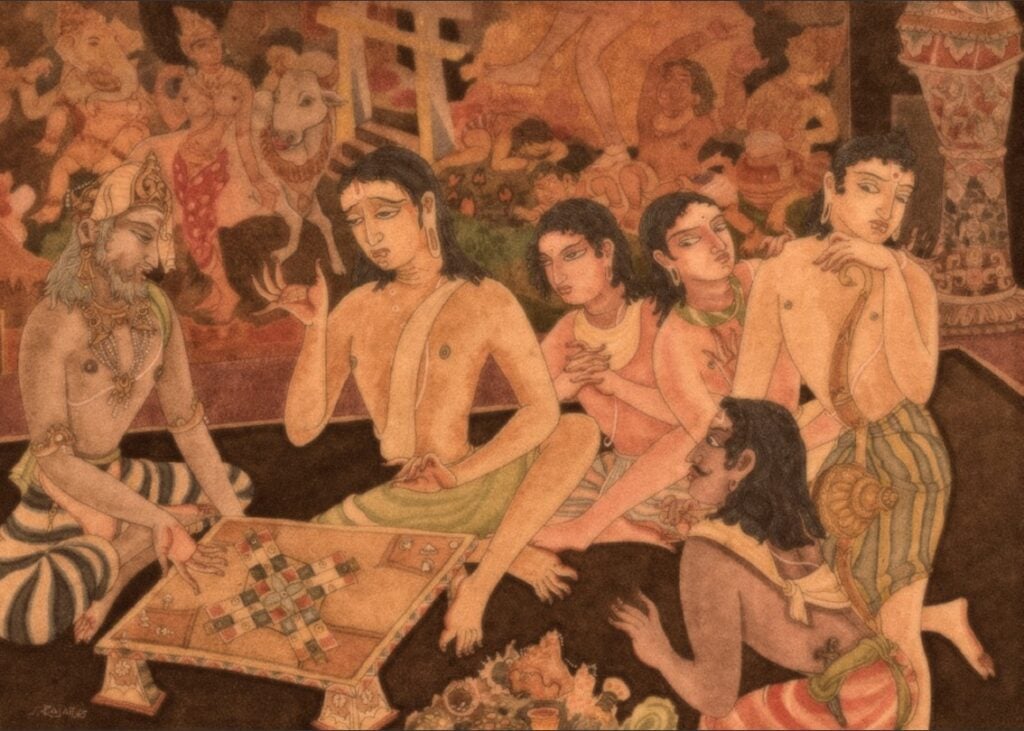
Traditional accounts describe Shrivasa Pandit as living in Navadvipa before the advent of Lord Chaitanya. He was joined by his brothers Shri Rama, Shri Nidhi, and Shripati, and together they cultivated a devotional life centered on the names of Krishna, worship of the Lord, and regular bathing in the Ganga. These details are significant because they show a form of bhakti that was neither abstract nor occasional. Devotion was woven into the daily rhythm of the household, the body, the voice, the river, and the sacred geography of Bengal.
The repeated bathing in the Ganga is not a decorative biographical detail. In the Indic religious imagination, the Ganga is a purifier, a mother, and a flowing symbol of grace. For Shrivasa and his brothers, the Ganga formed part of a disciplined devotional ecology. Worship, study, chanting, and sacred bathing together formed an integrated sadhana, reminding later generations that spiritual life in the bhakti tradition is sustained through repetition, reverence, and embodied practice rather than through sentiment alone.
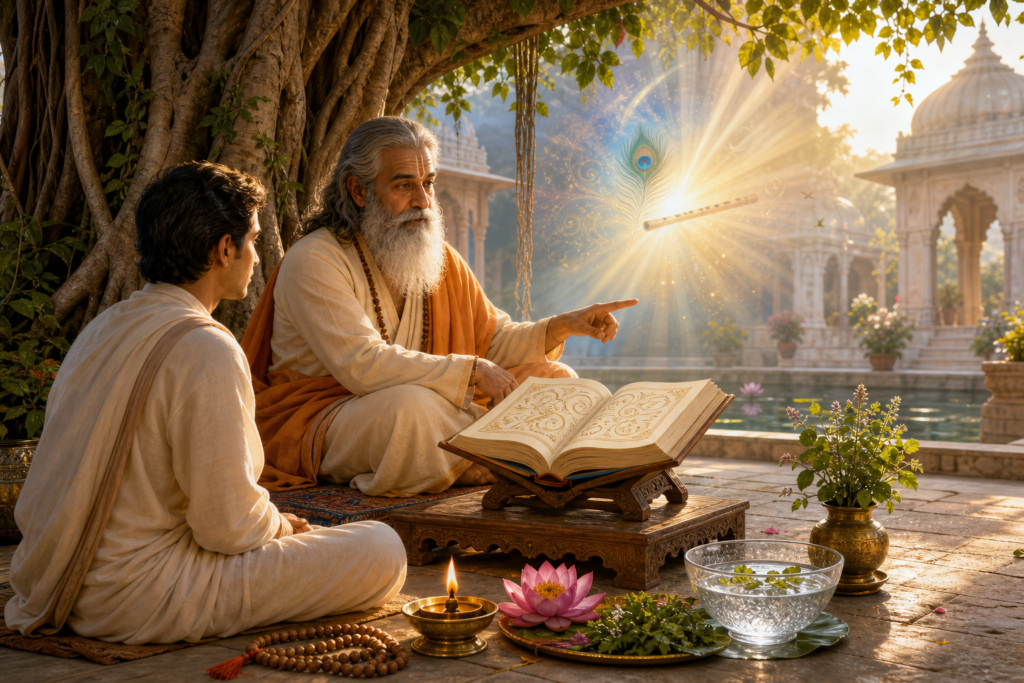
Shrivasa Pandit’s association with Shri Advaita Acharya is another key element in understanding his historical and theological importance. The devotees gathered with Shri Advaita Acharya Prabhu to study Bhagavatam and to pray for the descent of the Supreme Lord. In the Gaudiya Vaishnava tradition, this prayer is understood as a response to the spiritual condition of Nadia at that time, where intellectual pride, dry logic, social prestige, and spiritual indifference had overshadowed the direct practice of devotion. The concern was not learning itself, but learning disconnected from humility and divine remembrance.
This distinction is important for a contemporary reading. Dharmic traditions have always honored learning, inquiry, debate, and philosophical refinement. Hinduism, Buddhism, Jainism, and Sikhism all preserve sophisticated traditions of reasoning and spiritual discipline. The challenge arises when learning becomes pride, when intellectual achievement becomes a barrier to compassion, or when ritual identity loses its connection with inner transformation. Shrivasa Pandit’s life offers a corrective: knowledge becomes luminous when it serves bhakti, humility, and the welfare of others.
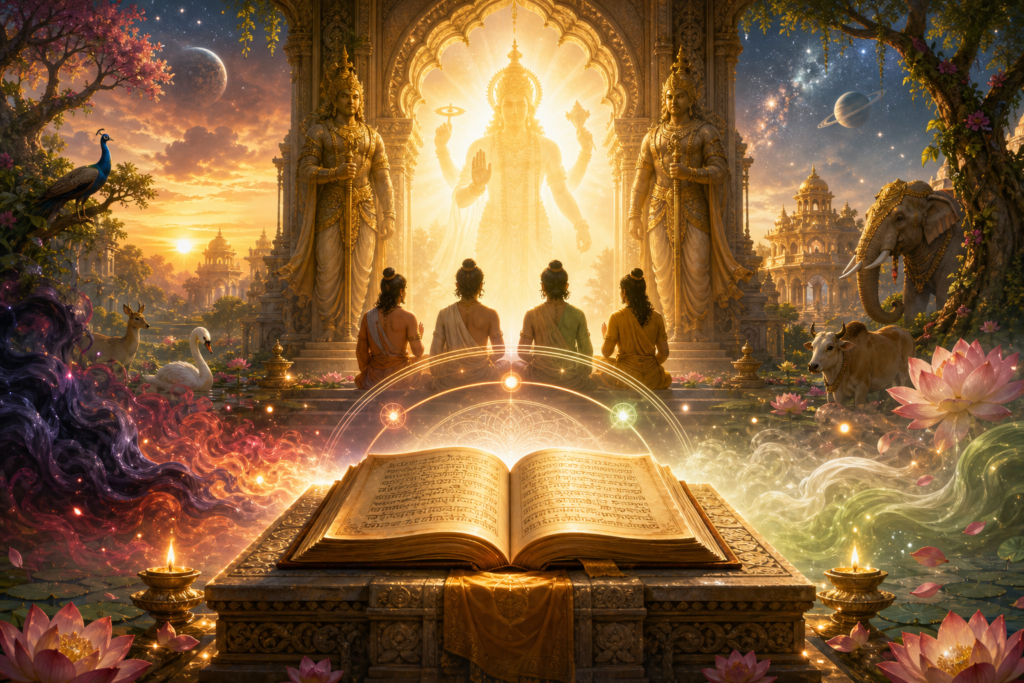
The study of Bhagavatam in Shrivasa Pandit’s circle was therefore not merely textual scholarship. It was a form of prayerful inquiry. The devotees did not approach scripture as a cold artifact, but as a living source of revelation, ethics, rasa, and spiritual orientation. In this sense, Shrivasa Pandit stands within a broader dharmic pattern in which sacred texts are not only read, but heard, sung, remembered, enacted, and internalized within community.
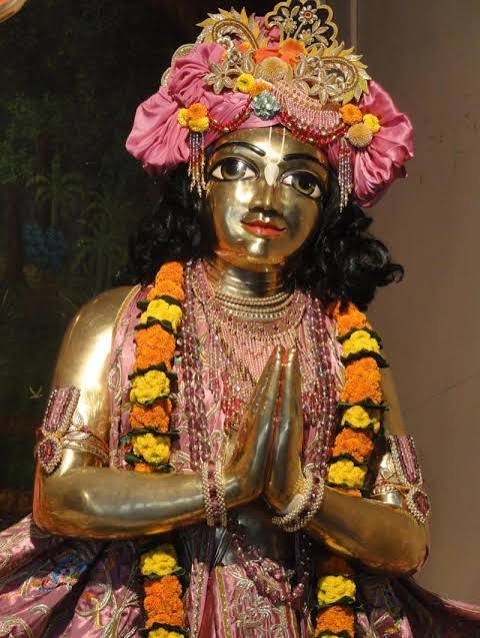
The Panca-tattva framework gives Shrivasa Pandit a precise theological identity. Shri Krishna Chaitanya is worshiped as the combined form of Radha and Krishna, Prabhu Nityananda as the original spiritual master and manifestation of divine compassion, Shri Advaita as the devotee incarnation who calls the Lord to descend, Gadadhara as the embodiment of devotional energy, and Shrivasa as the representative of the pure devotee. This structure places the devotee at the heart of divine manifestation. The sacred drama of Chaitanya-lila is not complete without the community of devotees who receive, serve, and distribute divine love.
In Gaudiya Vaishnava theology, Shrivasa Pandit is also identified with Narada Muni, the celestial sage known across Hindu scriptures as a constant associate of the Lord, a traveler between worlds, and a transmitter of bhakti. Narada’s presence in the tradition is associated with music, remembrance, divine names, and the awakening of devotion in many different hearts. The identification of Shrivasa with Narada therefore strengthens the sense that his life in Navadvipa was part of a larger sacred continuity linking Purana, bhakti, kirtan, and divine companionship.
Shrivasa Pandit is also described as representing the marginal living entity, or tatastha jiva. This term is technically important in Gaudiya Vaishnava thought. The jiva is understood as conscious, eternal, and dependent on the Supreme, yet endowed with the capacity to turn either toward divine service or toward forgetfulness. Shrivasa’s life illustrates the fulfilled state of the jiva: a being whose freedom has matured into devotion, whose individuality is not erased but perfected through loving service.
The devotees headed by Shrivasa are described in the tradition as smaller limbs of Lord Chaitanya. This imagery is theologically rich. It does not reduce the devotees to passive followers; rather, it places them within an organic vision of divine community. The sankirtana movement unfolds through many limbs, voices, hands, homes, and hearts. Divine grace descends, but it is also carried through human relationships, hospitality, sound, and shared discipline.
Malini Devi, the wife of Shrivasa Pandit, also holds an important place in this sacred household. She was a close friend of Sachi Devi, the mother of Nimai, and served Nimai with maternal affection. When Lord Vishvambhara appeared, the hearts of the devotees were filled with vatsalya bhava, the devotional mood of parental love. The tradition remembers that Gaurachandra loved Malini and Shrivasa as a second mother and father. This relationship reveals the emotional depth of Chaitanya tradition, where divine love is experienced not only through reverence, but through family-like intimacy.
The presence of Malini Devi also reminds readers that devotional history is not only the history of public saints, teachers, and theologians. It is also the history of homes, kitchens, care, nursing, friendship, and the quiet labor of love. Bhakti has often survived because households became sanctuaries. Women such as Malini Devi preserved devotional culture through affection, service, hospitality, and spiritual steadiness. Her role invites a more complete understanding of the sacred household in Hindu devotional traditions.
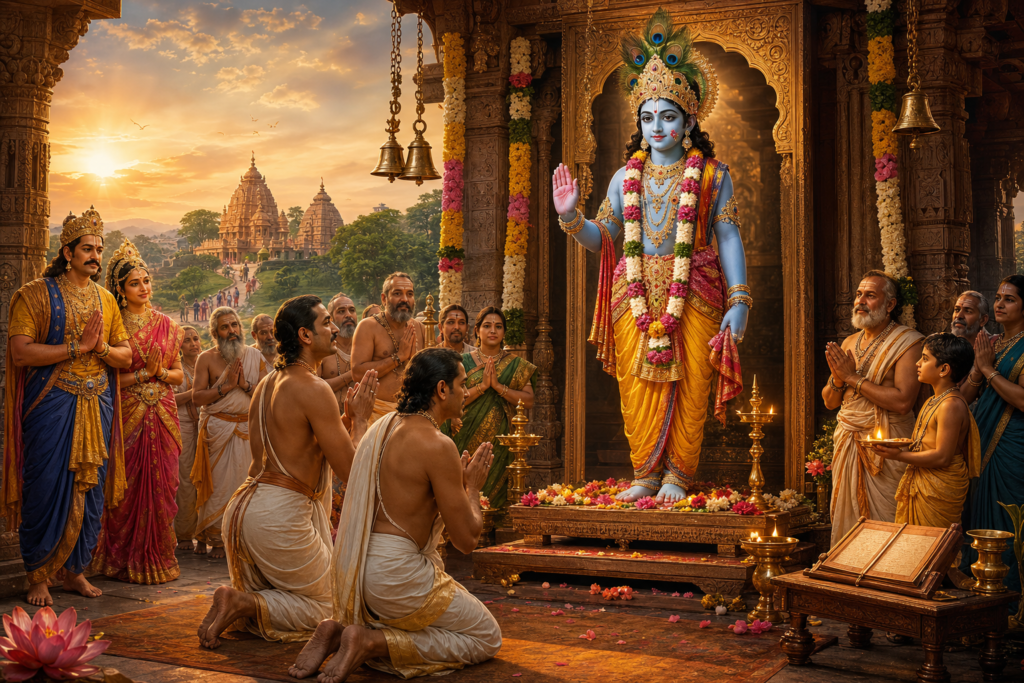
Shrivasa Angan, located about two hundred metres north of Nimai’s Bari, became one of the most treasured sites in Navadvipa. Traditional descriptions speak of a spacious house with comfortable rooms, a protective boundary wall, and lush gardens and groves. The physical details matter because they help the devotee imagine the setting in which nightly kirtans unfolded. This was not an anonymous hall. It was a living home transformed into a sacred theater of divine sound.
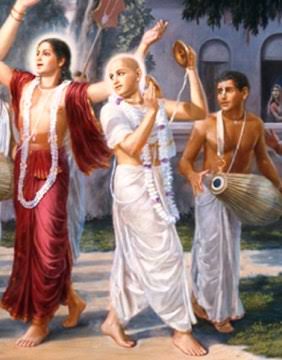
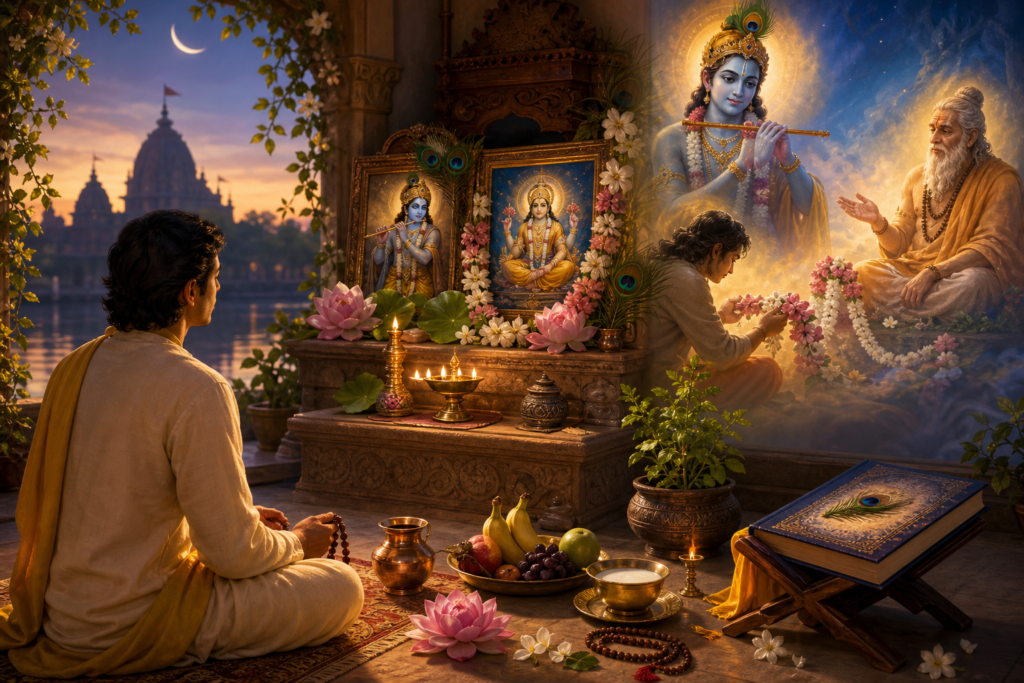
Every night, Shri Gauranga Mahaprabhu and His intimate associates are remembered as gathering at Shrivasa Angan for ecstatic kirtan. These kirtans were not performances in the modern sense. They were acts of surrender, theological expression, and collective transformation. Through the chanting of Krishna’s names, the devotees tasted the mellows of Vrindavana while standing in Navadvipa. In Gaudiya Vaishnavism, this connection between Navadvipa and Vrindavana is essential: the holy name reveals sacred reality wherever it is invoked with purity and love.
The sankirtana movement associated with Lord Chaitanya gave special emphasis to the congregational chanting of the divine names. In a technical sense, sankirtana is more than music. It is a disciplined and communal form of remembrance in which theology becomes sound, sound becomes meditation, and meditation becomes shared spiritual experience. Shrivasa Pandit’s home served as one of the earliest and most intimate spaces where this sacred practice took visible form.
From a broader dharmic perspective, the example of Shrivasa Pandit speaks to the power of sacred sound across traditions. Hindu japa and kirtan, Buddhist chanting, Jain stavan, and Sikh kirtan all recognize that sound can refine consciousness, gather community, and carry memory across generations. The particular theology of Gaudiya Vaishnavism remains distinct, yet its reverence for sacred sound participates in a wider Indic understanding: the voice can become an instrument of awakening when joined with devotion, discipline, and humility.
The disappearance of Shrivasa Pandit is therefore best approached as a moment of remembrance rather than loss alone. In bhakti traditions, the disappearance day of a saint is often observed with gratitude, reflection, kirtan, and renewed commitment to the teachings embodied by that saint. The physical departure of the devotee does not end the devotee’s influence. It often intensifies the community’s awareness of the values that saint preserved.
Shrivasa Pandit’s legacy may be summarized through several interrelated themes: devotion rooted in daily discipline, community formed around sacred sound, humility before scripture, hospitality toward the divine, and unwavering participation in Lord Chaitanya’s mission. Each of these themes has practical relevance. A spiritual community cannot be sustained by ideas alone. It requires homes that welcome seekers, voices that chant together, elders who preserve memory, and families who treat sacred practice as a living inheritance.
His life also challenges modern assumptions about spirituality as a purely private activity. Shrivasa Pandit’s devotion was personal, but not isolated. It was household-based, scripturally grounded, socially shared, and publicly consequential. The transformation that began in intimate kirtans at Shrivasa Angan eventually contributed to a movement that carried Krishna consciousness far beyond Nadia. This pattern shows how deep cultural change often begins in small circles of disciplined sincerity.
The figure of Shrivasa Pandit is especially meaningful for readers interested in the unity of dharmic traditions. His example does not require flattening differences among traditions. Instead, it demonstrates how a particular devotional path can be honored deeply while still contributing to a wider culture of reverence, compassion, and spiritual responsibility. The strongest form of unity is not sameness. It is mutual respect rooted in the recognition that sincere practice, ethical life, and remembrance of the sacred uplift the human condition.
The devotional culture surrounding Shrivasa Pandit also offers a corrective to purely institutional readings of religion. Institutions matter, but spiritual life becomes transformative when it reaches the level of relationship. Shrivasa and Malini’s home became sacred because it welcomed the Lord, protected the devotees, and allowed divine names to resound night after night. This suggests that every household, when oriented toward dharma, can become a place of refuge, learning, and inner renewal.
In the study of Hindu spirituality, Shrivasa Pandit’s life provides a valuable case study in the relationship between sacred geography and devotional memory. Navadvipa, the Ganga, Nimai’s Bari, Shrivasa Angan, and the nightly kirtans together form a landscape of remembrance. Pilgrimage to such places is not only movement through space; it is movement through layered memory. The pilgrim enters a geography shaped by sound, tears, scripture, and centuries of retelling.
The emotional force of Shrivasa Pandit’s remembrance comes from this union of theology and intimacy. He is not remembered merely as a doctrinal category within the Panca-tattva. He is remembered as a devotee whose home sheltered divine ecstasy, whose family served Lord Chaitanya with parental affection, whose brothers shared disciplined practice, and whose association helped nourish the early sankirtana movement. His sanctity was not distant from ordinary life; it transformed ordinary life into sacred service.
For contemporary devotees and students of bhakti, the lesson is direct. Spiritual renewal does not always begin with grand structures or public declarations. It may begin with a household that makes room for sacred sound, a small group that studies scripture sincerely, a family that honors the river, or a community that gathers without pride to chant the divine names. Shrivasa Pandit’s disappearance invites remembrance of this quieter but more enduring form of spiritual power.
The memory of Shrivasa Pandit continues to illuminate the devotional heart of Gaudiya Vaishnavism. As a member of the Panca-tattva, as the representative of the devoted jiva, as Narada Muni in Chaitanya-lila, and as the guardian of Shrivasa Angan, he stands as a model of surrendered participation in divine love. His life teaches that bhakti is not only a doctrine to be studied, but a sound to be sung, a home to be sanctified, a community to be protected, and a love to be lived.
Inspired by this post on Dandavats.


Leave a Reply
You must be logged in to post a comment.