

The June 2026 English Video Diary on ISKCON TV opens a living window into Sri Dham Mayapur, presenting the devotional heart of the global Hare Krishna movement through carefully curated scenes of kirtans, yajnas, pilgrimages, and community service.
Filmed with a documentary sensibility yet anchored in lived practice, the diary captures dawn aratis, the cadence of mridangas, and the circulation of sacred texts, enabling viewers worldwide to align personal sadhana with the rhythm of Mayapur’s temple life.
This month’s narrative foregrounds Purusottama Month—also known as Adhik Māsa—a rare, intercalary period traditionally dedicated to Lord Vishnu and extolled in the Padma Purāṇa as specially claimed by the Supreme for the spiritual upliftment of all.
In the classical Vedic lunisolar calendar, months are counted by the moon while seasonal alignment follows the sun. An Adhik Māsa is inserted whenever a lunar month contains no solar transit (sankranti). This astronomical rule yields Purusottama Month roughly once every 2½ to 3 years, preserving harmony between lunar observances and solar seasons.
Regional panchang traditions differ in nomenclature: some repeat the name of the adjacent lunar month, whereas the Vaishnava tradition—prominently represented in Gaudiya Vaishnavism—honors the intercalary period as Purusottama Month, emphasizing its exclusive dedication to Lord Vishnu.
Scriptural framing is unambiguous in its encouragement. The Padma Purāṇa recounts that, because this intercalary interval had no presiding deity, the Supreme Lord accepted it, elevating its status. Later compendia and Vaishnava commentaries consistently treat it as a potent window for intensified bhakti-yoga and purification.
For practice, the month functions much like a spiritual accelerator. Devotees commonly adopt additional japa, extended kirtan, expanded scriptural study (notably the Bhagavad-gita and sections of the Srimad-Bhagavatam), and focused seva within temple and community. Many also observe Ekadashi with special care, use simplified diets, and keep personal vrata journals to sustain accountability.
A widely observed convention is to refrain from initiating major worldly undertakings—such as new business ventures, weddings, or housewarmings—during Purusottama Month. The rationale is devotional concentration: by suspending fresh material commitments, attention and time are liberated for sadhana, introspection, and service. Local customs may vary, and families often consult their temple or panchang for guidance.
Comparisons with Kārtika are natural. Both periods are strongly Vaishnava in emphasis and invite vow-based practice; Kārtika highlights the Damodara mood of devotion, while Purusottama Month, though intercalary, is marked by a special magnification of results attributed to additional chanting, study, and service. In lived experience, the two become complementary: Kārtika consolidates sentiments, and Purusottama strengthens discipline.
Calendarically, the insertion of Adhik Māsa follows a precise rule: if the sun does not enter a new zodiac sign within a lunar month, that month is designated intercalary. Over a 19-year span, this tends to occur seven times, keeping the lunar year aligned with agricultural and ritual seasons. The video diary’s coverage situates Purusottama Month within this larger scientific context, demystifying how tradition and astronomy interact.
From a theological standpoint, dedicating an “extra” month to Lord Vishnu reflects a recurrent Vedic impulse: surplus time is sacralized, not wasted. The outcome is a culture of rhythmic recalibration, in which individuals, families, and communities pause to restore priority to sravana (hearing), kirtana (chanting), smarana (remembrance), and seva (service).
Practical observance often includes a structured daily cadence: early rising and japa, morning or evening kirtan, a fixed syllabus of shastra reading (for example, a chapter-a-day of the Bhagavad-gita), and a tangible seva commitment each week. Many households complement this with dana (charity), hospitality to pilgrims, and kitchen-based offerings prepared in the spirit of prasada distribution.
Dietary simplicity supports mental clarity. Sattvic preparations, careful observance of Ekadashi, and mindful restraint around stimulants or heavy foods are frequent choices during this month. The shared intention is steadiness: clarity in mind, regularity in practice, and compassion in conduct.
Because tithis and day boundaries are astronomical, diaspora communities are encouraged to use reliable local panchangs and to verify sunrise- and moon-based timings when planning vrata starts and Ekadashi fasts. Temples often publish region-specific schedules so that congregations can observe collectively without confusion.
The diary’s visual language underscores how communal kirtan and yajna amplify individual determinations. Scenes from Sri Dham Mayapur show sankirtan parties, scriptural recitations, and pilgrim flows converging into a single devotional current, offering a template that home-based viewers can adapt: steady chanting, acts of service, and reflective study.
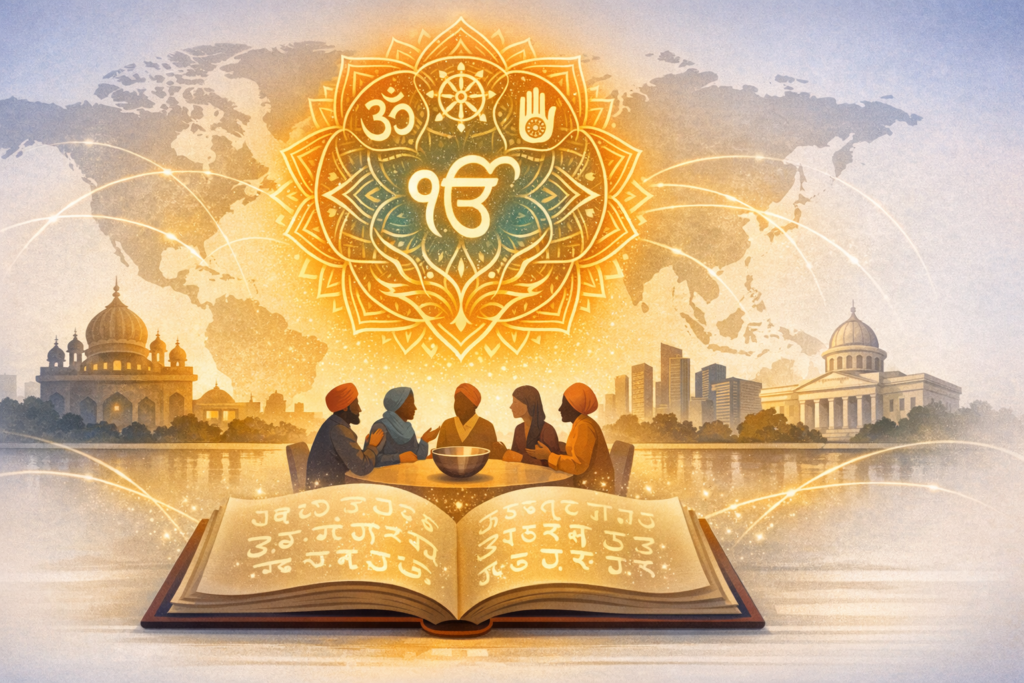
The shared ethical grammar of Purusottama Month—tapas (restraint), daya (compassion), satya (truthfulness), and sauca (purity)—resonates across dharmic traditions. Parallels can be meaningfully drawn with Buddhist uposatha disciplines, Jain pratikraman and anuvrata culture, and Sikh simran and seva. The diary’s framing thus points beyond sectarianism toward unity in practice and purpose.
In Gaudiya Vaishnavism, the epithet “Purusottama” signals the Supreme Person whose grace makes devotion effective. The intentionality of the month, therefore, is less about severity and more about reciprocity: a devotee increases effort, trusting that divine companionship multiplies results, especially where humility and service prevail.
Educational outreach receives emphasis. Children’s classes, verse memorization, and participatory kirtans are showcases of intergenerational transmission, ensuring that vratas are not only personal but familial. The video diary documents these micro-pedagogies, demonstrating how households translate calendar sanctity into daily habit.
Questions commonly arise: what if a vow is started late, or briefly interrupted? Traditions typically commend resuming earnestly without discouragement, and, where appropriate, adding compensatory reading, service, or charity. The measure of success is consistency and sincerity rather than austerity alone.
For those new to observance, a minimal yet meaningful framework can be effective: a fixed japa quota, a non-negotiable shastra slot, weekly seva, and Ekadashi with mindful food choices. The structure is intentionally modest so that completion cultivates confidence and readiness for deeper commitments in subsequent months such as Kārtika.
From a social perspective, Purusottama Month strengthens community bonds. Shared kirtans, reading circles, and seva drives generate trust and mutual care, countering isolation and digital distraction. ISKCON TV’s global reach transforms these local practices into a distributed congregation, enabling viewers to synchronize intent even when physically distant.
Pilgrimage, whether outward or inward, becomes a unifying thread. While the diary highlights yatra moments in and around Mayapur, it equally affirms that a sincere home altar, daily kirtan, and study group can constitute a valid tirtha in contemporary life, aligning with the broader Hindu understanding that sacred space is portable wherever remembrance is constant.
Temple administrators and community organizers may view the month as an opportunity for governance and pedagogy: clarifying schedules, publishing Ekadashi and sankranti timings, curating introductory curricula, and facilitating inclusive events that welcome practitioners from allied dharmic paths in a spirit of mutual respect.
Taken together, the June 2026 diary does more than document; it operationalizes a blueprint. By connecting Purusottama Month’s scriptural foundations to the lived cadence of Mayapur’s routines, it equips viewers with the knowledge, timings, and practices needed to transform an “extra” month into extraordinary growth in bhakti, wisdom, and unity.
Inspired by this post on Dandavats.







Leave a Reply
You must be logged in to post a comment.