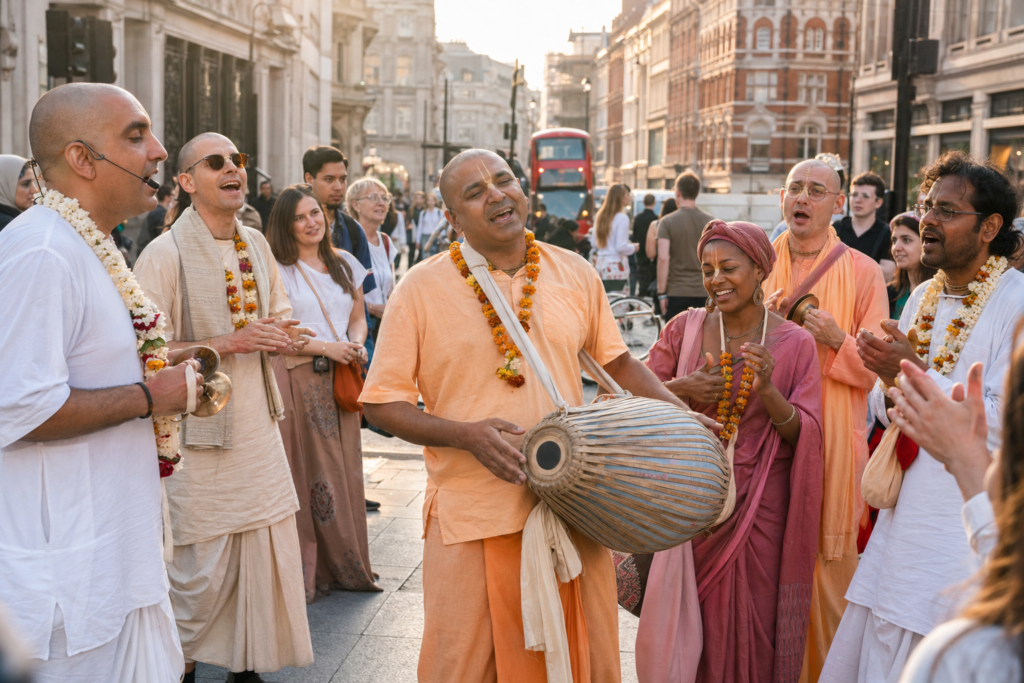
Radiant, transcendental smiles captured during Arabic book distribution convey a profound sense of shared joy and service. Documented by Satyanarayana Bbt Feme, the scene reflects a moment where community outreach, devotion, and cultural sensitivity converge to create a palpable atmosphere of goodwill.
As Krishna Kumar Prabhu observed: “Hare Krishna! This devotee came with me on books and he got the mercy. They were flying out. And people were giving donations. He could feel the special purification of this Arabic book distribution and was so fired up. We became spiritual brothers by the mercy of this service!”
In the Bhakti Tradition, sharing wisdom literature is regarded as sevaan act of service that cultivates inner clarity and compassion. The spontaneous receptivity describedbooks “flying out” and donations offered freelyindicates trust, resonance, and the community’s readiness to engage with meaningful ideas presented respectfully in the Arabic language.
This outreach exemplifies how devotion and cultural awareness can advance interfaith dialogue while honoring linguistic identity. Arabic book distribution underscores that spiritual communication is most effective when it is non-coercive, inclusive, and attuned to local cultures. Such efforts naturally align with the unity of dharmic traditionsHinduism, Buddhism, Jainism, and Sikhismby emphasizing compassion, learning, and mutual respect.
The expressed kinshipbecoming “spiritual brothers”illustrates how shared service fosters deep bonds across communities. Many participants in community service report similar experiences: heightened gratitude, calm focus, and renewed commitment to social harmony. These outcomes demonstrate that devotional service, approached with humility, can strengthen community cohesion while supporting interfaith relations.
Viewed through a broader lens, Arabic book distribution functions as a bridge between cultures and traditions, turning everyday encounters into opportunities for understanding. By centering empathy, accessible language, and ethical engagement, such initiatives reinforce unity in spiritual diversity and model how dharmic values can contribute constructively to plural societies.
Inspired by this post on Dandavats.