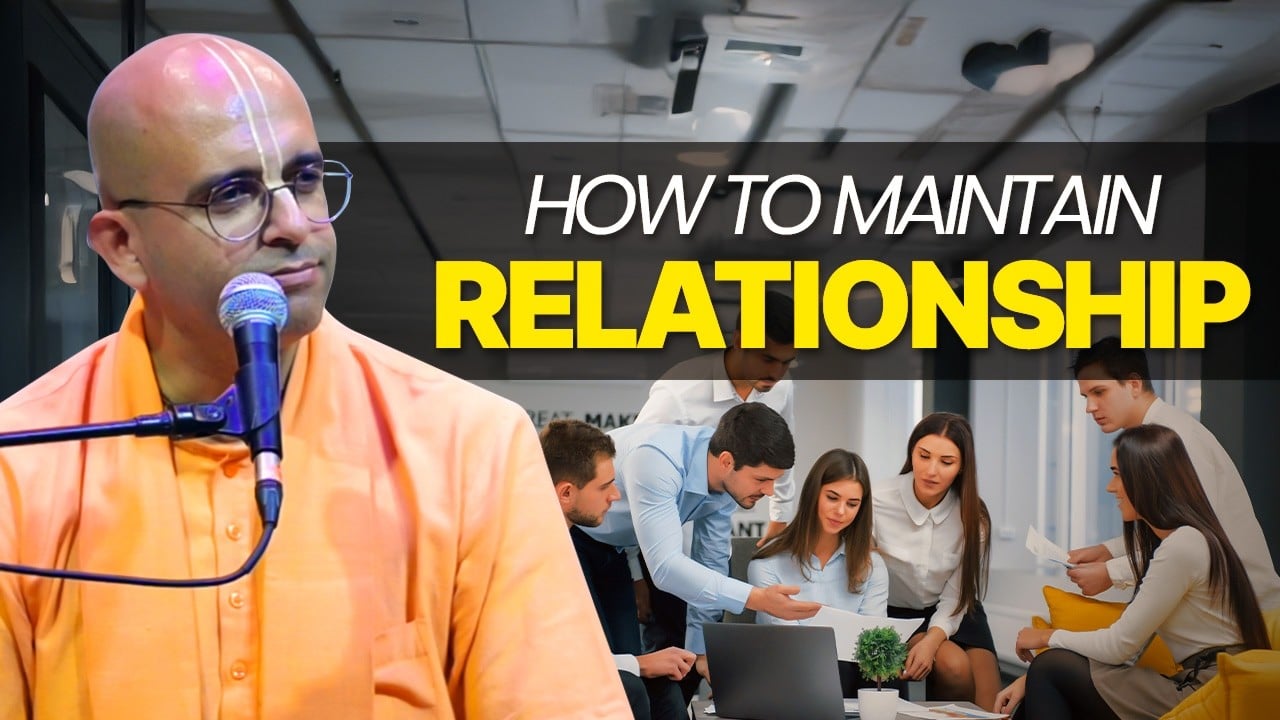
In a widely shared talk, HG Amogh Lila Prabhu emphasizes a deceptively simple truth: the real strength of any company, organization, or family is not money, technology, or buildings, but people. This perspective, while intuitive, is also strongly supported by insights from organizational psychology and the lived wisdom of dharmic traditions. Across workplaces and homes alike, the quality of human relationships predicts trust, morale, engagement, and long-term cohesion. People rarely leave organizations; they leave unhealthy relationships, often shaped by unskilled or unmindful leadership.
Reframing people as “resources” risks treating individuals as inputs to a process rather than as bearers of intrinsic dignity. A dharmic lens rejects this instrumental view and recognizes every person as worthy of respect and care. Shifting the focus from “human resources” to “human relationships” transforms policy, culture, and day-to-day behavior. It also clarifies an ethical baseline: dignity is not merely a courtesy; it is a non-negotiable foundation for any flourishing community or institution.
Dharmic traditions offer convergent guidance on this point. Hindu Dharma foregrounds the sacredness of the Self (atma) and the virtues of daya (compassion), kshama (forbearance), and satya (truthfulness); the Bhagavad Gita honors self-mastery and non-harm (ahimsa) as leadership essentials. Buddhism cultivates metta (loving-kindness) and karuna (compassion) to reduce suffering and foster interdependence. Jainism advances ahimsa in thought, word, and deed, and anekantavada (the recognition of multiple perspectives), a powerful antidote to rigid conflict. Sikh tradition anchors leadership in seva (selfless service) and sarbat da bhala (the welfare of all). Together, these principles encourage inclusive, respectful, and resilient relationships.
Contemporary research complements these insights. Teams thrive in climates of psychological safety, where individuals can speak candidly without fear of humiliation or retaliation. Motivation is sustained when autonomy, competence, and relatedness are protectedpatterns summarized in self-determination theory. Families and community organizations mirror these same dynamics: when members feel heard, capable, and connected, they invest their best selves; when they feel controlled, diminished, or isolated, withdrawal or conflict follows.
The adage “people leave managers, not companies” captures a practical reality. Chronic disrespect, inconsistency, emotional volatility, and value conflicts degrade trust over time. Yet this is rarely about labeling individuals as “good” or “bad”; it is about observable behaviors and repeatable patterns. Leaders at any level can learnand unlearnsuch patterns through disciplined reflection, feedback, and skills training grounded in compassion and accountability.
A helpful dharmic lens for leadership capacity is the interplay of the gunas: sattva (clarity and compassion), rajas (driven action), and tamas (inertia or neglect). Relationship health expands when sattva predominateswhen clarity tempers ambition and compassion balances performance pressure. Rajas, without reflection, can become agitation; tamas, left unexamined, becomes apathy or avoidance. Practices that cultivate self-awareness, equanimity, and ethical intent help prevent relational harm and enable steady, benevolent leadership.
Relationship excellence can be operationalized through four interlocking commitments. First, dignity must be explicit in norms and visible in micro-behaviors, from greetings to decision-making rituals. Second, trust emerges from reliability, openness, benevolence, and integrity; when any of these weakens, confidence declines. Third, compassionate accountability sustains high standards without humiliating people; it pairs clarity of expectations with empathy for constraints. Fourth, shared purpose aligns diverse talents and temperaments, making room for difference without diluting cohesion.
In organizations, these commitments translate into consistent one-to-one conversations, clear role expectations, and transparent decision logs that explain the why behind the what. Leaders can invite dissent safely by pre-committing to listen fully before responding. Even brief reflective pauses before high-stakes meetings reduce reactive speech and support mindful choices. When performance discussions are framed around growth, contribution, and support needsrather than only deficit correctionengagement typically strengthens.
In families, small rituals sustain big bonds. Daily check-ins, express gratitude, shared meals without devices, and brief silence for reflection create a dependable emotional climate. Repairing a misunderstanding the same day prevents minor rifts from compounding into deep resentments. Mindful breathing before difficult conversations improves tone and reduces the likelihood of saying words that later require repair.
Communication quality is decisive. A practical discipline derived from nonviolent communication emphasizes clear observations (not judgments), honest feelings (not accusations), underlying needs (not demands), and specific requests (not vague wishes). Across dharmic frames, this reflects the blend of satya and ahimsa: truthful speech that also avoids harm. In stressful moments, asking “What matters most to each person here?” redirects attention from winning arguments to meeting human needs.
Conflict resolution benefits from a cooling-off interval followed by structured dialogue. Prepare by clarifying values and facts. Listen until each side can paraphrase the other accurately. Synthesize areas of agreement and name the precise differences. Agree on next actions with owners and timelines, then recheck emotional temperature. Relationships heal when both truth and care are honored; either one without the other proves insufficient.
Boundaries are an expression of dignity, not a rejection of relationship. Clear limits prevent overreach, enable sustainable giving, and protect safety. In homes, this may mean time boundaries for work or screens; in teams, it may mean scope boundaries that prevent role creep and burnout. Boundaries become bridges when communicated early, respectfully, and consistently.
Measuring relationship health need not be intrusive. In organizations, simple pulse questions can track belonging, clarity, and perceived fairness. Retention patterns, peer recognition frequency, and the rate of constructive feedback exchange provide additional signals. In families and community groups, periodic reflection on appreciation, quality of listening, and speed of repair after disagreements offers a grounded picture of relational climate.
Sometimes relationships require protection as much as cultivation. When a leader or family member repeatedly violates dignity despite feedback, escalation may be necessarydocumented conversations, seeking third-party facilitation, or establishing formal guardrails. Dharmic ethics combines compassion with courage: non-harm to the vulnerable (ahimsa) can include firm stance (kshatra) against repeated relational harm. Calm resolve, not revenge, guides the response.
Remote and hybrid settings magnify subtle communication dynamics. Without shared physical context, tone, timing, and clarity matter more. Brief agendas, explicit decisions, and follow-up notes reduce friction. Camera-on conversations for sensitive topics, asynchronous updates for low-stakes coordination, and thoughtful written acknowledgments help sustain warmth and reduce misunderstanding. Courtesy in digital channels is not ornamental; it is infrastructure for trust.
Inter-tradition and interfaith contexts call for special attentiveness to language, symbols, and histories. Anekantavada encourages honoring multiple perspectives; metta practice humanizes the other; seva dissolves ego through service. In plural communities, curiosity outperforms certainty. The shared ethical spinecompassion, truthfulness, non-harm, and servicekeeps dialogue constructive and expands the circle of trust.
Not every relationship can or should be preserved in its current form. When trust repeatedly breaks and repair fails, principled exit may be the most dharmic path. Leave with clarity, not contempt; close with gratitude for what was learned; refuse cycles of blame that entangle the mind. Integrity during separation dignifies all involved and keeps doors open to future goodwill.
Ultimately, the thesis advanced by HG Amogh Lila Prabhu aligns with both evidence and experience: institutions endure when relationships are dignified, trustworthy, truthful, and purpose-aligned. Money, tools, and structures are amplifiers at best; people are the source. Centering compassion and accountability does not soften performance; it strengthens it. Whether in a company, a family, a temple committee, or a neighborhood sangha, choosing people over power is the most reliable way to build something worthy of devotion and capable of lasting.
Inspired by this post on Dandavats.