Hindu spirituality is often misunderstood as a retreat from the world, a pursuit reserved for the evening of life when careers slow down and duties lessen. In practice, it is a disciplined way of mastering the inner world to meet the demands of family, work, society, and self with clarity. Grounded in Dharma and informed by living traditions, it enables steady engagement with life rather than escape from it.
This perspective aligns with the core teachings found across dharmic traditionsHinduism, Buddhism, Jainism, and Sikhismwhere inner transformation supports outer responsibility. Karma Yoga emphasizes selfless action, Buddhist mindfulness cultivates present-moment awareness, Jain ahimsa refines intention and conduct, and Sikh seva unites devotion with service. Together, these streams illustrate unity in spiritual diversity while guiding a shared path of resilience and compassion.
The popular belief that spirituality begins after retirement overlooks its practical relevance to everyday life. The assumption arises partly from confusing ritual with essence and equating detachment with withdrawal. Hindu spirituality, however, frames detachment (vairagya) as freedom from compulsive reactivity, allowing deeper presence in relationships, work, and civic duty.
To “master the inner world” means cultivating steady attention, balanced emotion, and ethical intention. Classical frameworks describe training the indriyas (senses), harmonizing the gunassattva, rajas, and tamasand refining prana through breath and awareness. These practices translate into improved decision-making, emotional regulation, and sustained focusskills essential for modern life.
Scriptural guidance offers clear foundations. The Bhagavad Gita presents Karma Yoga as disciplined action without cling to outcomes; the Yoga-Sutra outlines abhyasa (consistent practice) and vairagya (non-attachment) as twin pillars of inner stability; the Upanishads point toward Self-knowledge as the ground of freedom. Parallel insights appear in Buddhist satipatthana (mindfulness), Jain samayik (equanimity practice), and Sikh kirtan and naam-simran (remembrance), each fortifying clarity and compassion in daily conduct.
A practical model for everyday resilience integrates three elements: intention (shraddha), practice (abhyasa), and service (seva). A short morning sadhanajapa or silent Meditation, gentle pranayama, and a minute of sankalpacreates mental clarity. Through the day, Karma Yoga reframes tasks as offerings, while brief pauses for breath awareness interrupt stress spirals. In the evening, svadhyaya (self-study) and gratitude consolidate learning and guide course corrections.
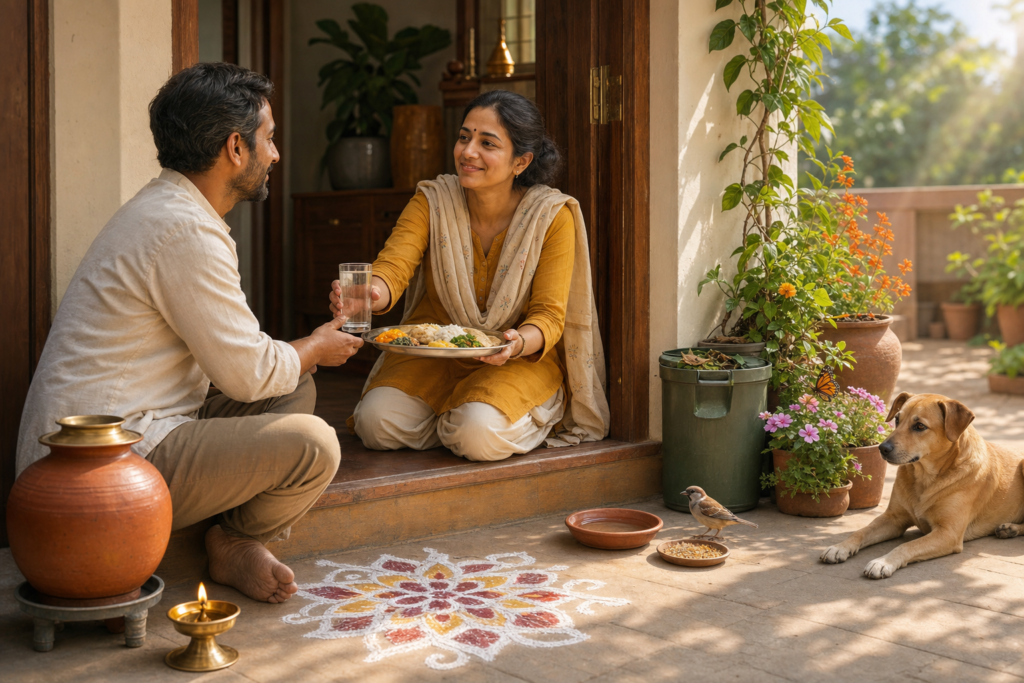
Consider common pressuresdeadline-driven projects, caregiving duties, or difficult conversations. When attention is trained, breath steady, and intention ethical, responses become measured rather than impulsive. Individuals often report fewer mental ruminations, improved listening, and a greater capacity to sustain value-aligned choices under pressure. This is inner mastery in action: less noise, more signal.
A dharmic lens emphasizes inclusivity. Whether practicing Metta (loving-kindness), observing ahimsa in speech and consumption, or engaging in seva in community contexts, the unifying aim is the refinement of character and the uplift of collective well-being. Such unity in spiritual plurality strengthens social harmony while honoring diverse methods of worship and contemplation.
Progress is observable in everyday markers: reduced reactivity, steadier mood, accountable choices, and consistent alignment with Dharma under complexity. Clarity does not eliminate challenge; it equips the mind and heart to face challenge skillfully. Over time, sattva naturally increases, making resilience and compassion more reliable than mood or circumstance.
Detachment is sometimes misread as apathy. In the Gita’s spirit, it is better understood as anāsaktifreedom from compulsive attachmentenabling deeper care without burnout. This “engaged equanimity” preserves energy for sustained service, creative problem-solving, and courageous action when stakes are high.
A concise pathway can begin today: set a clear sankalpa; practice 10–15 minutes of Meditation and pranayama; choose one act of mindful seva each week; study a brief passage from the Bhagavad Gita or a trusted dharmic text; and track one concrete habit aligned with ahimsa or truthfulness. Small, consistent steps compound into durable inner strength.
Hindu spirituality is not a postscript to life but a method for living fullylucid in thought, compassionate in action, and steady under uncertainty. By mastering the inner world through Dharma, Karma Yoga, and contemplative practiceand by honoring the shared insights of Buddhism, Jainism, and Sikhismindividuals cultivate resilience, clarity, and courage that benefit both self and society.
Inspired by this post on Hindu Blog.