Magh Snan (Magha Snana) is revered across Bharat as a profoundly auspicious observance during Magh month (Magha masam). Classical traditions regard this period as especially potent for inner purification, dissolution of past transgressions, and spiritual elevation. Within this horizon of meaning, the ritual bath (snana) undertaken before sunrise is honored as a disciplined practice that harmonizes body, mind, and intention.
Scriptural and cultural memory consistently emphasize the sanctity of pre-dawn timings—particularly Brahma Muhurta—when quietude supports contemplation and prayer. At this hour, many integrate snana with japa, vrata, and daana, aligning personal conduct with dharmic ethics. Such alignment frames the snana not merely as an external ablution but as an inward reorientation toward clarity, humility, and compassion.
Traditionally, Magh Snan is performed at tirthas—sacred confluences and rivers—including Ganga, Yamuna, Brahmaputra, Narmada, and Godavari. Pilgrims gather at places such as Prayagraj for collective worship and reflection. Yet, in keeping with the inclusive spirit of dharma, those distant from these rivers observe Magha Snanam through mindful bathing at home or in local water bodies, accompanied by mantra recitation and prayers for the welfare of all beings.
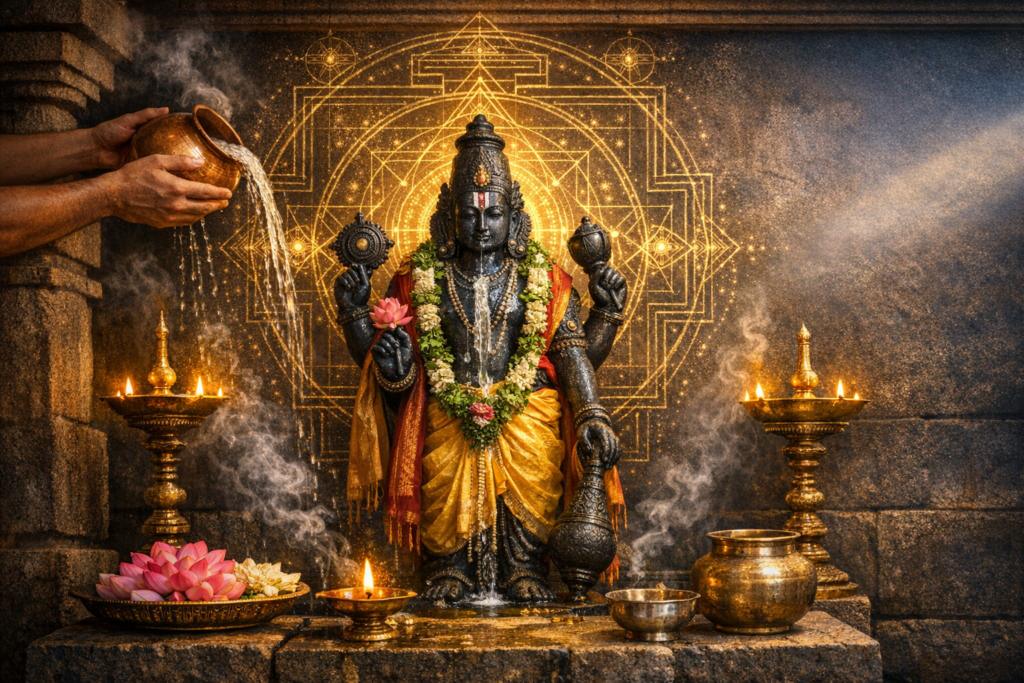
Ritual elements often include offering arghya to Surya at sunrise, reciting stotras (such as Ganga stotra) or Vishnu Sahasranama, and engaging in selfless giving. Puranic references, including those in the Padma Purana, praise the discipline of snana during Magh for its capacity to refine conduct and cultivate sattva. The emphasis is on ethical living—truthfulness, ahiṁsa, and service—so the act of bathing becomes a gateway to sustained inner practice.
The spiritual significance of Magh Snan rests on the symbolism of water as a purifier and a mirror to the inner life. Dharmic traditions—Hinduism, Buddhism, Jainism, and Sikhism—converge on the insight that true purification is both outer and inner: cleansing the body while freeing the mind from restlessness, anger, and attachment. In this shared ethos, Magha Snanam guides practitioners toward equanimity, gratitude, and a renewed dedication to lokasangraha—the uplift of the wider community.
Accounts from devotees frequently describe a palpable sense of renewal: the cool pre-dawn air, the stillness of the river, and the collective silence coalescing into a transformative calm. Families and communities often participate together, strengthening intergenerational bonds and cultural continuity. In the diaspora, observances adapt with grace—local lakes, rivers, or even home snana performed with intention—retaining the practice’s essence while nurturing belonging.
Magh Snan Mahatmya also inspires ecological reverence. Revering the rivers as living heritage naturally aligns with environmental stewardship—cleaner banks, reduced plastic use, and community efforts to protect watersheds. Thus, the holy dip in Magh month becomes both a spiritual discipline and an ethical commitment to care for the shared sacred commons.
To observe Magha Snanam with depth, practitioners commonly begin with a simple sankalpa (clear intention), maintain a respectful, non-harmful routine, and complement the snana with prayer, meditation, and charity. The practice is inclusive and accessible—guided by sincerity rather than spectacle—making the Importance of Magha Snanam and its spiritual significance enduring across regions, languages, and communities.
Inspired by this post on Hindu Pad.